
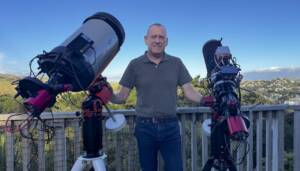
From Backyard Skies to Deep Space: Peter’s Astrophotography Journey
Peter Ambrose lives in Porirua, Wellington, New Zealand, after moving there from his hometown of Christchurch in 1991. Now retired from corporate life for over 13 years, he has been
Hi, I’m Christopher Rose. My own personal interest in astronomy started when my parents got our own black and white television so we could watch the first man to land on the Moon. My grandparents got ine of the first color televisions and I remember watching Apollo 15 in color live from the Moon. Being young, I was very optimistic that by the end of the decade we would have a Moon base or be on Mars. I was also lucky in the fact that we lived only a few miles from Jodrell Bank Radio observatory in the United Kingdom and they did have a visitor center which we visited often.
I had a passion for bigger things and space and astro physics. My school project for my exams was based on orbital mechanics and had to be sent offsite for marking. Later the next year at college I coded a simulator using their mainframe computer to run a simulated rocket launch with random failures in the amount of thrust.
In 1990 having attended several astronomy society meetings none of which were local I approached a contact at Jodrell Bank who along with the 13(th) Astronomer Royal Sir Francis Graham Smith put an advert in the local newspaper announcing the initial formation of Macclesfield Astronomy Society based at Jodrell Bank. We had forty-five people turn up on that first night. The initial interest led to some lifelong friendships that last to this day.
About this time, I bought my first telescope an 8″ Scmidt Newtonian on an equatorial mount. Like all new scope owners that have high expectations and little experience and no drive motors I was only able to find the really bright objects. We had the use of a car park up in the hills above my town and our observers would meet up and share our expertise.
Our society went from strength to strength with well over a hundred members. We met in the planetarium at Jodrell Bank with a lecturer of note and before the main lecture we did a beginner’s class for children and their parents. This was very successful and we helped inspire a new generation of astronomers one of whom is now a professor of astromy at Preston University and the Vice President of the prestigious British Astronomical Association. We hosted Sir Patrick Mooore a well-known tv host for the ‘Sky at Night’ series on the BBC. At about this time I was also the Technical Editor for the British Magazine ‘Astronomy Now’ mainly doing articles on software that was coming of age in the PC World.
Until then and really up until 2013 I had mainly done observational astronomy. I had a passion for normal photography so I decided to use my Celestron C8 and a Nikon camera to take my first image of the Dumbbell Nebula. A splattering of egg-shaped stars and the red bow tie of my first nebula I was hooked. The limited sky I had meant I had to travel to a good site and the challenges of having to setup and calibrate every night had its own set of challenges.
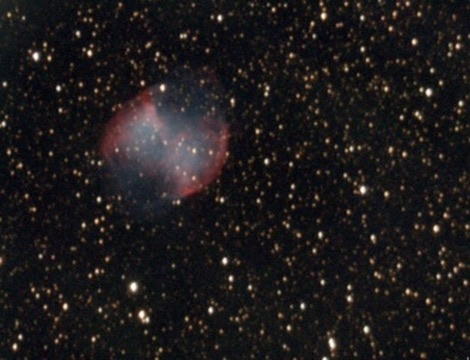
Figure 1 My first Astro photo of Messier 27
Some nights I just lay on my car roof with a pair of binoculars just cruising through the Milky Way sometimes listening to the theme tune to the original Cosmos series by Carl Sagan is such an uplifting experience.
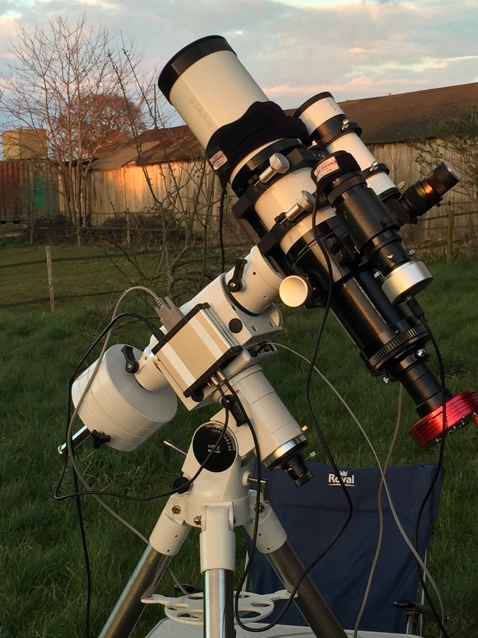
I then purchased an 80mm EDT Refractor and my first dedicated camera an ATIK 314 cooled one-shot color CCD and here was my first foray into automating my setup.
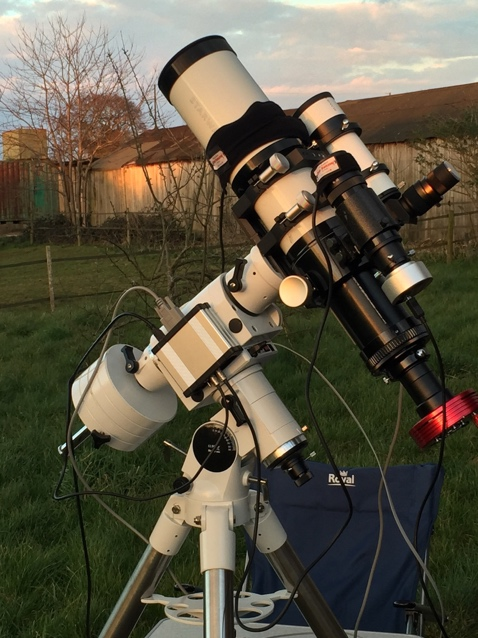
Figure 2 My Altair Astro 80mm EDT
A move to a rural location meant I could leave my setup outdoors and leave it running overnight plus new remote desktops meant I did not have to sit on a deck chair all night I could do this from inside my house. Adding additional components such as an auto focuser and a filter wheel adding a bit at a time gave me better results and introduced the concept of reciprocity. The ability to reproduce night after night and I was introduced to the world of narrowband imaging and PixInsight.
A move to the United States and a windfall I purchased a 9.25″ Celestron Edge HD and my first ZWO Camera an ASIAir, ASI533 MC Pro.
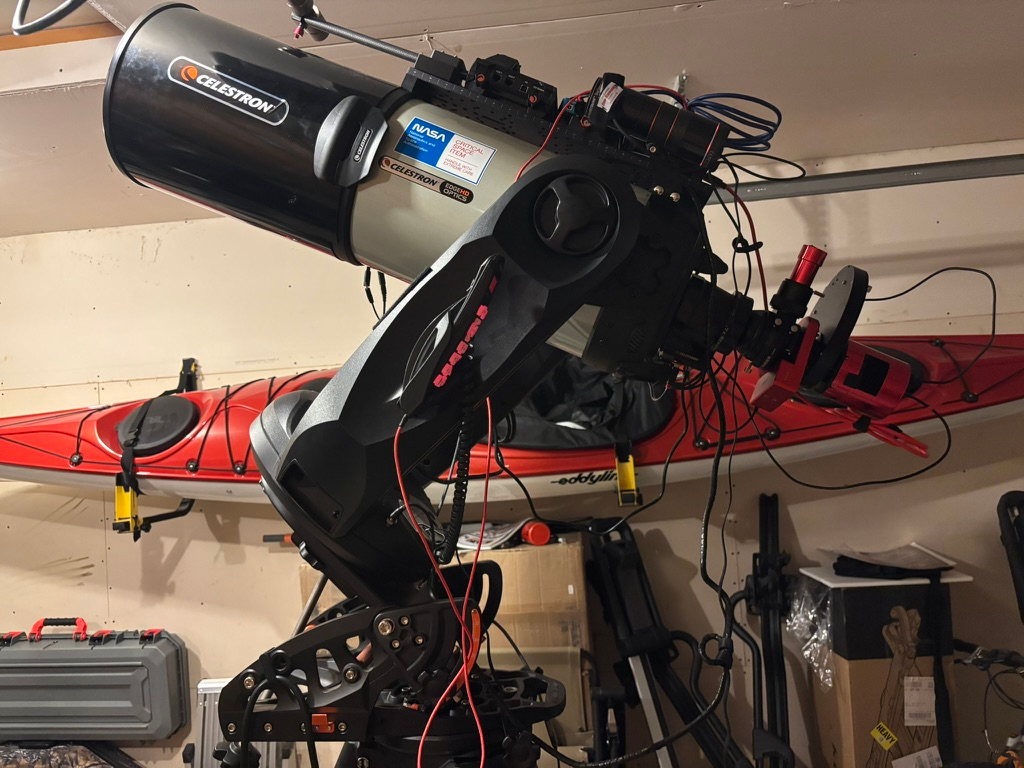
This was a big turning point. A purchase of another ZWO Camera this time an ASI 2600mm Pro and a ZWO filter wheel I was able to take this image of M27. Used alongside the Celestron Starshoot Autoguider there is an inherent bug in the software that causes the mount to timeout which Celestron are not able to fix so I have ‘deforked’ the optics and they are now running on the AM5N.
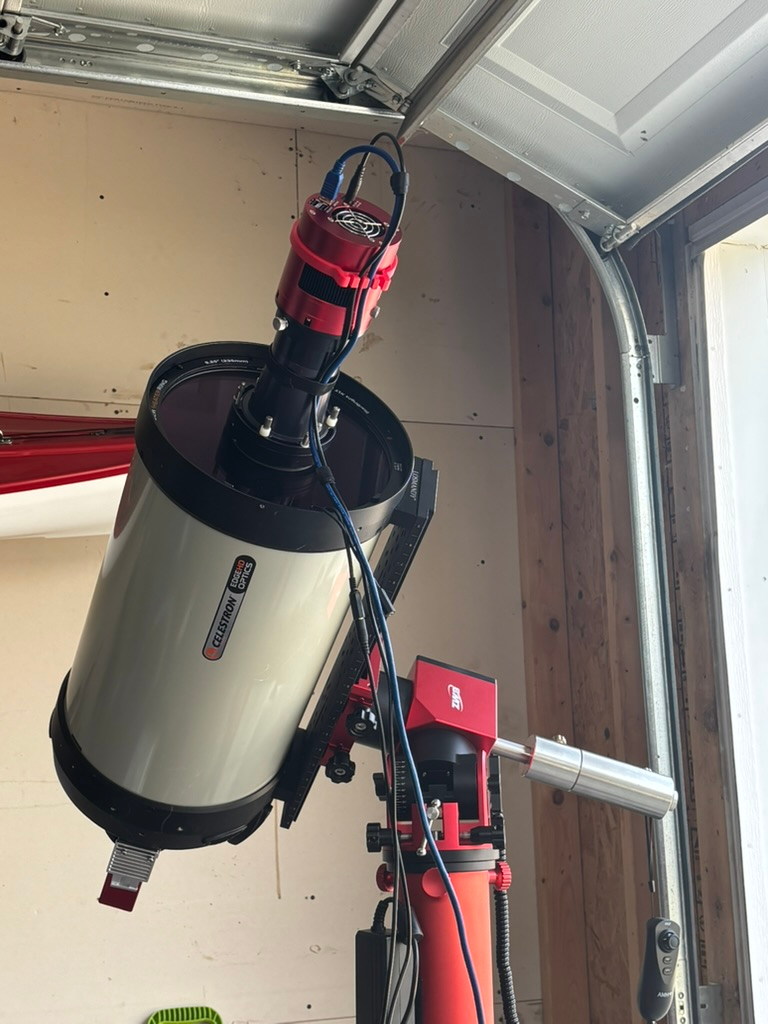 Figure 3 Celestron EdgeHD 9.25 perfectly balanced on the AM5N
My prime directive for this setup is to develop an asteroid detection system. I have been using Claude.ai to explore the concept of scanning a set grid in the sky at specific intervals and running a ‘blink’ comparison. The current setup should be able to detect down to magnitude 16. I hope to code a plugin for NINA similar to exoplanets. Unfortunately, the development environment was on my Mele3 before it crashed so I am rebuilding the .NET environment as we speak.
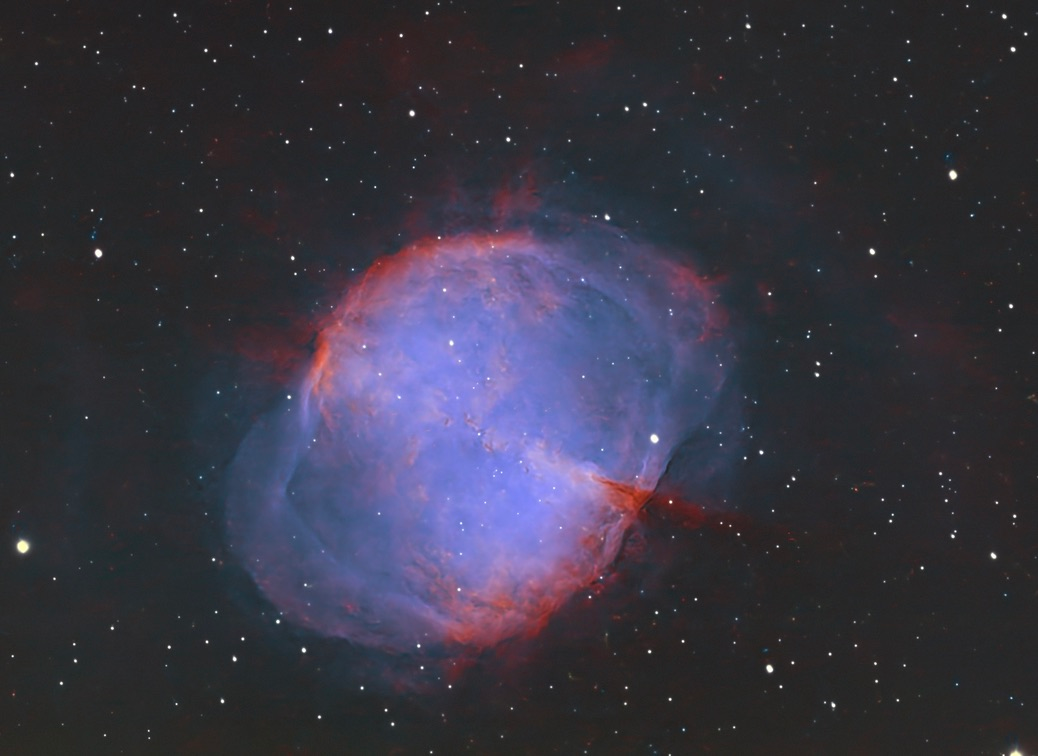 Figure 4 Messier 27 taken in narrowband
I have also installed a Hyperstar V4 and I have had some success doing very fast widefield images. I am a big user of PixInsight using the latest in machine learning tools.
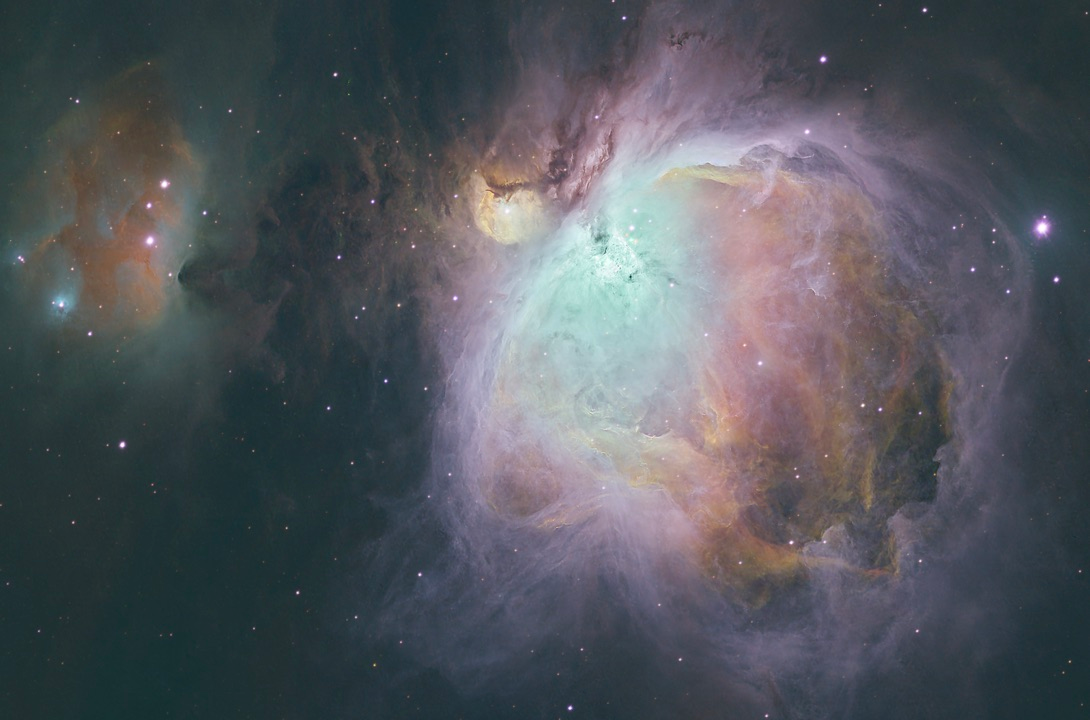 Figure 5 M42 The Orion Nebula using narrowband filters and Hyperstar V4
I am still an active member of my society. Since Covid forced us to use Zoom to meet I am a major contributor to our Astro ‘Shed’ meetings where we meet online and share technical advice not only to each other but newcomers as well. We regularly do group purchases of ZWO Seestars, and we have one on load for new users to get to try it out. We also have project to ‘daisy chain’ several of these devices into one imaging system.
I now have a ZWO FF131 with the F7.5 Focal Reducer. Mounted on an AM5N Mount with an ASI 2600 MC Duo (I also have the ASI 2600 MM Pro) and the ZWO filter wheel. Focus is achieved using the ZWO EAF (I also have the Bluetooth one as well). Also mounted is a flat panel and a Pegasus Sky Sensor.
This is driven by a Primalucelab Eagle 6S running Windows 11 and Primalucelab’s proprietary software. Scheduling is done using the latest GA release of NINA and I have a Claude based MCP AI server running on this instance which monitors trends in autofocus and imaging quality and messages me if it sees any developing issues.
When the Eagle6s’s predecessor a Mele Quieter3c PC quit I purchased an ASI Air and I have had considerable success in using it with my setup. I use this for remote setups
With a serious background in IT. I have developed a Docker Container and a node.js service running on my home server to bring together other sensor information though API calls to run a web-based console. My plan is to use this to monitor and make informed decisions.
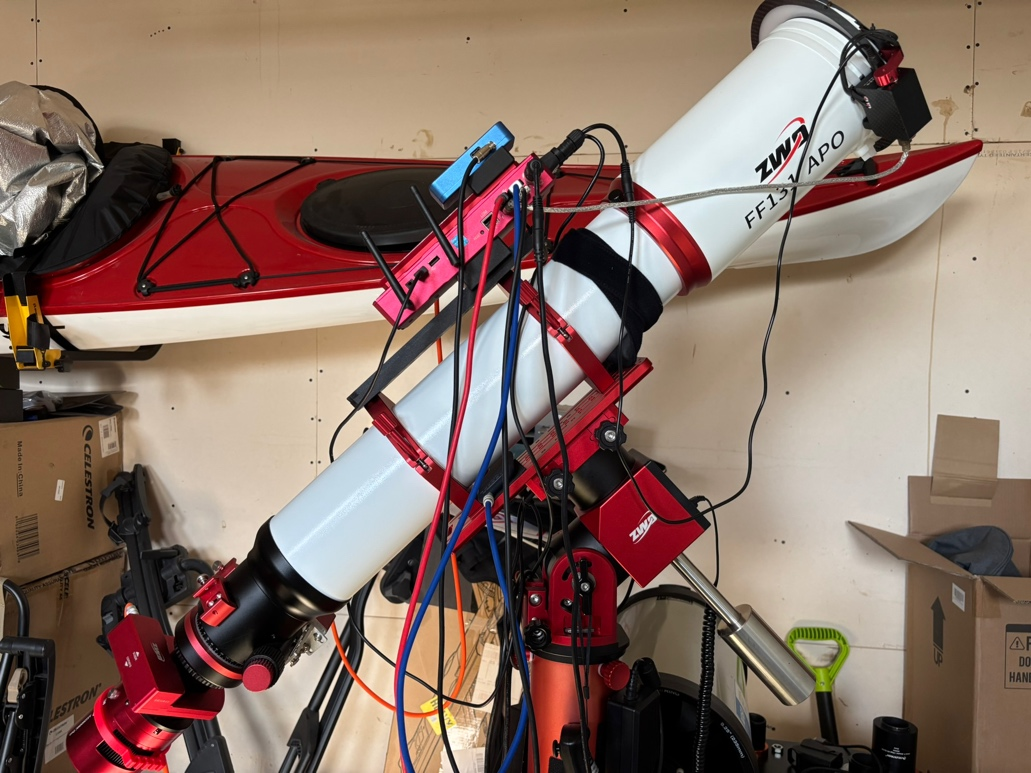 Figure 6 Starbase One Command Console
For people starting out in astro photography who want to make a serious commitment this is an expensive hobby and it pays to take it one step at a time. A good mount and good optics. Patience is essential. Despite my years of experience I still have nights where nothing works as it should, sometimes it’s just the seeing or light interference. I must say when images start to appear on your PC or phone it’s a golden moment, photons travelling millions of light years to be recorded for prosperity on my camera still gives me a big buzz.
Peter Ambrose lives in Porirua, Wellington, New Zealand, after moving there from his hometown of Christchurch in 1991. Now retired from corporate life for over 13 years, he has been
Distributed-Aperture Telescopes: A New Revolution in Astronomy A new wave of astronomy is here. Instead of relying on a single massive telescope, distributed-aperture systems combine multiple smaller telescopes working together—unlocking
I am an avid guitar player. I have been playing for most of my life. I like just about any guitar, electric, acoustic, even bass. It is funny how many
Capturing the Andromeda Galaxy is not uncommon.Resolving it—star by star, across its vast spiral arms—is something else entirely.For the four-member team Cosmic Quadrant, this project became a test of patience,
Jan Erik Vallestad is an astrophotographer based in rural Norway, where his connection to the night sky began as a child. He started his astrophotography journey in 2022 and quickly