
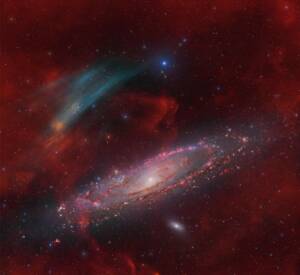
Discovery of the M31 [OIII] emission arc
Recently, a major discovery by an international team of amateur astronomers and scientists has become a huge online hit, and this new discovery is just located in one of the
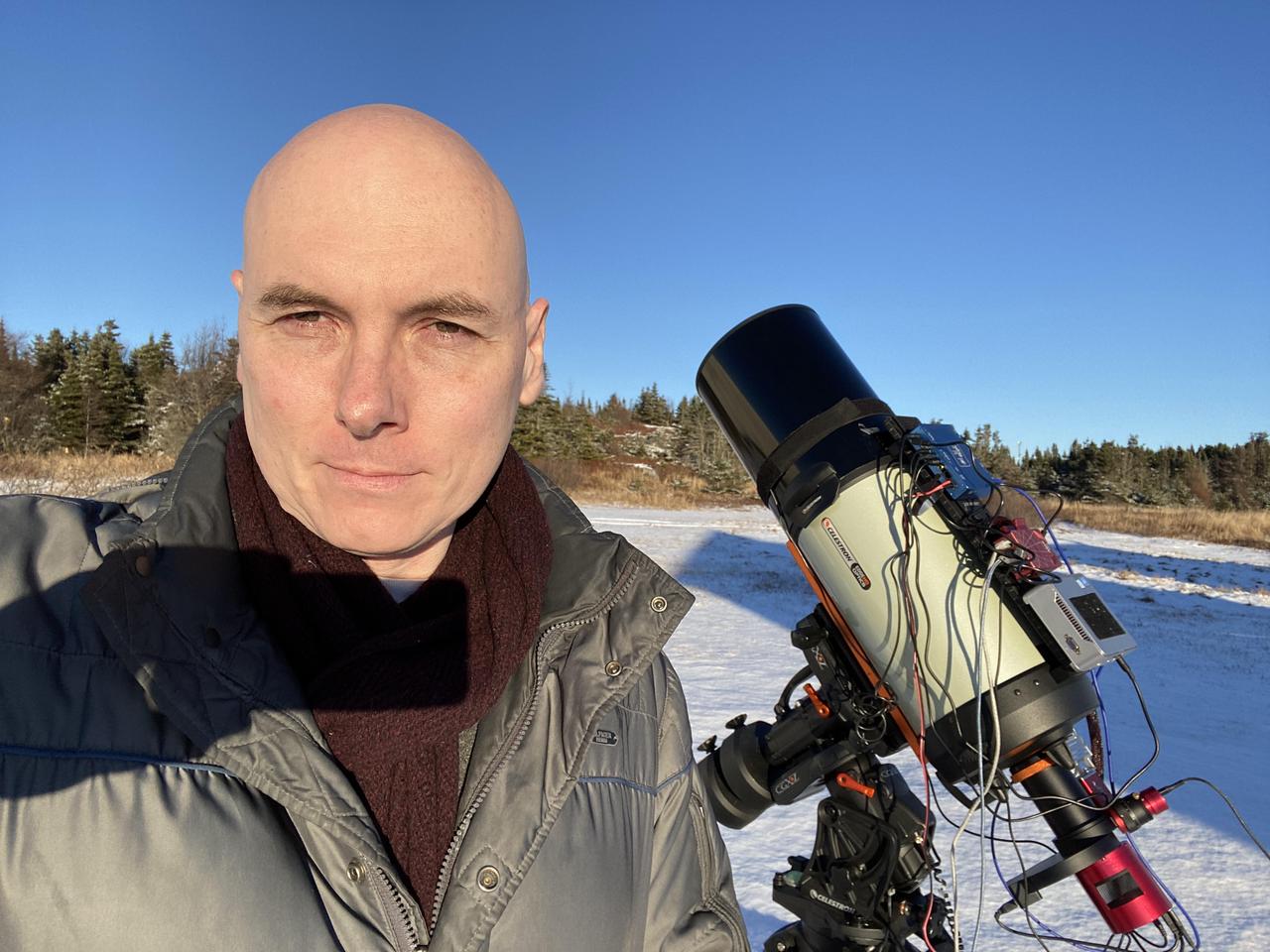
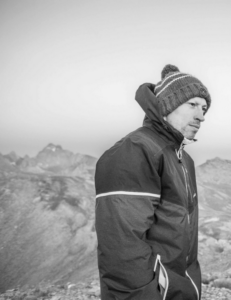
Meet Benoit De Mulder(@ bigbenuniverse) , 52, and started visual astronomy at the age of 8. “For as long as I can remember, I’ve been fascinated by the sky, and I joined a local club in France.
Astrophotography in the 1980s and 90s was far more complicated than it is today. It required access to a darkroom and, above all, the acquisition itself was very difficult: deep-sky work meant extremely long exposures, the concept of stacking as we know it today didn’t exist, guiding was done by eye through a reticle eyepiece, and you used hypersensitized film to minimize noise and grain.
The very possibility of doing astrophotography felt like a distant dream. I remember winning a poster of the Veil Nebula in a contest run by my club. Even shooting in color was out of reach back then. I owned a 115/900 telescope, but I used it purely for observing. My first photograph was comet Hale-Bopp in the spring of 1997, taken with an SLR and a 200mm zoom. It was far from perfect, but it was a success. A few years later I emigrated to Canada and settled in Montreal, and I set astronomy aside for nearly 25 years.
In 2021, I moved with my family to Sheldrake, a small village in the Minganie region, north of the Gulf of St. Lawrence in Quebec, Canada. The sky is nearly Bortle 1 across the territory, and Bortle 2.5 in the middle of the village. I rediscovered my passion for the stars and decided to take the plunge into astrophotography—the childhood dream had finally become possible.”
I don’t have a permanent observatory yet, though it’s in the plans—the concrete for my first pier is already poured! So for now I’m mobile, on my own property. I have four setups that I use roughly equally. The first is a Celestron C11 with a Hyperstar that brings its focal ratio down to f/1.8. It’s equipped with a ZWO ASI2600MC camera and a ZWO EAF focuser, all on a Celestron CGX-L mount and run by a ZWO ASIAIR Plus.
The second setup is a simple all-sky camera that I use for the aurora—a ZWO ASI178MC.
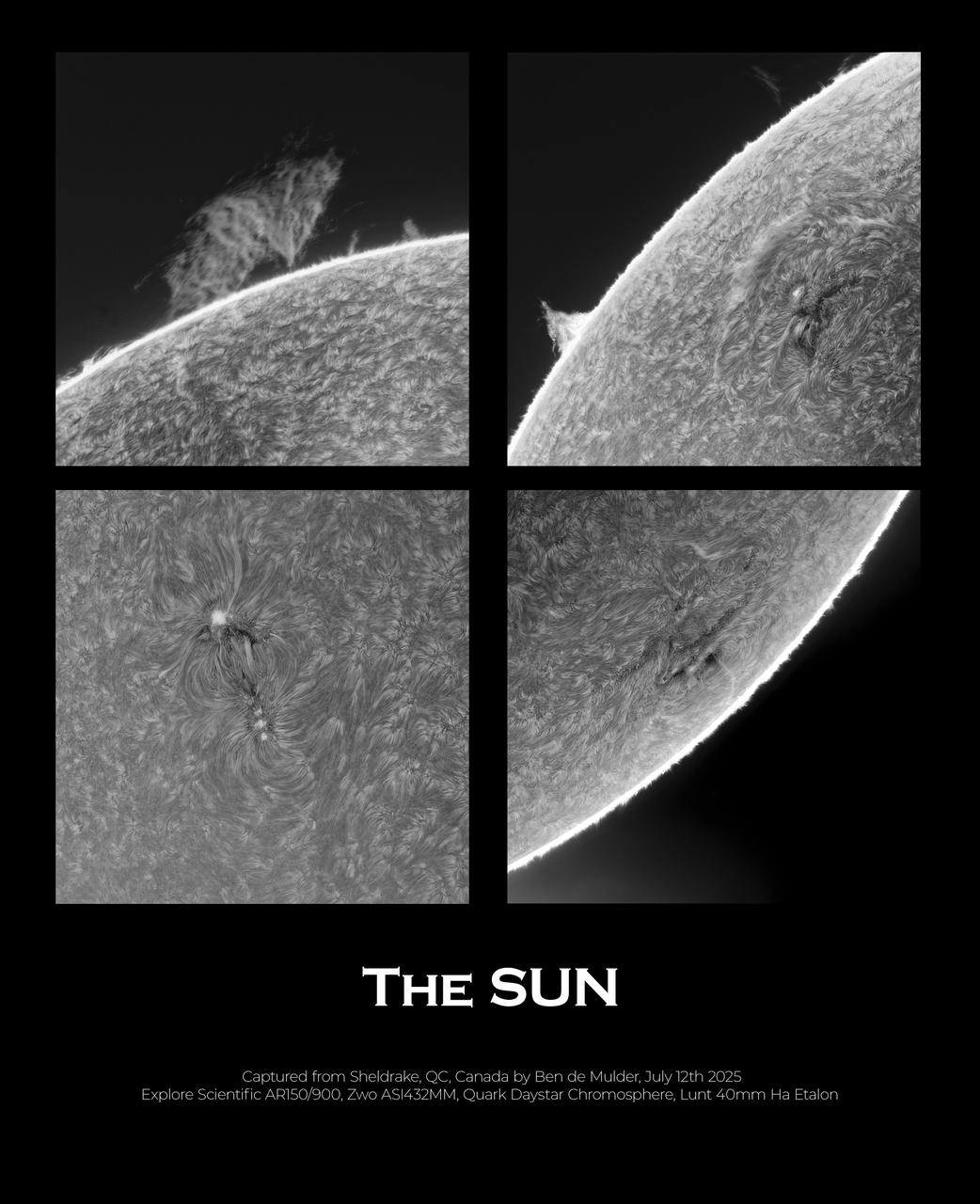
The third is for solar imaging: an Explore Scientific AR150/900 refractor with an ERF at the front, a Quark Chromosphere paired with a 50mm Lunt etalon, which gives me a double-stack Hα, a ZWO EAF focuser, and a ZWO ASI432MM camera. I run it on the Celestron CGX-L as well.
The last setup is a first-generation Takahashi FSQ-106ED refractor that I bought used. It’s now located in Chile, where I operate it fully remotely. It’s equipped with a ZWO ASI6200MM camera, a ZWO CAA rotator, a ZWO 7×2″ filter wheel, and a ZWO EAF focuser. Guiding is handled by a ZWO ASI174Mini.
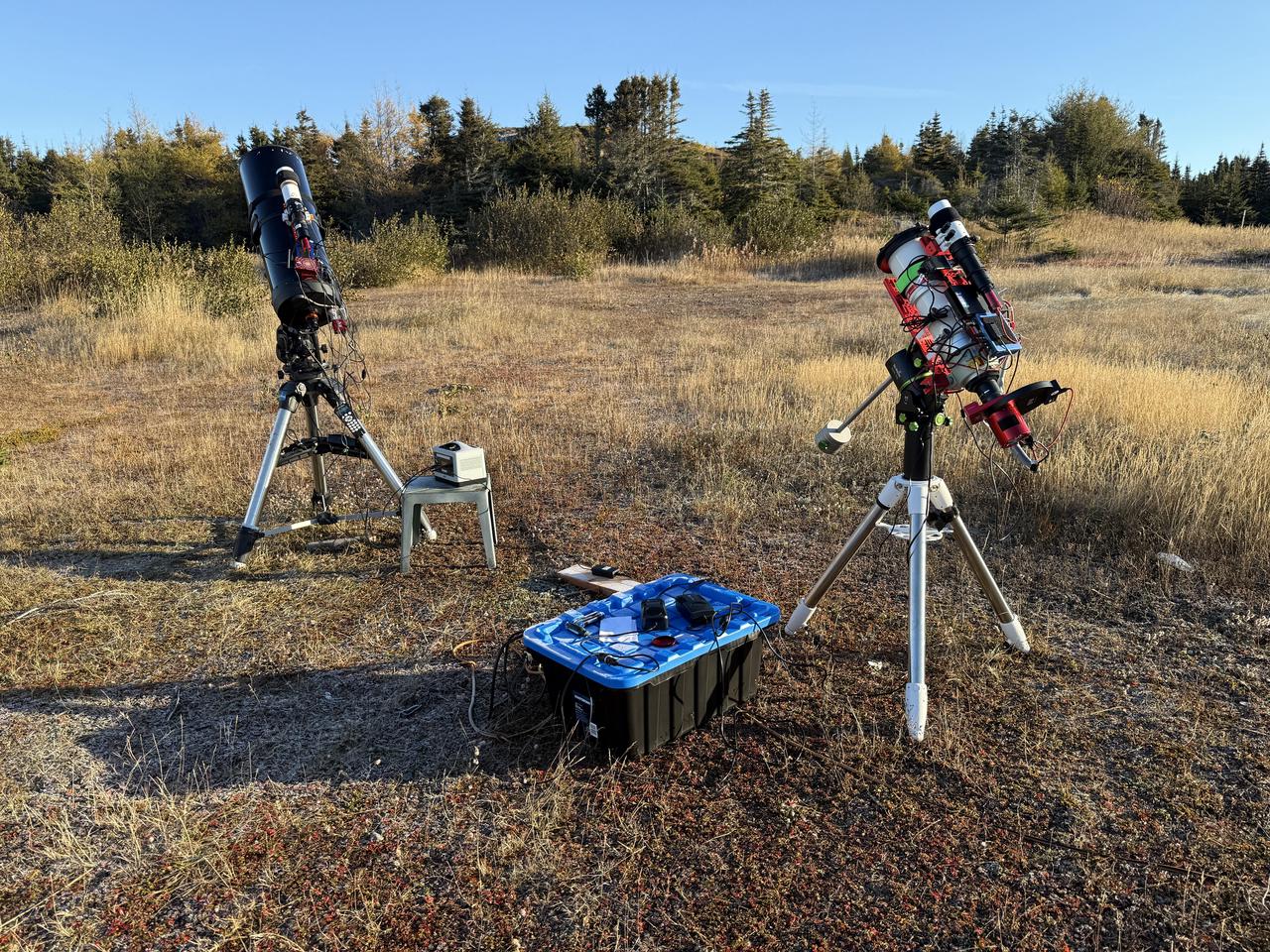
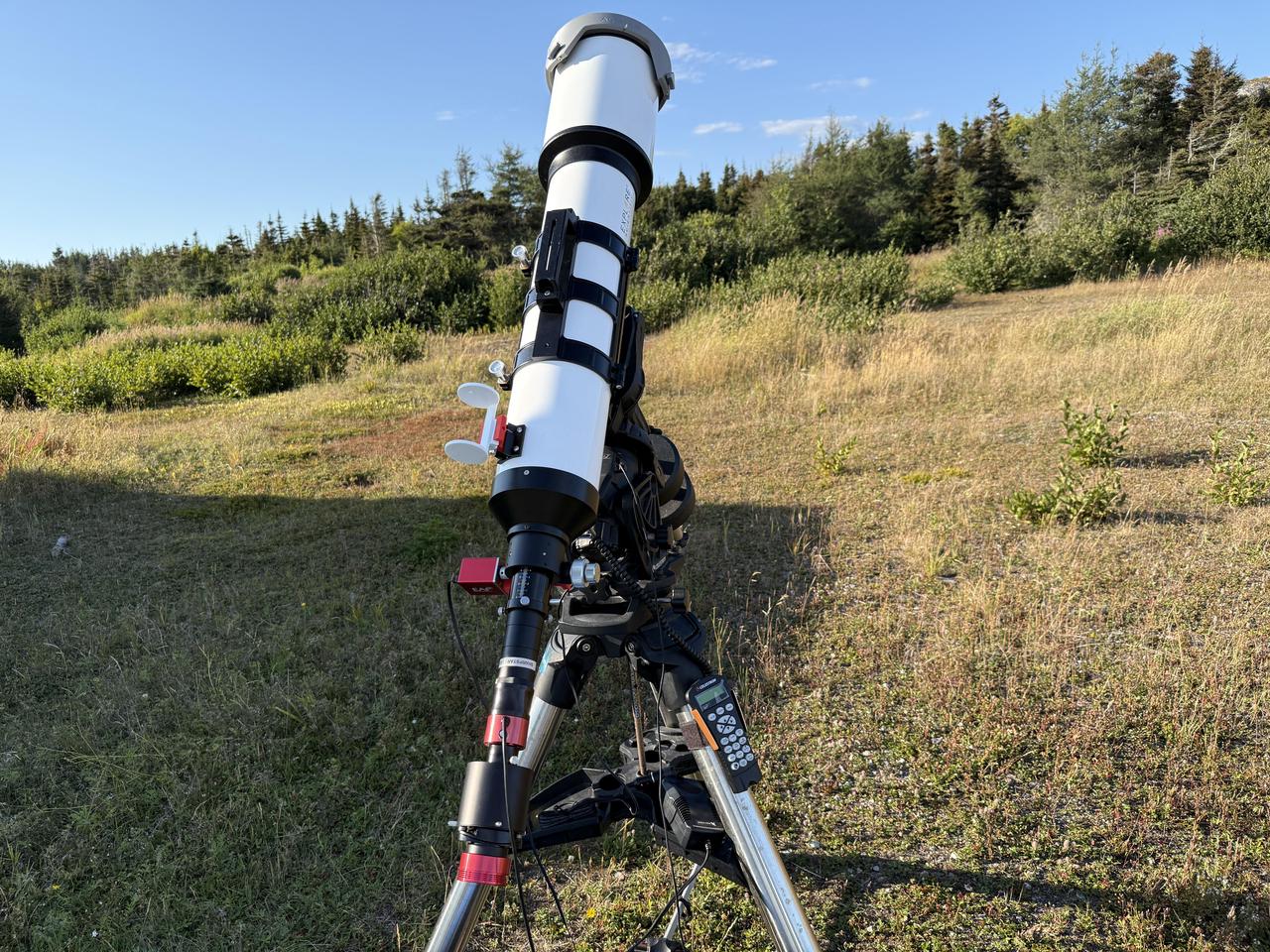
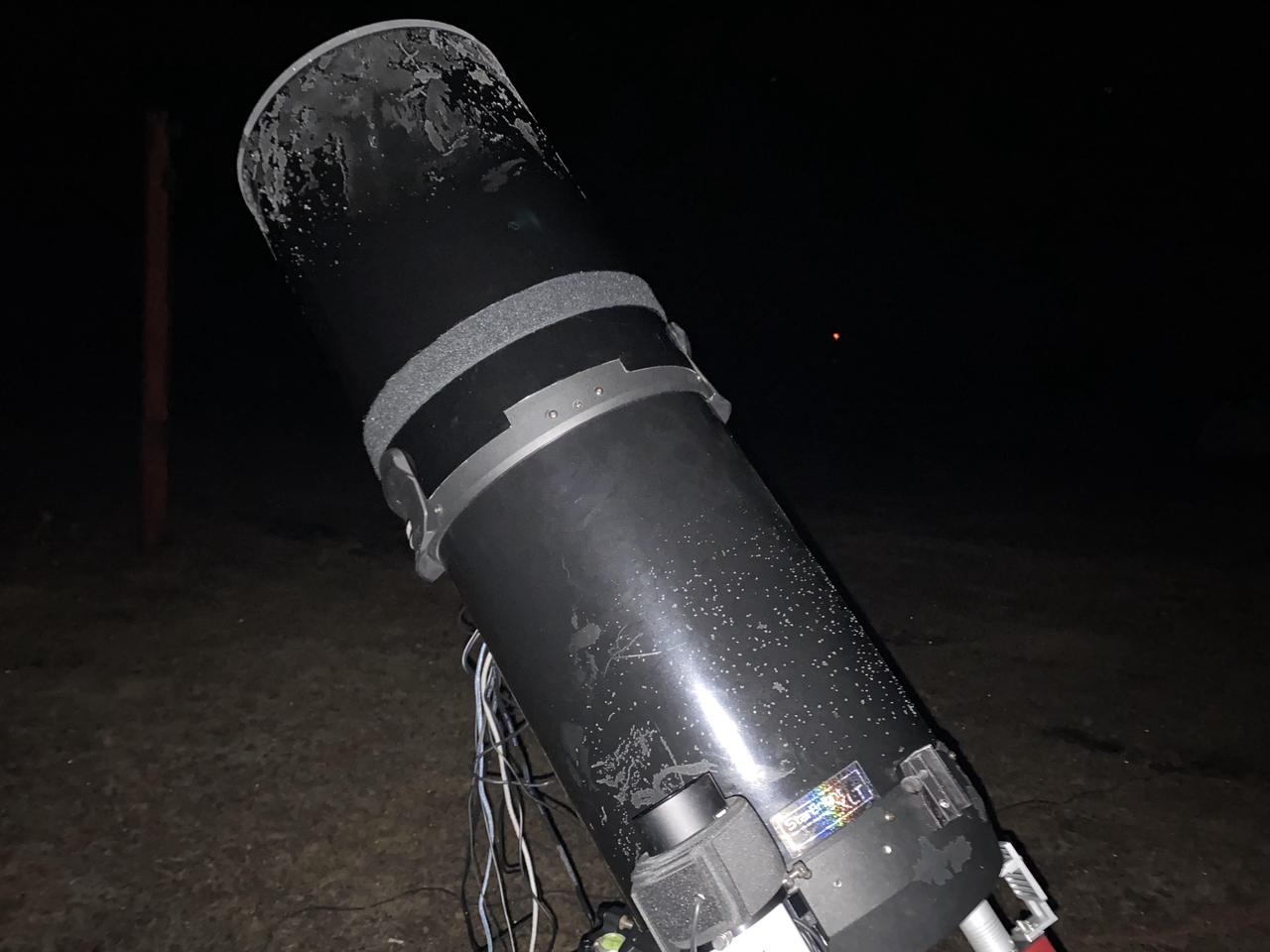
I started astrophotography in 2022 with a full-frame DSLR on an 80mm refractor, with an ASIAIR Pro running everything. Shortly afterward I had the chance to acquire a Celestron C9.25 Edge, and that’s when I bought my first dedicated astro camera, a ZWO ASI294MC Pro. I sold that whole rig fairly quickly to favor wide fields and a faster system: my C11, which is permanently set up with the Hyperstar and the ASI2600MC. That camera was a real leap forward—no amp glow, easier processing, and a more linear workflow than with my earlier configurations.
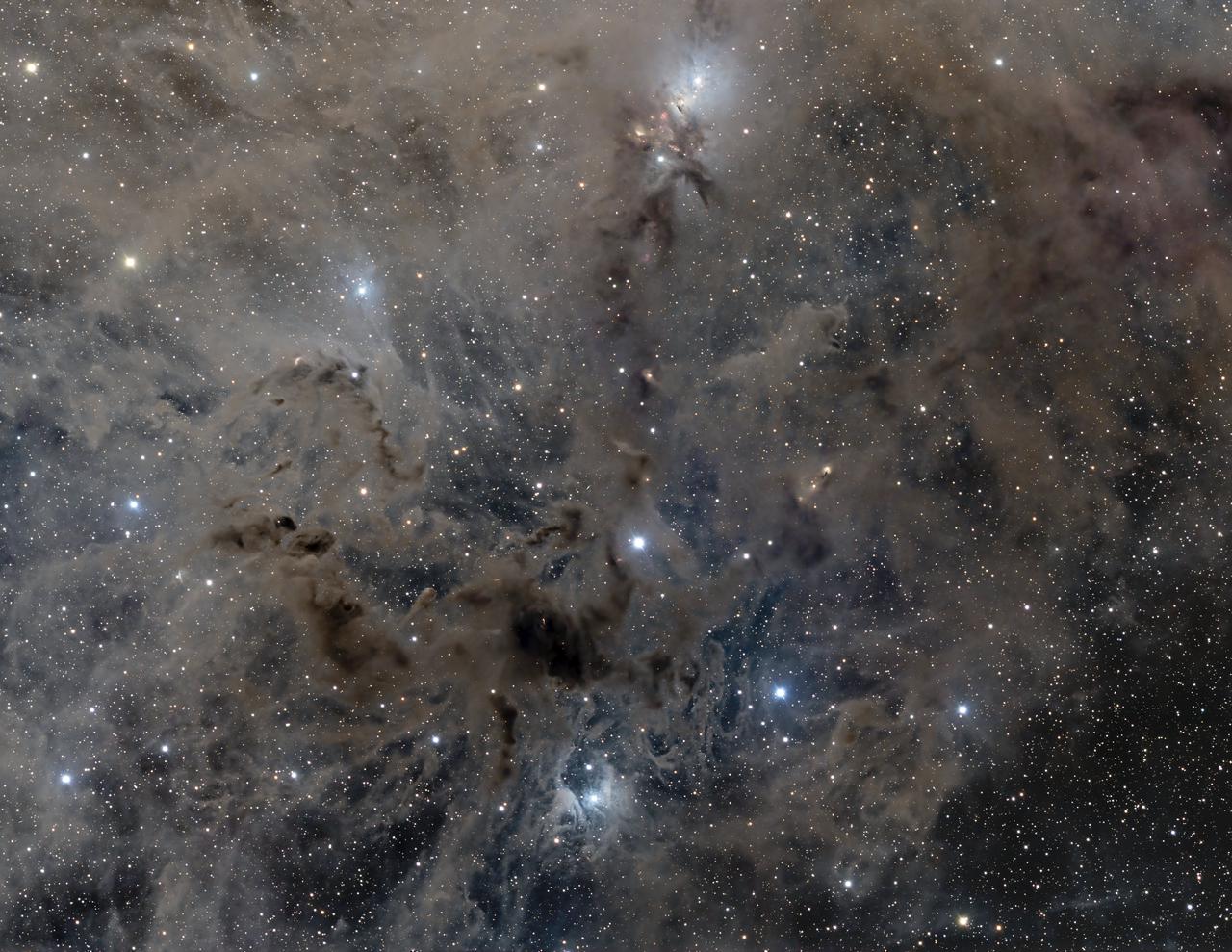
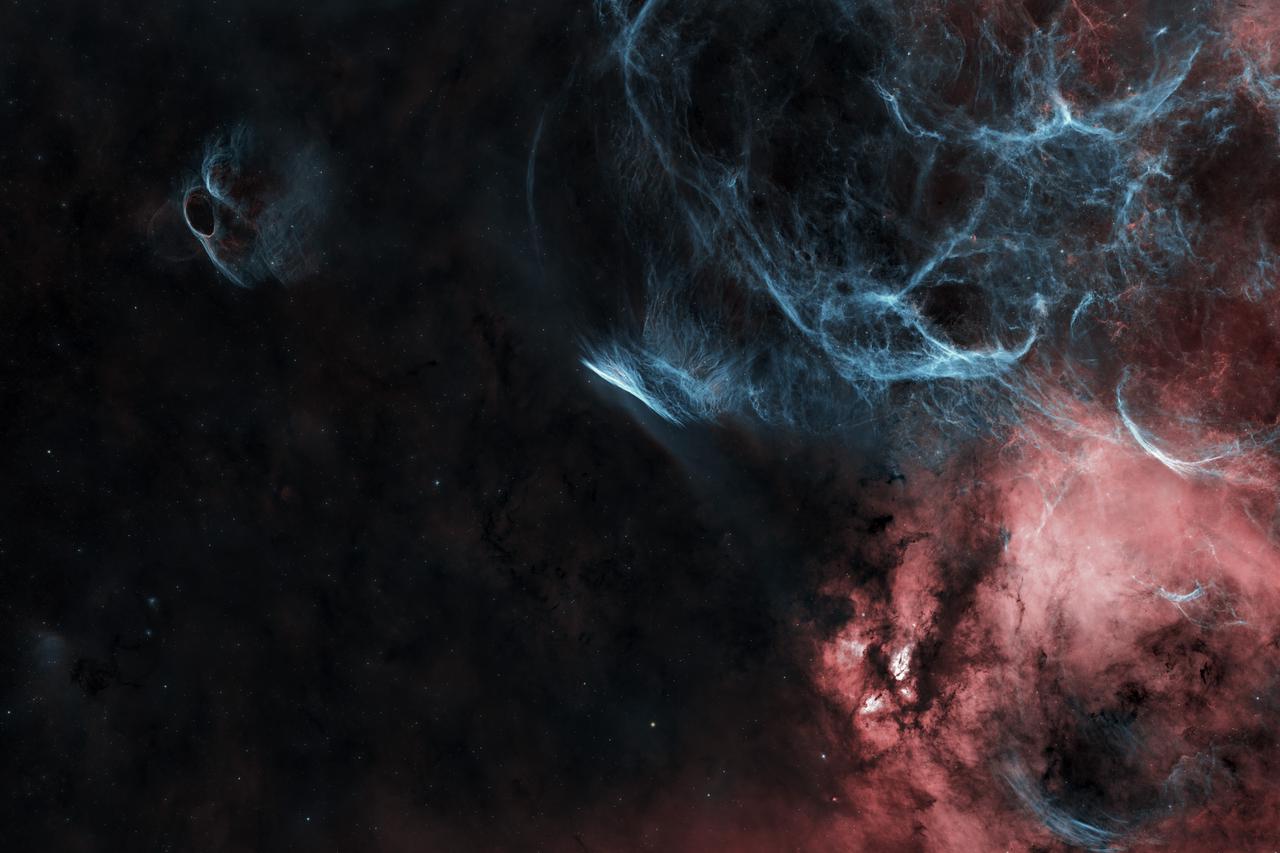
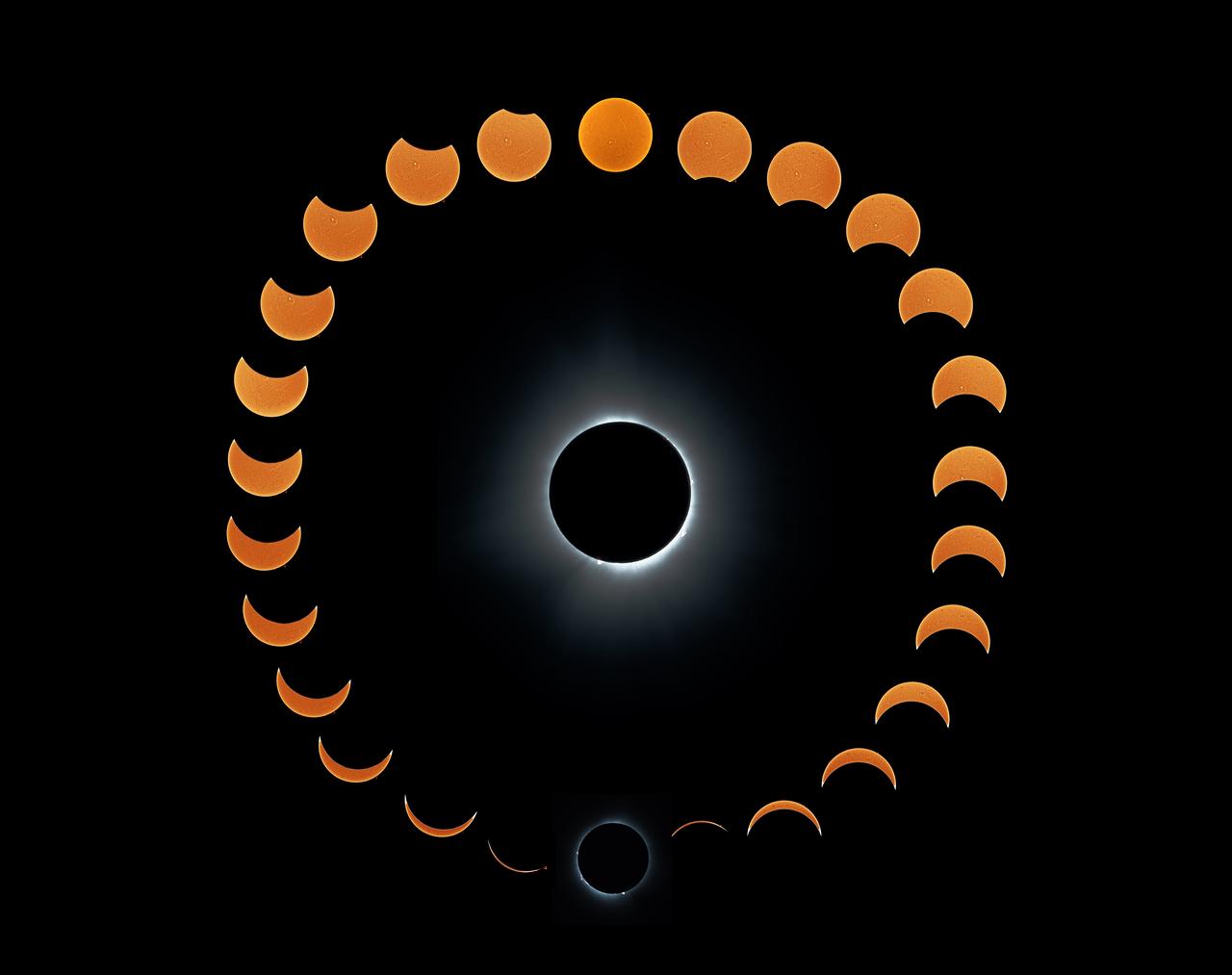
I’m fortunate to be able to shoot under a Bortle 2 sky right from my house. My limiting factors are wind, which is very present in Sheldrake; the cold, with several months often below -25°C; and the aurora. -25°C is the temperature at which I stop operating—the mechanical strain on my mounts becomes too much. The cameras and the ASIAIR, on the other hand, handle it without any trouble. It’s hard to settle on a single night. I’ll mention three moments. One night in May a few years ago, when the seeing was excellent and the Milky Way appeared in relief, giving the feeling of truly diving into the sky. The unforgettable night of May 2024, with the G4-level storm—waves of light crossing the sky in 2 or 3 seconds, the sky turning red at times. It was unforgettable. And finally, the partial eclipse of 2025, which happened at sunrise; I drove 400 km to find a good site. My choice must not have been too bad, because three of us enthusiasts ended up there to photograph it, including an eclipse chaser who had come from Germany. It was windy and below -20°C, but the sight of a crescent sun rising over the horizon will stay with me.
For deep sky, the most anticipated moment is the reveal of the result during the first stretch after stacking. It’s the equivalent of watching the image come up in the developer tray in film photography. One of my interests is dark nebulae, and it’s only at that moment that the success—or failure—of nights of acquisition is revealed.
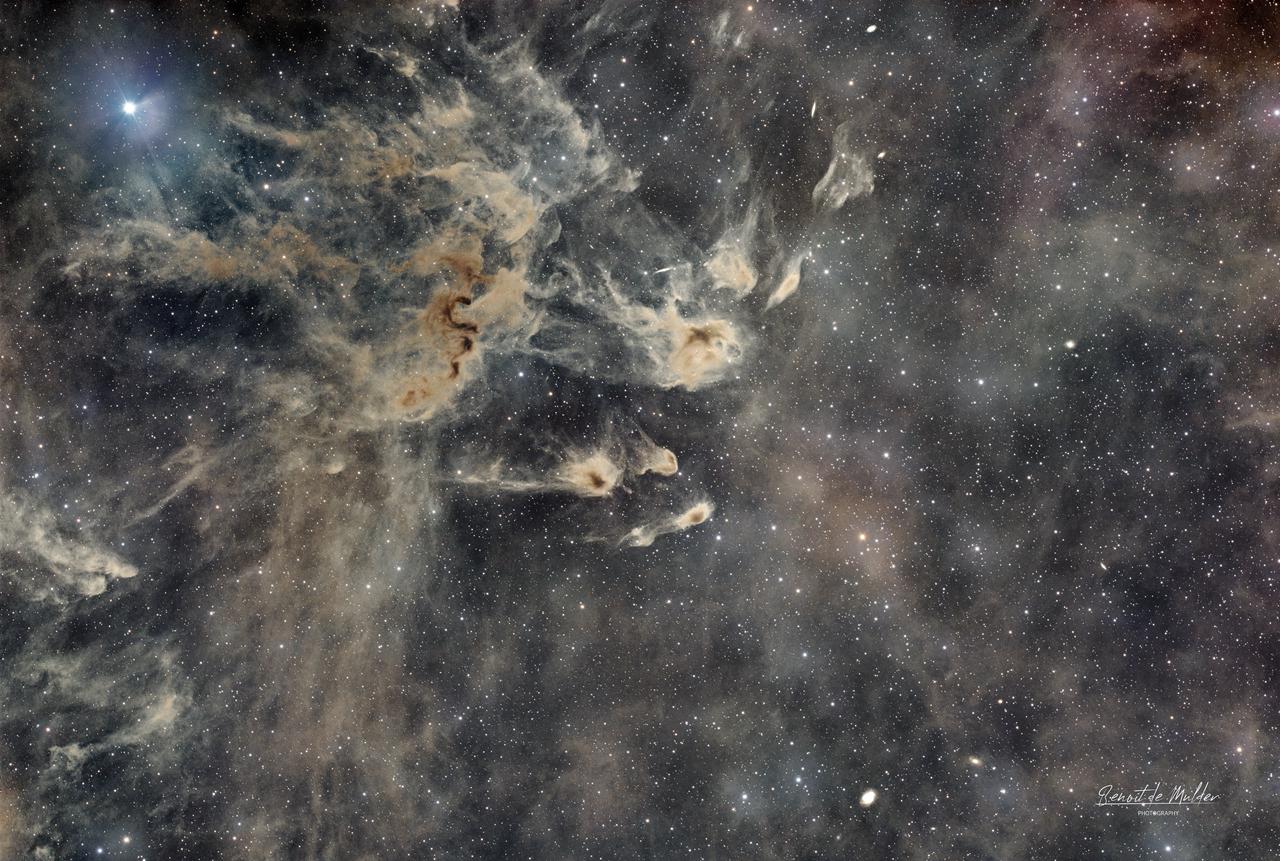
My biggest challenge isn’t related to acquisition; it comes from my northern, maritime environment. Providing stable power to my equipment—which sits on my property and which I set up for every session—turned out to be a real headache. The power from the grid isn’t stable, and using long extension cords amplifies the problem. The cold, with sub-zero temperatures for about five months of the year followed by periods of high humidity, forced me to come up with a homemade solution after several mornings of finding my telescope completely frozen over. I now have a thermally insulated storage box that holds a battery and that has proven its endurance through Canadian winters.
The ZWO gear (ASIAIR, camera, EAF, etc.) has proven its resilience in this environment.
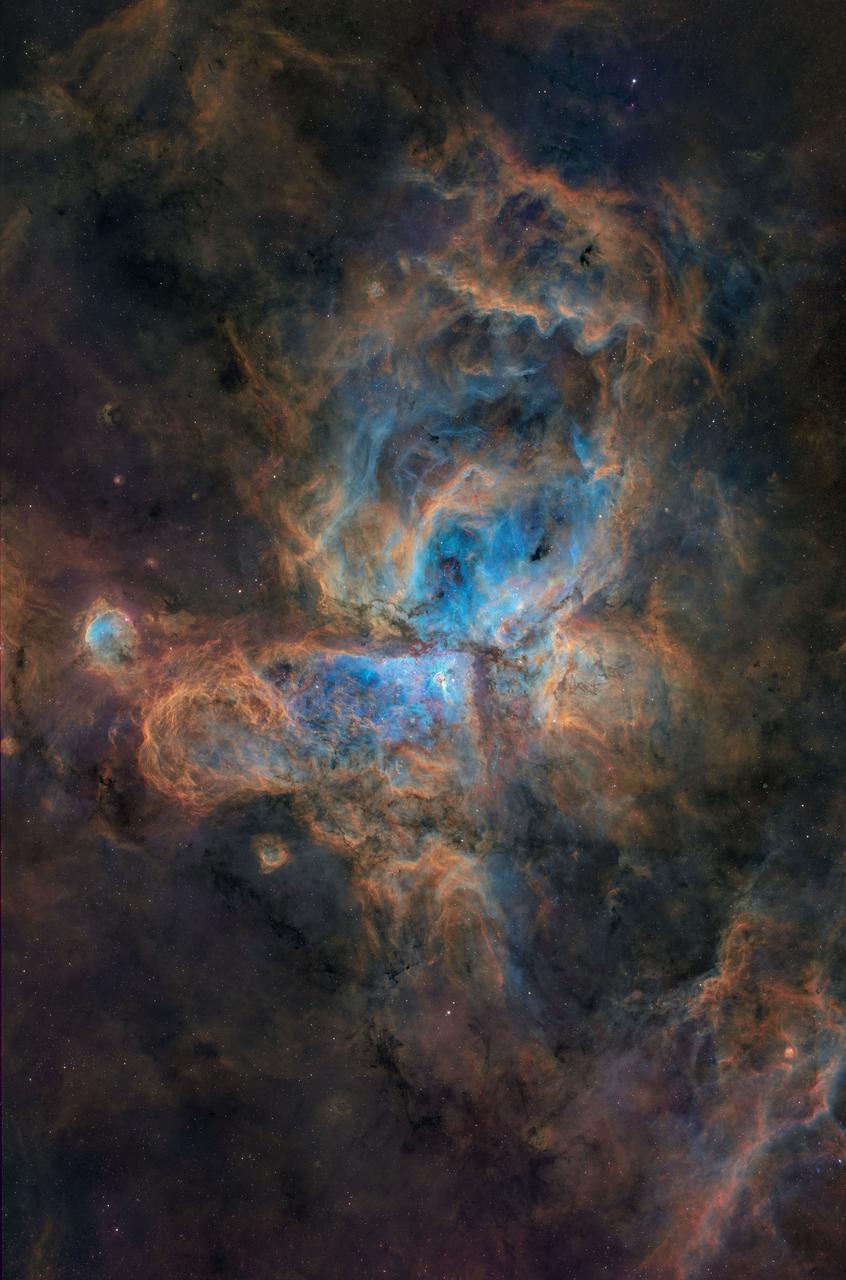
I chose to use PixInsight from the very start. The learning curve is fairly steep at first, but by following tutorials and, above all, by experimenting a lot, I feel like I’m beginning to understand the environment. Once the image is produced, I use DxO PhotoLab for the final adjustments to brightness and curves. For my timelapses, I try to work with batch processing using settings defined on key frames.
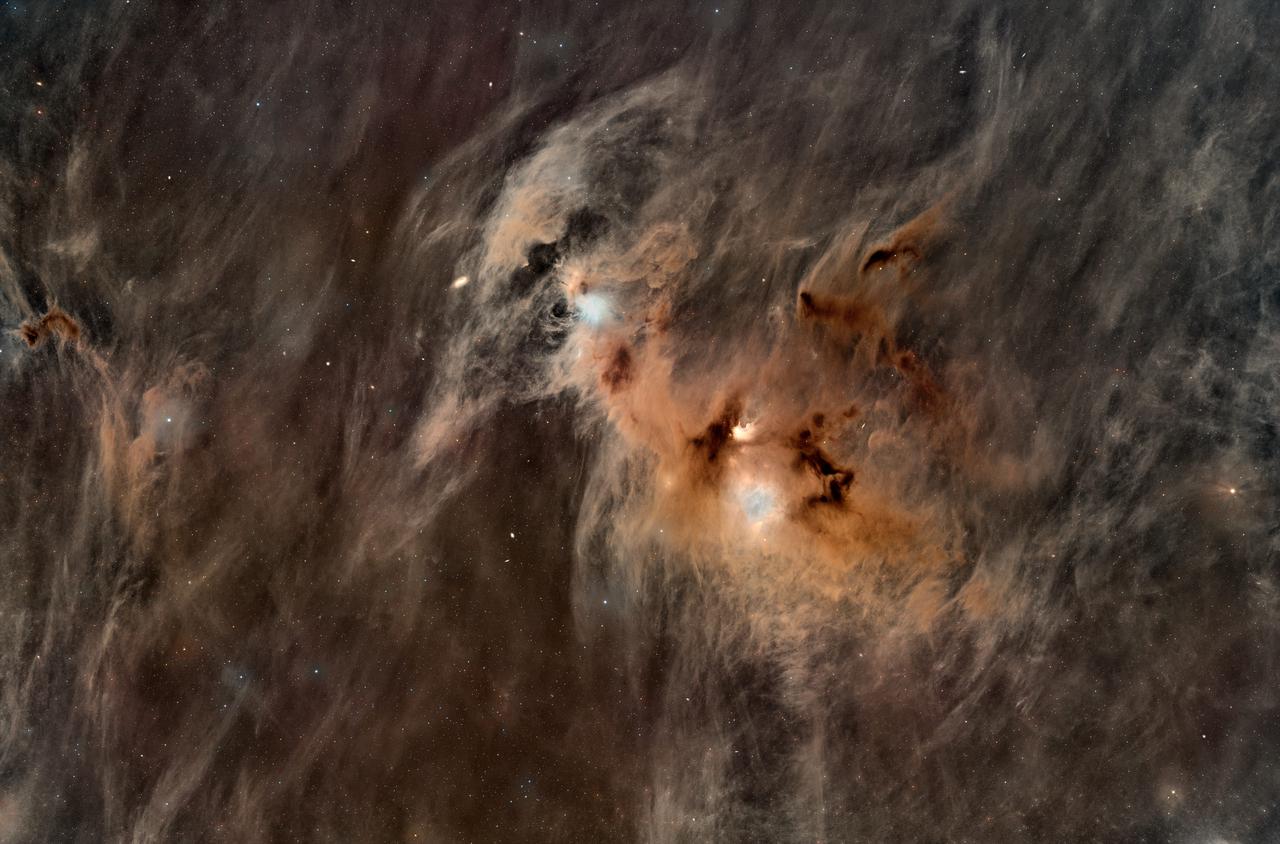
The Achievement
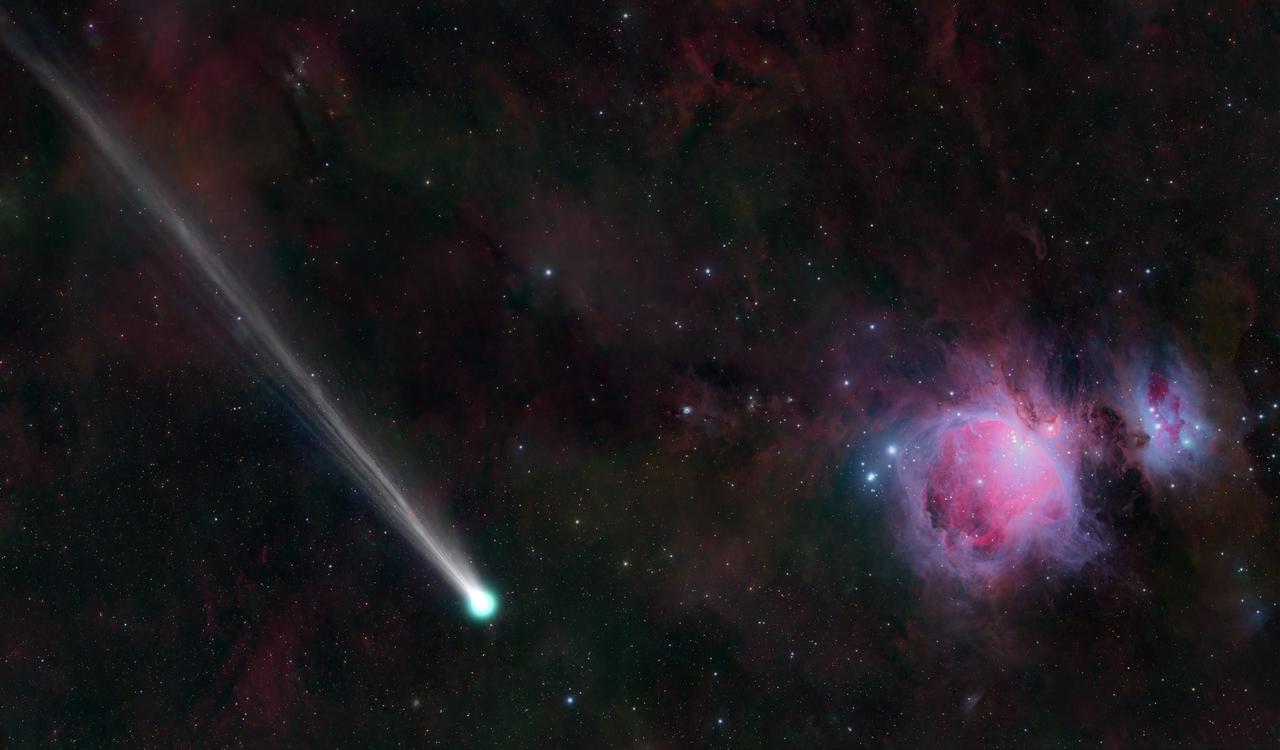
It’s more in terms of a region than a single target. The constellations of Cepheus and Orion are the two I devote at least several nights to each year. These regions are so rich in nebulosity that whatever focal length you use and whatever field you cover, there’s always something new to image. One of my dreams would be a complete, high-resolution mosaic of these constellations, but that’s a project spanning several years. But if I had to single out two recent photos, they would be the one of the Carina Nebula—my first image with over 70 hours of acquisition—and the one of comet C/2025 R3 (PANSTARRS) passing near M42.
I have two projects. The first is to finish a mosaic of the Small Magellanic Cloud—four panels, with roughly 100 hours of integration per panel. The second is to commission, in Sheldrake, a telescope I bought used two years ago now but which has stayed in its box for lack of a mount. It’s an RC14 that will be equipped with a ZWO ASI2600MM camera. I should finally receive the mount this year—though it all also depends on the construction of my observatory.
When I decided to take up astrophotography, I had to relearn everything. ZWO proved ideal for getting started with the ASIAIR Pro and a tablet as a friendly interface with an easy learning curve. The framing and mosaic interface is smooth and superior to the other products I’ve tried. One of my earlier struggles with a laptop was polar alignment in the dead of winter… In a field full of snow, you can’t just set a computer down on the ground… Over time, even though my needs have evolved toward more complex interfaces, I’ve stayed loyal to ZWO for two reasons. The first is the software support: whether I’m using a PC or an ASIAIR, everything works without wasting time. The second is robustness. My ASIAIR, my cameras, EAF, filter wheel, and now the CAA have all been reliable and function in conditions that can be very cold and sometimes very humid, and they’ve proven to be utterly dependable to this day. As for products you might develop, if ZWO could offer a line of flat panels, that would be very welcome.
Recently, a major discovery by an international team of amateur astronomers and scientists has become a huge online hit, and this new discovery is just located in one of the
My name is Julien De Winter (@dwj85), and I live in Belgium. I am a Professor of Chemistry at the University of Mons, where my research focuses on mass spectrometry
Hi! My name is Nicola Bugin and I live in a town in northern Italy called Borgoricco. I’m really happy that my photo of WR-134 has been so successful that
My name is Quentin (@_quentin_g), I am 17 years old, and I live in Nantes, in the west of France. I am currently in a French preparatory class for engineering
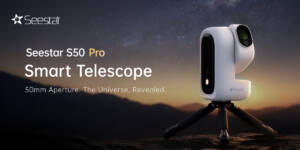
NEW PRODUCT LAUNCH Seestar S50 Pro Now Available: 50mm Aperture. Revealing More of the Universe 50mm Large Aperture · 4K Dual-Lens · One-Tap Post-Processing· Pro-Level Milky Way Shots · Up
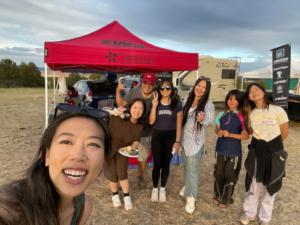
Golden State Star Party 2026 – Friends, Dark Skies, and Perseverance July 11–15, 2026 | Frosty Acres, Northern California Golden State Star Party welcomed astronomers from across California and beyond