
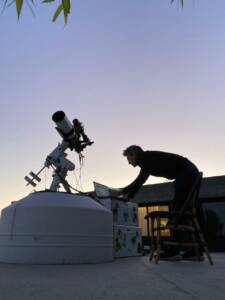
He Started Chasing the Perfect Sky. Now He Helps Others Find It.
What first made you look up at the night sky and want to photograph it? Hi, I’m Nicolas Paladini. I’ve always been fascinated by space and the endlessness of the
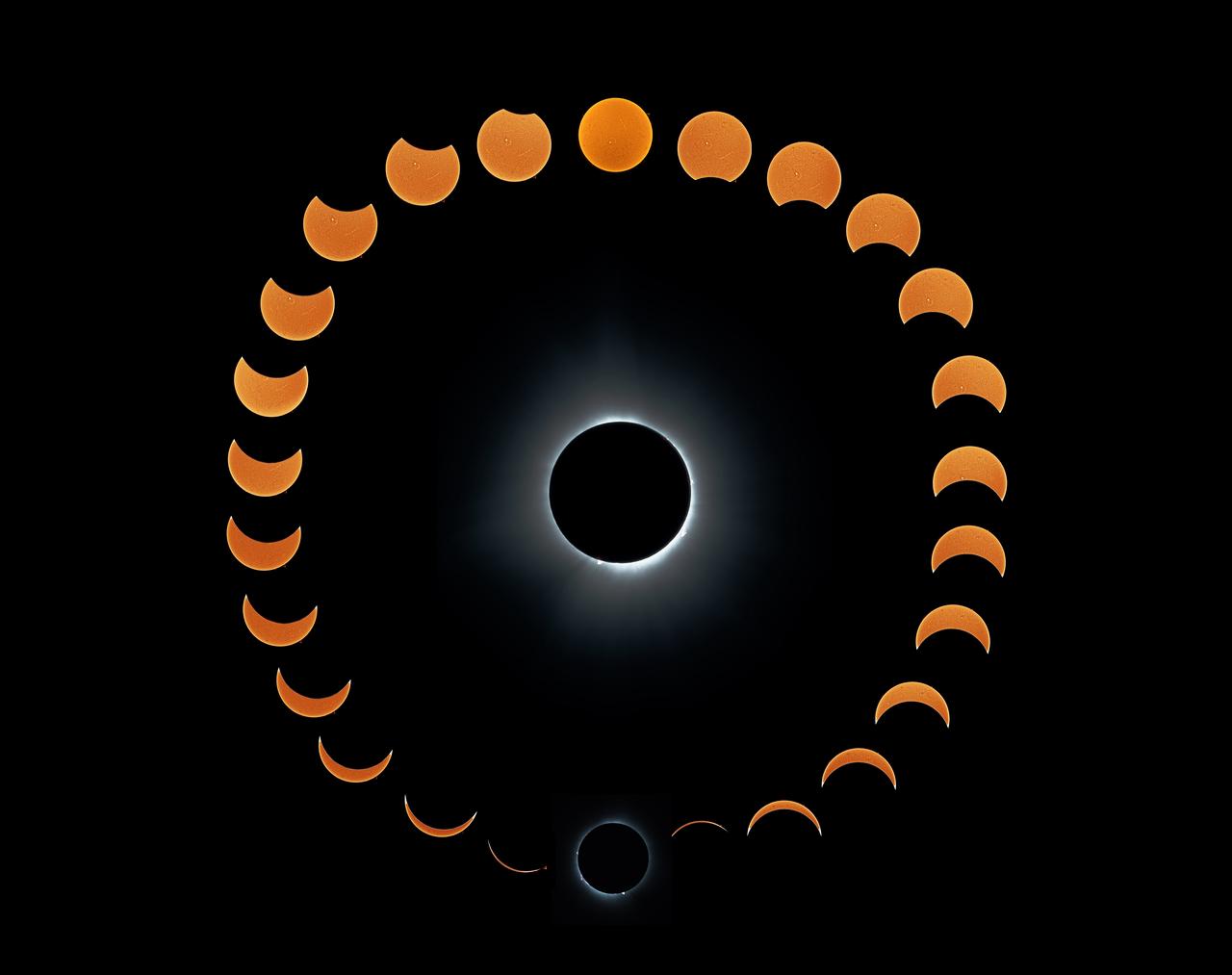
On April 8, 2024, my wife, two of my daughters, and I drove to Beaulac-Garthby, a small municipality in Quebec, Canada, a little under 900 km from our home in Sheldrake. For several days I had been poring over the weather maps to decide where to go for what was turning out to be the first total solar eclipse in Quebec since 1972 — and one that will not happen again in the province before 2106. Across North America the clouds are pretty much everywhere, except for one wide weather corridor about 500 km across, between Montreal and eastern Quebec. Since I can take my car, I load all my gear in with me, no worrying about the weight limit I’d be facing if the trip had to be made by air.
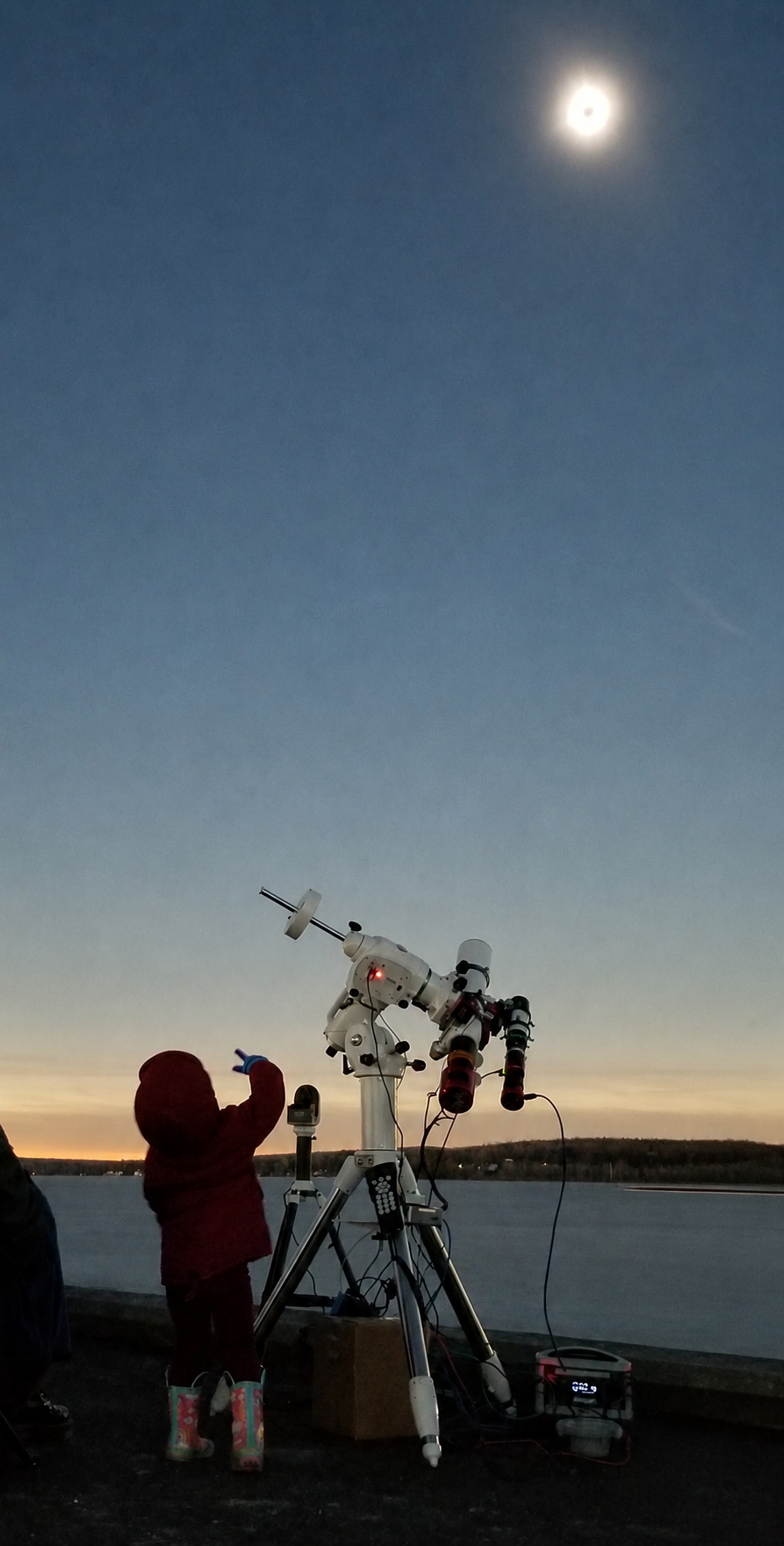
Even though the event takes place in the afternoon, I set up in late morning along the dock that borders Lake Aylmer. It’s April, but the lake is still frozen. The big surface, still snow-covered, will let me watch the Moon’s shadow spread across the ground.
My equipment is made up of two instruments. The first, a William Optics ZS80 refractor fitted with a ZWO EAF, an ASI2600MC camera and, of course, a Baader solar filter mounted in a holder I 3D-printed myself. The second, a Sky-Watcher Evoguide 50DX at f/4.8, with a DayStar Quark Chromosphere H-alpha filter and a ZWO ASI432MM camera for the partial phase. I normally use this camera on the ZS80, but this time the focal ratio will only be f/20.2 instead of f/28.6. It was not ideal, but I had no other option. The mounts I use are a Sky-Watcher EQ6-R and a Sky-Watcher SolarQuest. Acquisition runs from a PC with a Python script I had written and tested many times without a hitch. Power comes from a camping power station with 12 V, USB and 110 V outputs. Storage goes to a 4 TB USB solid-state drive.
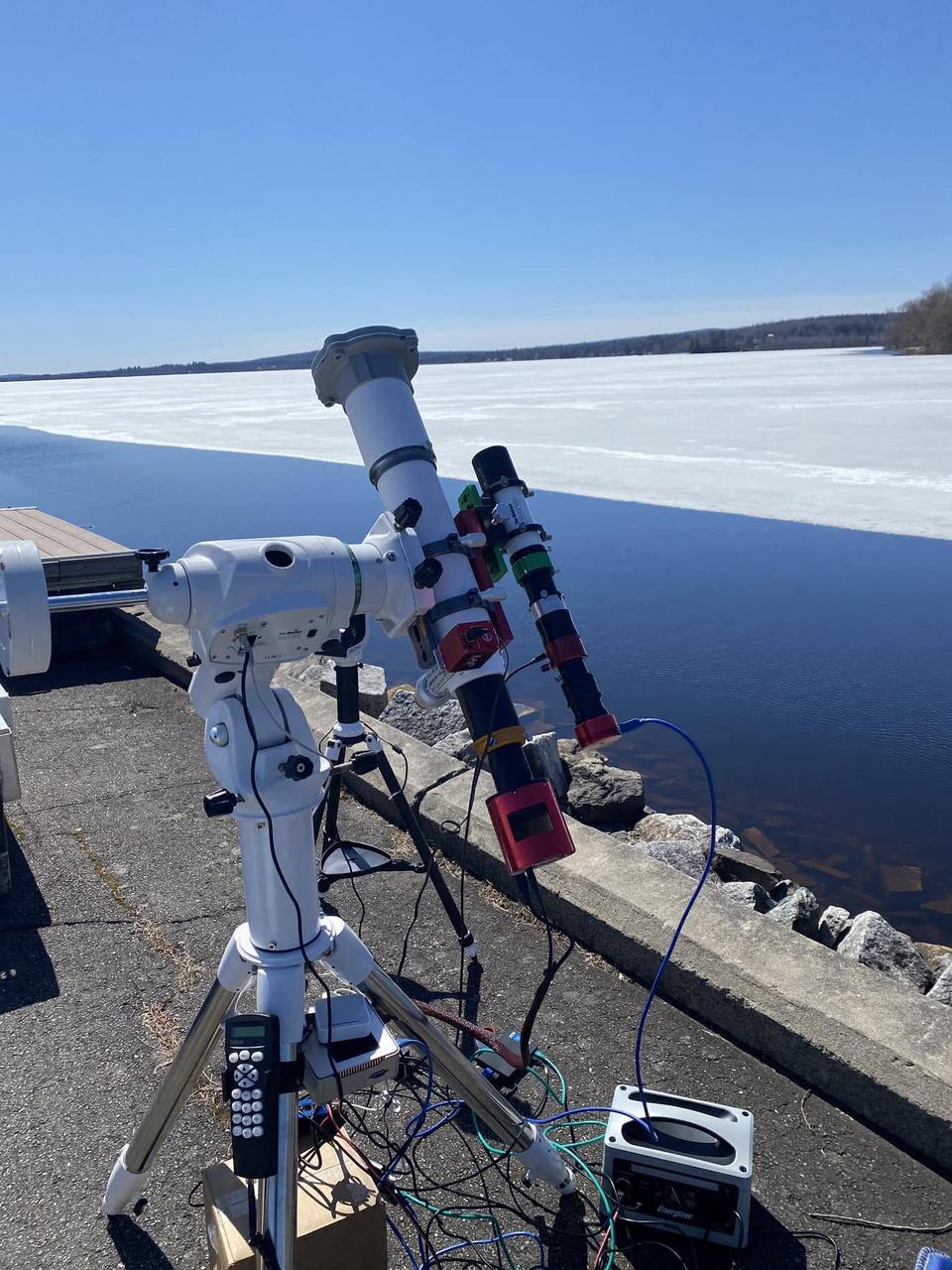
First problem. My SolarQuest mount — the one carrying the Quark and the 50 mm refractor — refuses to acquire a GPS position, which it needs in order to track the Sun… Plan B: I mount the small refractor piggyback on the ZS80 and align the whole thing that way… It works. My equatorial alignment, done with the solar shadow method, looks right, and the unguided mount needs only minimal corrections. I start a simple sequence with the acquisition utility I use: a short 30-second video every two minutes.
People start to arrive, and I’m glad I set up well ahead of time. The eclipse hour is approaching and you can feel a feverish energy in the air. The temperature drops, a light wind begins to pick up, sharpening the feeling. I’m about to launch my script two minutes before totality; it will bracket around each phase of totality — the diamond ring, Baily’s beads, the corona. The moment comes and… bug! Plan C (I’ve already used my Plan B…). Thirty seconds before totality begins, I remove the Baader solar filter from the ZS80; this 30-second figure isn’t universal, it depends on the instrument and on how much risk the photographer is willing to take with their gear.
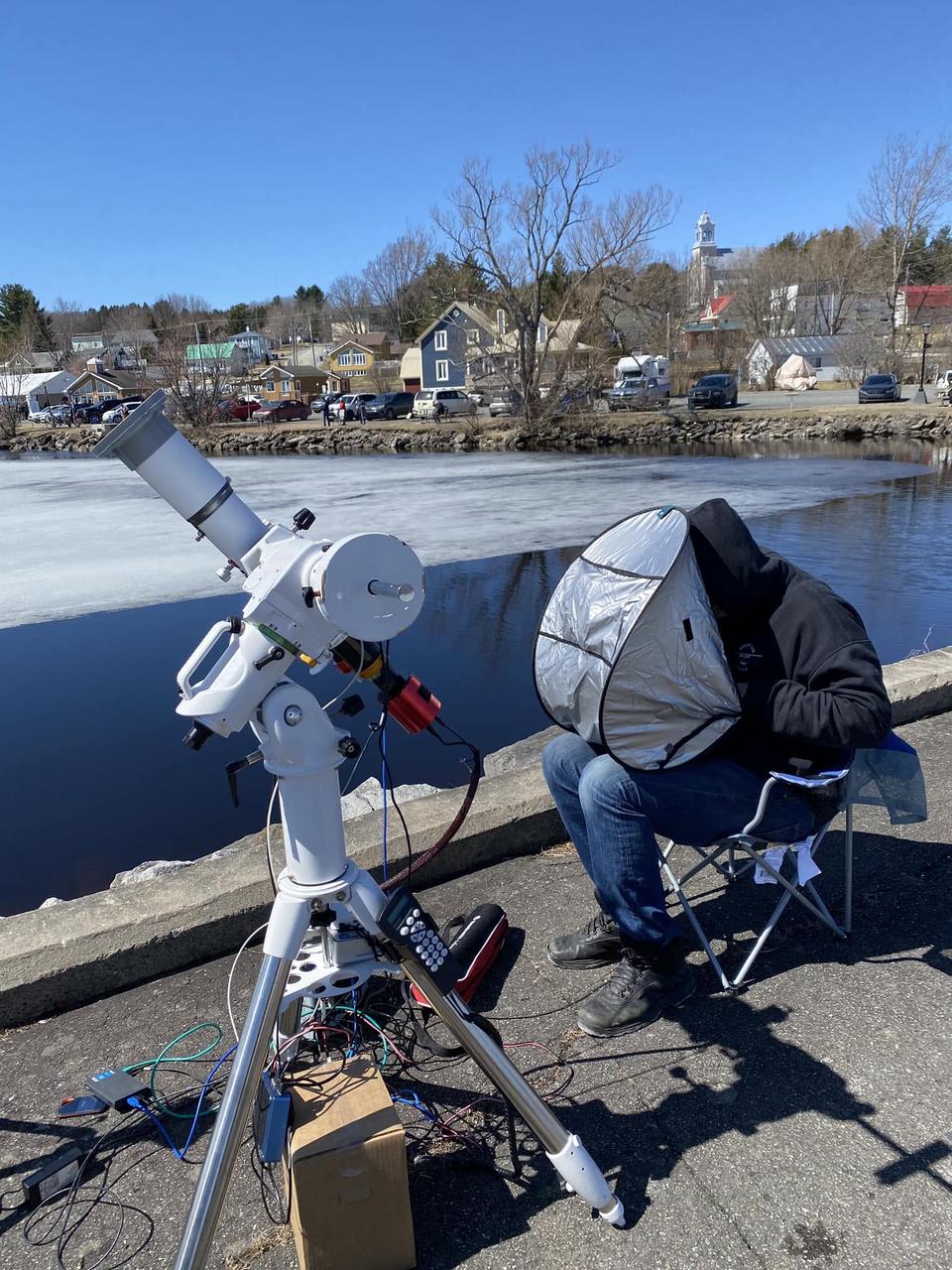
A necessary aside: for visual observation, always keep the filter on the telescope — it’s an essential, vital safety rule, and getting it wrong can cost you your eyesight.
Eclipse glasses are just as indispensable for the phase before totality. I bury my nose in the laptop and, in a scramble, work out the right exposure to start a simple acquisition sequence. The ASI2600MC starts saving frames; I’ve missed Baily’s beads at ingress and the first minute of the eclipse. Whatever the outcome, I’ll have done what I could — it’s time to enjoy the show with my family. Two minutes where time seems to stop, where a black Sun fills the sky. Third contact (C3) arrives and totality ends. I put the solar filter back in front of my refractor. The moment is etched into our memory.
The takeaway from that day: two principles always hold. Murphy’s law — when things go wrong, they can always get worse — and KISS, keep it simple, stupid.
Running acquisition with multiple cameras makes sense, but my mistake was leaning on too many different components: two mounts, two acquisition software systems. Even though I had tested it all many times over, an error can always creep in. The other point, maybe the most important one, is to enjoy the moment. Don’t spend the whole eclipse with your nose glued to your tablet or your computer. The show is all around you, and even if you don’t come home with a single photo of the eclipse, the memories of those moments are worth every photograph in the world.
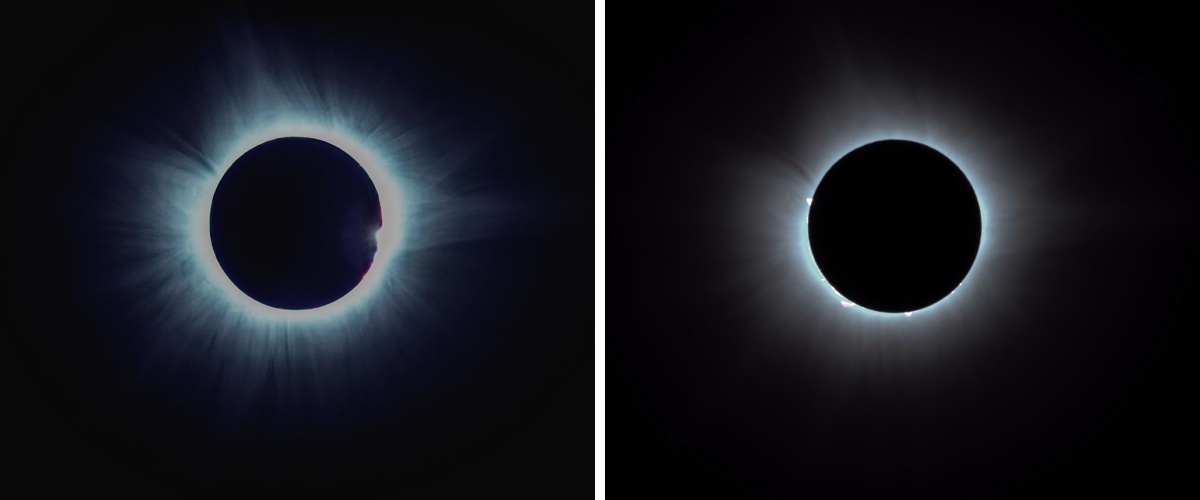
Photo Credit: Telescope & me: Elena Vasileva, Eclipse: Benoit de Mulder
What first made you look up at the night sky and want to photograph it? Hi, I’m Nicolas Paladini. I’ve always been fascinated by space and the endlessness of the
Hello! My name is Gianni Lacroce, and I’m an astrophotographer from Italy.I’m incredibly honored that my image “The Crescent Nebula & the Soap Bubble Nebula” has been chosen of the
How It All Began First of all, a big thank you to all the ZWO staff for choosing my “Abell 39” planetary nebula as the #23 ASIWEEK 2026 winning image.
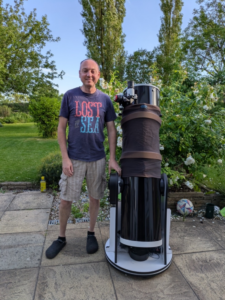
ASIWeek Honors & Your Astrophotography Journey My name is Konstantinos Beis. I am a 48-year-old originally from Athens, Greece, but I have been living in the UK for the past
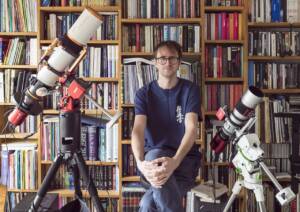
From Seestar to Pro: Dominik Popławski’s Journey into Deep-Sky Imagin Hello. My name is Dominik Popławski. I live in Poland. I’m a painter and computer graphic designer. Astronomy has been