Distributed-Aperture Telescopes: A New Revolution in Astronomy
A new wave of astronomy is here. Instead of relying on a single massive telescope, distributed-aperture systems combine multiple smaller telescopes working together—unlocking new levels of flexibility, sensitivity, and precision.
One standout example is the Condor Array Telescope, led by Stony Brook University. Since 2020, it has been operating at Dark Sky New Mexico Observatory, using multiple 18 cm refractors equipped with large-format ZWO CMOS cameras. A second site at Cerro Chajnantor (5,600m altitude) now pushes its capabilities even further.
Unlike lens-based arrays, Condor uses high-quality refractors + advanced imaging systems for sharper resolution and better control. By stacking many short exposures, it creates deep images while preserving time-resolved data.
Detect short-duration exoplanet transits—even around white dwarfs
With multiple telescopes running different filters simultaneously, it can also analyze light polarization—revealing magnetic fields in extreme environments like gamma-ray bursts within seconds.
But Condor is just one approach.
At El Sauce Observatory, MOTHRA takes a different path—combining 1,100+ telephoto lenses into a unified system. The result? A powerful, ultra-fast optical array capable of detecting extremely faint structures like the cosmic web.
Today, distributed-aperture systems are being widely adopted. Projects such as HATNet / HATPI, Argus Array, and BlackGEM are already contributing to the discovery of exoplanets, supernovae, asteroids, and other transient phenomena.
✨ Key takeaway
Distributed-aperture telescopes are no longer experimental—they represent a scalable, cost-effective, and scientifically powerful approach to exploring the universe.
From mapping faint cosmic structures to capturing fast-evolving events, this technology is redefining the frontiers of astronomical observation.
A new wave of distributed-aperture systems is changing how we explore the universe. Instead of relying on a single massive instrument, these systems combine multiple telescopes working together — unlocking new levels of flexibility, sensitivity, and precision.
One compelling example is the Condor Array Telescope, led by researchers at Stony Brook University.
Supported by funding from the National Science Foundation, the project has been operational since 2020 at Dark Sky New Mexico Observatory, where multiple 18-cm refracting telescopes are mounted together and equipped with large-format ZWO CMOS cameras.
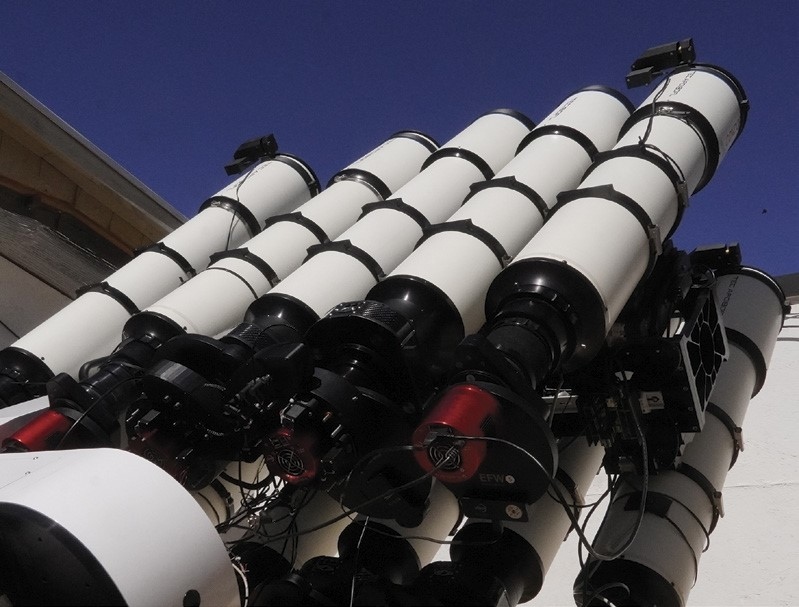
Fig. 1. CONDOR The 10-element version of the Condor Array Telescope, part of the evolution to a larger setup in both New Mexico and Chile. Reprinted from MAY 2026· SKY & TELESCOPE 30.
A second installation has recently been completed at Cerro Chajnantor, at an altitude of over 5,600 meters — expanding the array to new observing conditions and further enhancing its scientific capabilities.
Rather than using hundreds of camera lenses, Condor takes a different approach: it combines high-quality refracting telescopes equipped with advanced imaging systems to achieve sharper resolution and greater control over observations.
Each telescope in the array is fitted with a large-format ZWO CMOS camera, allowing researchers to capture high-quality data across multiple channels. By combining many short exposures, the system can build deep images — while also preserving time-resolved information from individual frames.
This enables Condor to do more than just image faint structures. It can:
Study low-surface-brightness features of the cosmic environment
Track rapid time variability in stars and transient events
Detect short-duration exoplanet transits, even around compact objects like white dwarfs
With multiple telescopes operating simultaneously using different filters, the system can also analyze the polarization of light — offering insights into magnetic fields in extreme environments, such as gamma-ray bursts, within seconds of detection.
While Condor represents one approach to distributed-aperture design, other projects are exploring complementary approaches. At El Sauce Observatory, projects like MOTHRA (Modular Optical Telephoto Hyperspectral Robotic Array) are redefining what’s possible. Instead of relying on a single large aperture, MOTHRA combines over 1,100 telephoto lenses into a unified imaging system — achieving light-gathering power comparable to a multi-meter-class telescope, while operating as an ultra-fast optical system optimized for detecting faint structures. This unique design allows astronomers to detect ultra-faint, low-surface-brightness structures, including the diffuse gas and filaments that form the cosmic web — features that are notoriously difficult to observe with traditional telescopes.
Beyond CONDOR and MOTHRA, the revolutionary distributed‑aperture approach has been widely adopted across modern astronomy, with numerous advanced projects exploring the faint and dynamic universe. These include the HATNET and HATPI arrays, which use wide‑field commercial lenses to hunt for exoplanets, supernovae, and near‑Earth asteroids; the Argus Array, a massive upcoming system with 1,200 telescopes designed for an almost all‑sky survey; the BlackGEM array, dedicated to finding optical counterparts of gravitational‑wave events such as kilonovae; GOTO, which monitors the sky for fast transients; and well‑known surveys like ATLAS and ASAS‑SN, which have successfully detected thousands of supernovae, comets, asteroids, and even interstellar objects. Together, these projects prove that distributed telescope arrays are no longer experimental—they have become a powerful, scalable, and cost‑effective foundation for modern astronomical discovery, opening new possibilities to map the cosmic web, find exoplanets, monitor transient events, and uncover the hidden structure of the universe.
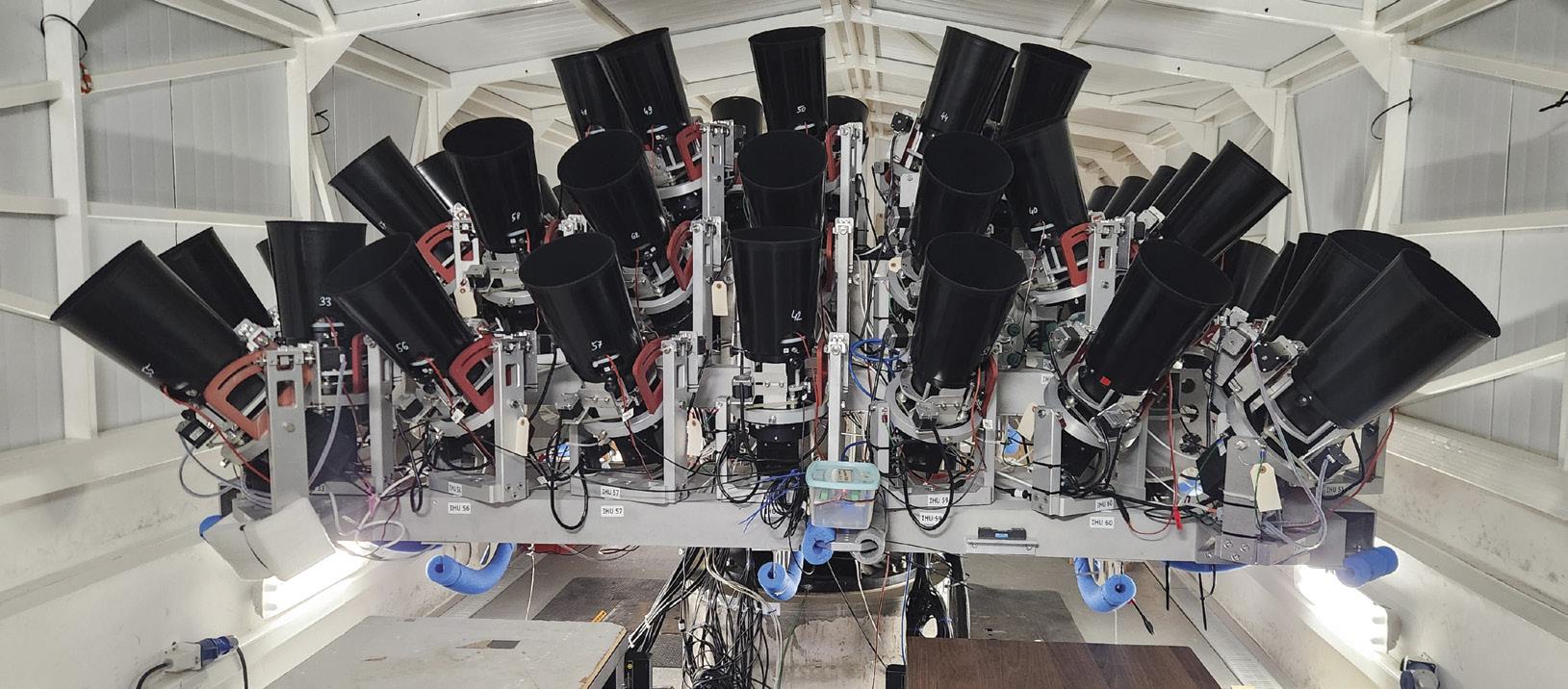
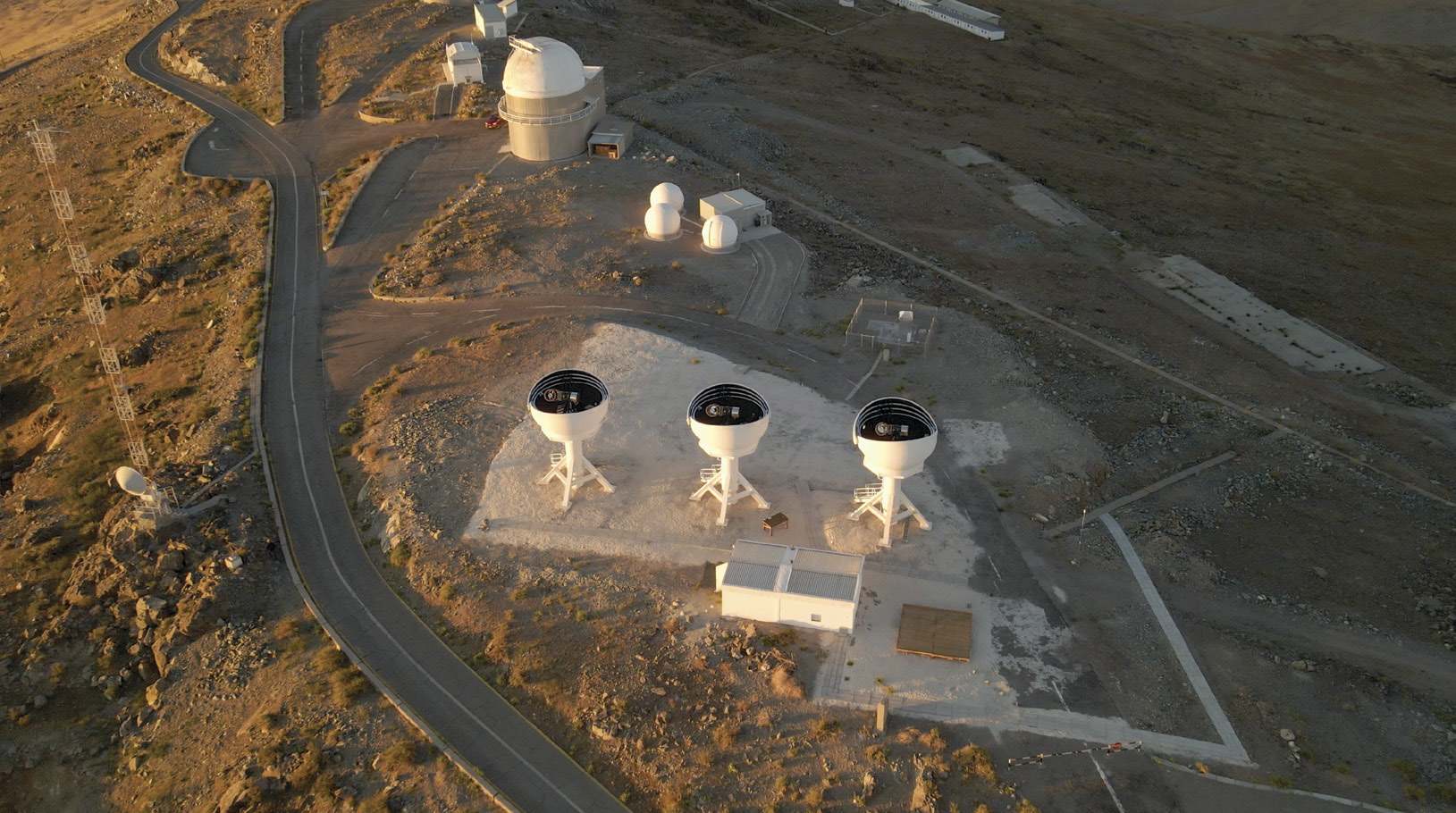
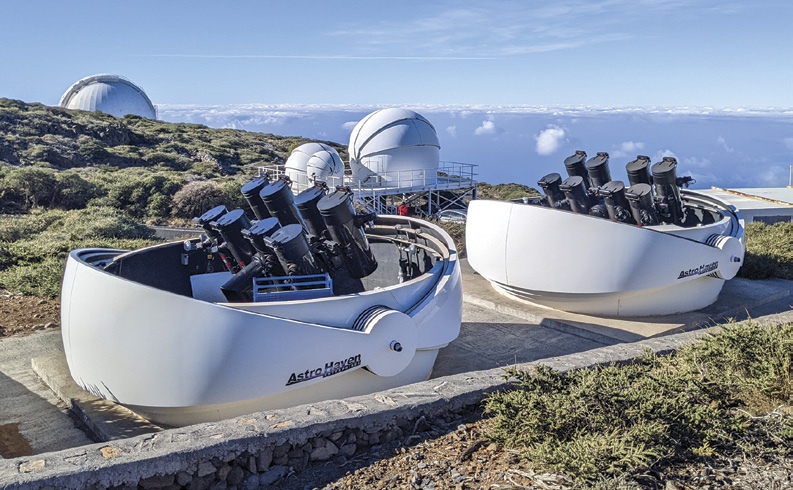
Fig. 2. HATPI ARRAY. Reprinted from MAY 2026· SKY & TELESCOPE 28.Fig. 3. BLACKGEM. Reprinted from MAY 2026· SKY & TELESCOPE 31.Fig. 4. GOTO. Reprinted from MAY 2026· SKY & TELESCOPE 32.
As distributed-aperture systems continue to evolve, they are reshaping not only how we observe the universe, but also how astronomical technology is designed, scaled, and applied.
At ZWO, we closely follow these developments and remain committed to supporting both cutting-edge research and the broader astronomy community. By providing reliable, high-performance imaging solutions, we aim to empower scientists, institutions, and creators alike — contributing to the next generation of astronomical discovery.
Reference: Schilling, G. (2026). Distributed-Aperture Telescopes. Sky & Telescope, May 2026 issue.
ASIWeek Honors & Your Astrophotography Journey My name is Konstantinos Beis. I am a 48-year-old originally from Athens, Greece, but I have been living in the UK for the past
From Seestar to Pro: Dominik Popławski’s Journey into Deep-Sky Imagin Hello. My name is Dominik Popławski. I live in Poland. I’m a painter and computer graphic designer. Astronomy has been
My name is Eric Wright and I’m a 39 year old Astro photographer and cybersecurity technician in the Cleveland, Ohio area (United States). I am the current Secretary for the
Some astrophotographers spend years searching for the perfect image. For Deqian Li, the journey began only in 2024—yet within a remarkably short time, several of his images have already been
Part 1: What’s New in ASIAIR V3.0 New Features Optimized & Fixed Telescope Network is now live No matter where you are, as long as your device is online, you