I am an avid guitar player. I have been playing for most of my life. I like just about any guitar, electric, acoustic, even bass. It is funny how many people I know have tried to learn the instrument at some point in their lives. Most plateau somewhere between the G chord and a power chord. Guitar is one of those instruments that makes that easy to understand. You go through seasons with it. Sometimes those seasons last years. At first it is cowboy chords, a few songs, maybe some bar chords if you are stubborn enough. Then you get into scales, usually pentatonic first, then the rest. Then you start hearing different voicings, different rhythms, different ways to say the same thing. It keeps going. There is always another plateau, another small breakthrough, another point where your hands finally begin catching up to what your ears have wanted for years.
So how is guitar playing like astrophotography? Because this hobby has seasons too. Not just spring, summer, fall, and winter, though that part matters. I mean the repeating seasons of the hobby itself. The sky gives you new subjects each part of the year. Your gear changes. Your skill changes. Your patience changes. Your taste changes. One year you are happy to get a fuzzy Orion Nebula. A few years later you are arguing with yourself over star color, gradients, and why your guiding graph looked perfect while the corners still went wrong. It keeps going. And just like guitar, you can come back to the same subject and say something new with it. Same sky. Same object. Different light, different sensor, different focal length, different judgment.
Astrophotography has its G chords, too. When I first started playing, I knew where to play G in just one place on the neck, and today I can play it everywhere on the neck. There are targets that teach you the same thing in astrophotography if you let them. Some teach framing. Some teach restraint. Some teach calibration. Some teach that no amount of money can replace one calm, clear, dark night. In this piece, I want to walk through ten targets I keep coming back to year after year, starting in spring and moving through summer, fall, and winter, then ending with the two targets that show up every month whether you planned for them or not. So get out your guitar pick, ahem…telescope, and let’s get to it.
Spring
Spring is when the sky gets honest. Winter gives you bright nebulae. Summer gives you rich hydrogen fields and the Milky Way. Spring gives you galaxies, and galaxies do not care how excited you are. They care about good focus, steady seeing, careful framing, and enough integration time to pull real structure out of the background. It is a season that teaches humility fast, which is exactly why I like it.
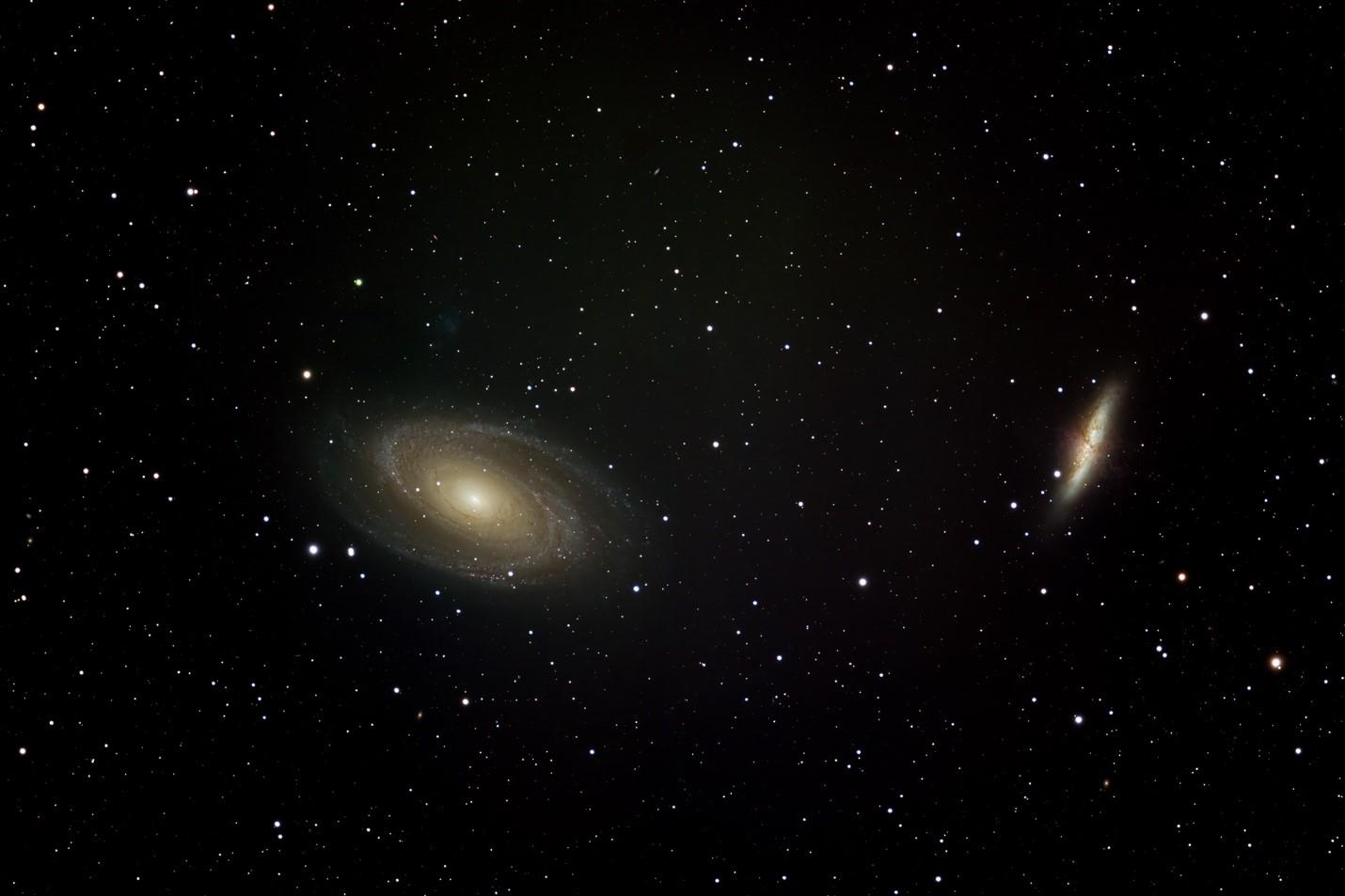
M81 and M82 galaxies captured using a TEC 180 FL telescope and ZWO 6200MM camera, RGB only 300s X 12 frames each, by Richard Harris
M81 and M82 Galaxies
The first spring target I point people toward is the Bode’s and Cigar pairing, M81 and M82. If you want one frame that immediately explains why galaxy season is worth losing sleep over, this is it. One galaxy is broad and orderly. The other looks like it has been roughed up by the neighborhood, which in a sense it has. They make a satisfying pair because you do not need to explain to your eyes what is going on. You can see the difference right away. In the same field you get graceful spiral structure on one side and a stretched, brighter, rougher profile on the other. That is a good night in one composition.
From a gear standpoint, this is one of the more forgiving galaxy pairings if you choose your focal length with some common sense. A small refractor in the 250mm to 500mm range works very well with a one shot color camera like a ZWO ASI533MC Pro or ASI2600MC Pro. If you are using a larger refractor or an 800mm class reflector, the pair still looks good, but on some sensors you start to give up the pleasing context around them. This is exactly the sort of spring target where the Seestar S30 Pro makes sense without forcing the issue. Its 160mm tele lens is not going to turn M81 into a close-up galaxy portrait, but it does give this pair room to breathe in one frame, and that matters. Beginners often chase magnification before they learn composition. M81 and M82 are a good cure for that.
My real advice on this pair is simple. Favor seeing over ambition. If the air is soft, do not imagine that a longer focal length will save you. It will only magnify your disappointment. Keep the galaxies high, be patient with total exposure time, and do not oversharpen tiny details into plastic nonsense in processing. If you want to push further later, a monochrome camera with luminance and a little hydrogen data on M82 can be rewarding, but you do not need that to make a frame worth keeping.
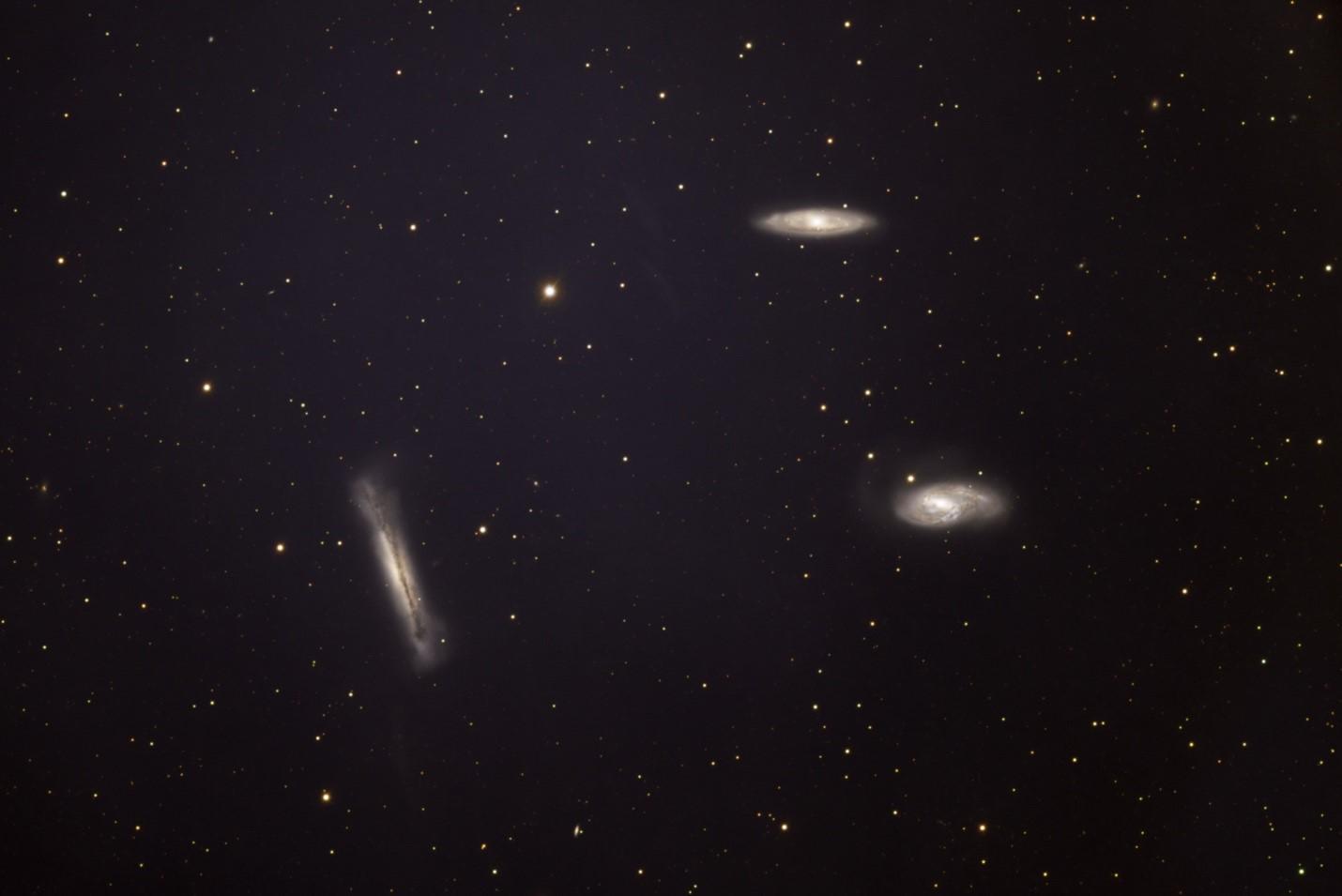
Leo Triplet galaxies captured using a RASA 11 telescope and QHY268C camera on the ZWO AM7 mount, 2 hours total exposure, by Richard Harris
The Leo Triplet
The second spring target on my list is the Leo Triplet. This is one of those images that makes people feel like they have crossed a line in the hobby. Three galaxies in one frame, each with its own shape, its own attitude, and its own lesson. M65 is composed. M66 looks more animated. NGC 3628 brings the long, flatter profile that balances the group. When I think of spring as a season, this trio is right there with it.
You can shoot the Leo Triplet with more than one kind of setup, but I think the sweet spot for most people is a telescope somewhere around 400mm to 800mm, depending on sensor size. An APS C camera like the ASI2600MC Pro on a mid focal length refractor gives a very balanced frame. A square sensor camera like the ASI533MC Pro on a scope around the 500mm range is often a comfortable match, too. If you are using the Seestar S30 Pro, you can still capture the trio, but here is where honesty matters. You will get a respectable small field composition, not a deep close study with dust lane drama. And that is fine. There is no shame in letting a target teach you what your current imaging scale is good at.
The better lesson with the Leo Triplet is not just focal length. It is sky quality. Spring galaxies respond to dark, transparent sky and stable air far more than they respond to clumsy overprocessing. Keep your subs clean, stack enough data to separate the galaxies from the background with some grace, and keep your star field under control. I have seen more spring galaxy images ruined by impatience in processing than by any camera limitation. Let the data breathe. If the faint outer arms are not there, do not invent them with contrast sliders.
If you own a longer focal length rig, spring is still the season when M51, the Whirlpool Galaxy, starts whispering at you, and eventually you should listen. But I like starting with M81 and M82, then the Leo Triplet, because those two targets teach you spring without asking you to prove yourself every minute. They are accessible, photogenic, and honest. That is enough.
Why the best astrophotography targets for every season come alive in summer
Summer is when the hobby gets social and demanding at the same time. The weather is easier on the body but harder on discipline. Darkness comes late. Humidity creeps in. Dew becomes a real problem. Mosquitoes remind you that the universe is not the only thing trying to feed at night. But summer also gives you the richest stretch of targets in the year if you like nebulae and wide sky work. This is where broad fields, red hydrogen, and common sense gear choices pay off.
Milky Way Core
My first summer target is not even a single deep sky object. It is the Milky Way core. And every year I watch people overcomplicate this. The Milky Way core is not a contest to see who can buy the most hardware. It is a lesson in timing, moon phase, location, and composition. If you live under suburban or city sky, your first improvement is usually not a new camera. It is a darker place to stand.
For a classic landscape style Milky Way image, a mirrorless or DSLR body with a fast lens in the 14mm to 35mm range on full frame, or roughly 10mm to 24mm on APS C, is the straight answer. If you want more structure in the core and you are willing to track, then 50mm to 135mm becomes very interesting. What is nice about the Seestar S30 Pro here is that it gives you another path. The wide lens and Milky Way stitching modes make it a practical little field companion for this kind of summer work. That does not replace a dedicated landscape setup with a fast interchangeable lens, but it absolutely lowers the barrier if you want a tracked, stitched, approachable result without hauling a larger rig.
The common mistake with Milky Way core work is to think detail alone makes the image. It does not. Foreground choice matters. Horizon haze matters. Moon phase matters. Restraint matters. A plain weathered barn under the right sky will beat a technically cleaner image with no composition every time. If you use the Seestar, let it do what it does well. Use it for the broad stitched sky work, let the tracking help you, and do not demand from it the sort of foreground artistry that still belongs to a more traditional landscape workflow.
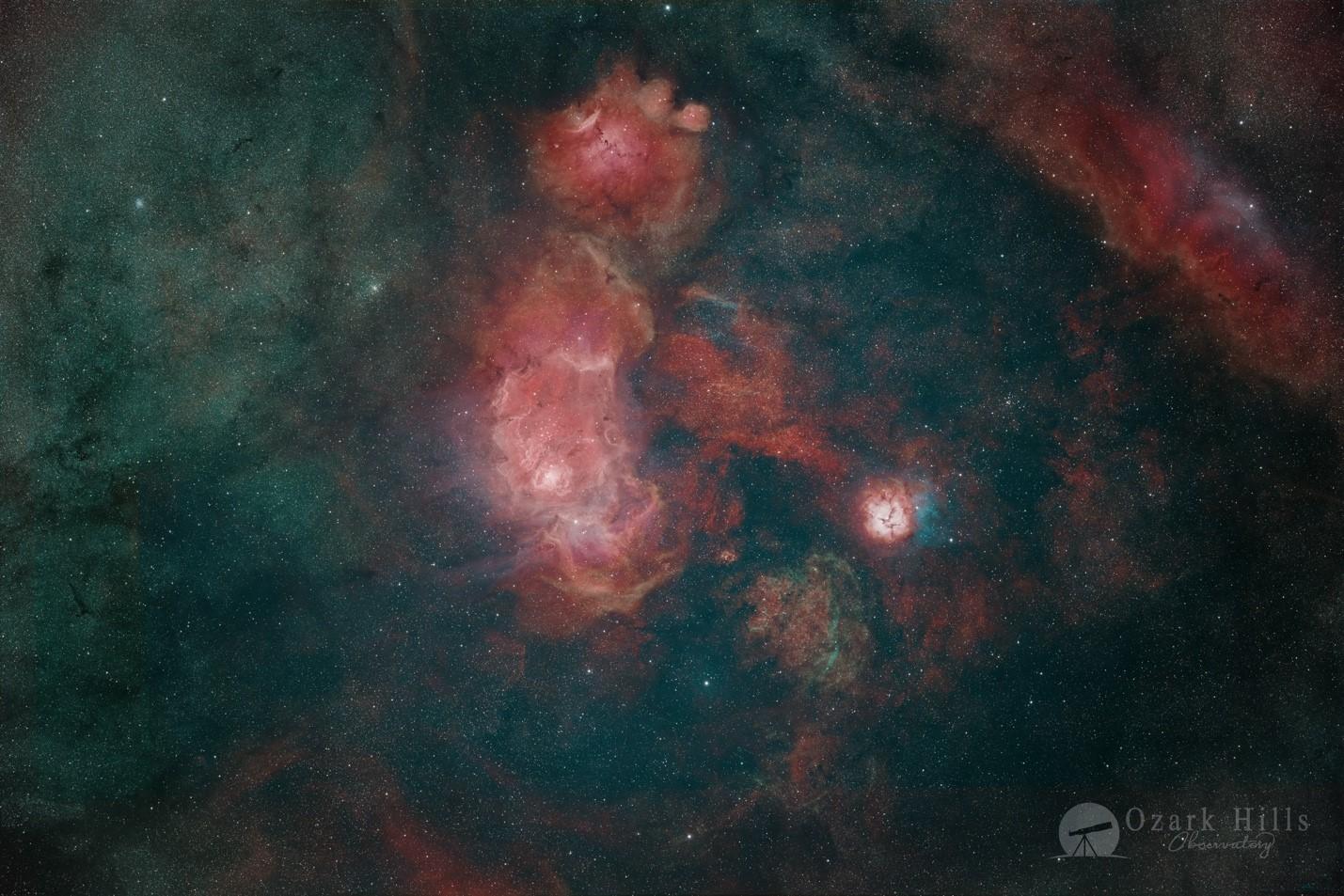
Lagoon and Trifid Nebulae captured using a Takahashi FSQ-106EDX4 astrograph and the ZWO 6200MM camera on the AM5 mount, 6 hours total exposure, by Richard Harris
Lagoon and Trifid Nebulae
The second summer target is the Lagoon and Trifid pairing. If spring is the season of subtlety, this is the season of payoff. Both objects sit in a rich part of the sky, and they reward short to medium focal lengths in a very satisfying way. In a single frame you get the broad pink glow of the Lagoon and the mixed structure of the Trifid, with enough surrounding stars to keep the whole thing feeling like a place rather than a specimen in a jar.
For most imagers, I think 135mm to 300mm is the sweet range here, especially with APS C or one inch class sensors. A compact refractor around 250mm to 400mm with a cooled one-shot color camera like the ASI533MC Pro or ASI2600MC Pro is excellent. With a monochrome camera and narrowband filters, you can go deeper still, particularly from light polluted locations. But this is one of those targets where a color camera already gives you a lot because the structure is strong and the field is generous.
This is also, to my eye, one of the most natural fits for the Seestar S30 Pro’s tele lens. At 160mm, it is short enough to take in the neighborhood and long enough to show that you are not just photographing a red smudge. In fact, if someone told me they wanted one summer deep sky image to justify carrying a Seestar on a trip, the Lagoon and Trifid together would be high on my list. You can set it up quickly, let the stacking build, and come away with a result that feels like real astrophotography instead of novelty astronomy.
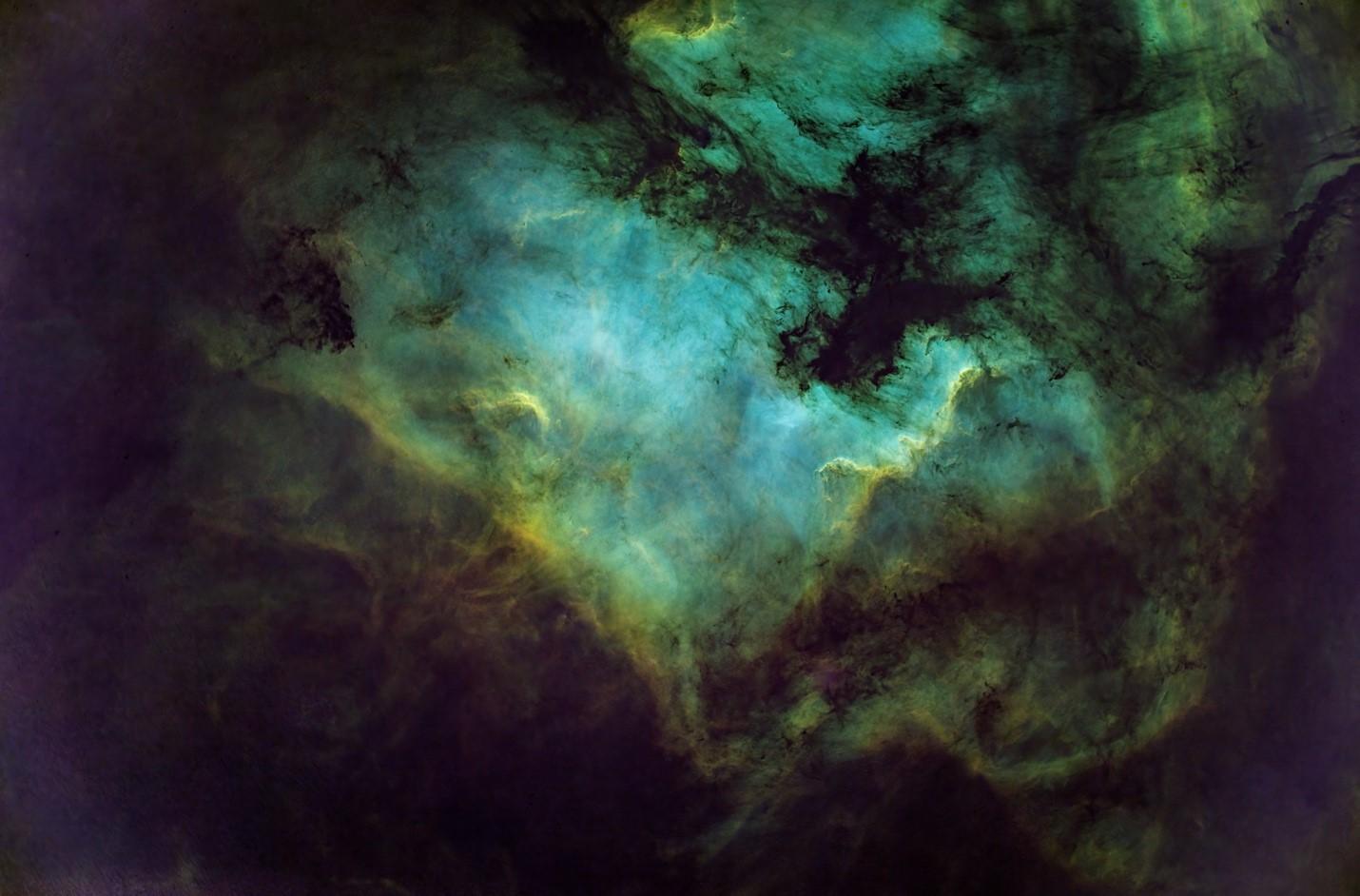
Starless North American Nebula captured using a Takahashi FSQ-106EDX4 astrograph and a ZWO 6200MM camera on the AM5 mount, 3 hours total exposure, by Richard Harris
North American and Pelican Regions
The third summer target I keep recommending is the North America and Pelican region in Cygnus. This is one of those broad summer fields that teaches you a good truth about focal length. Bigger is not always better. Some targets want room. This pair wants room. If you try to shoot it too tight, you start cutting off the story. The North America shape itself is large and recognizable, and the Pelican beside it gives the frame reason to exist as a pair.
A camera lens or short refractor in the 100mm to 250mm range is often just right. A modified DSLR works beautifully here, and so do cooled one shot color cameras with a dual band filter. If you live under city glow and want to do it seriously, a monochrome camera like the ASI2600MM Pro with narrowband filters is hard to beat. But again, this is where the Seestar S30 Pro earns a natural mention. Its field is well matched to wide and medium targets, and if you want the full region with breathing room, the built in mosaic mode is not a gimmick. It is exactly the sort of practical feature this target can use.
Summer does demand some field discipline. Keep dew under control. If your gear has anti dew capability, use it. If it does not, plan for heaters. Do not pretend humidity is not there. Also remember that summer sessions are shorter than winter sessions. That means planning matters more. Choose one real target and shoot it properly instead of trying to capture half the catalog because the weather finally turned warm.
Fall
Fall is when the sky starts feeling generous again. The nights get longer. The air often steadies down. The gear is more pleasant to handle. There is less of the frantic late sunset feeling you get in summer and less of the battery misery you get in winter. Fall is also where a lot of people start making prettier images, not because they suddenly became better imagers in September, but because the targets are broad, well placed, and forgiving if you match your focal length to them.
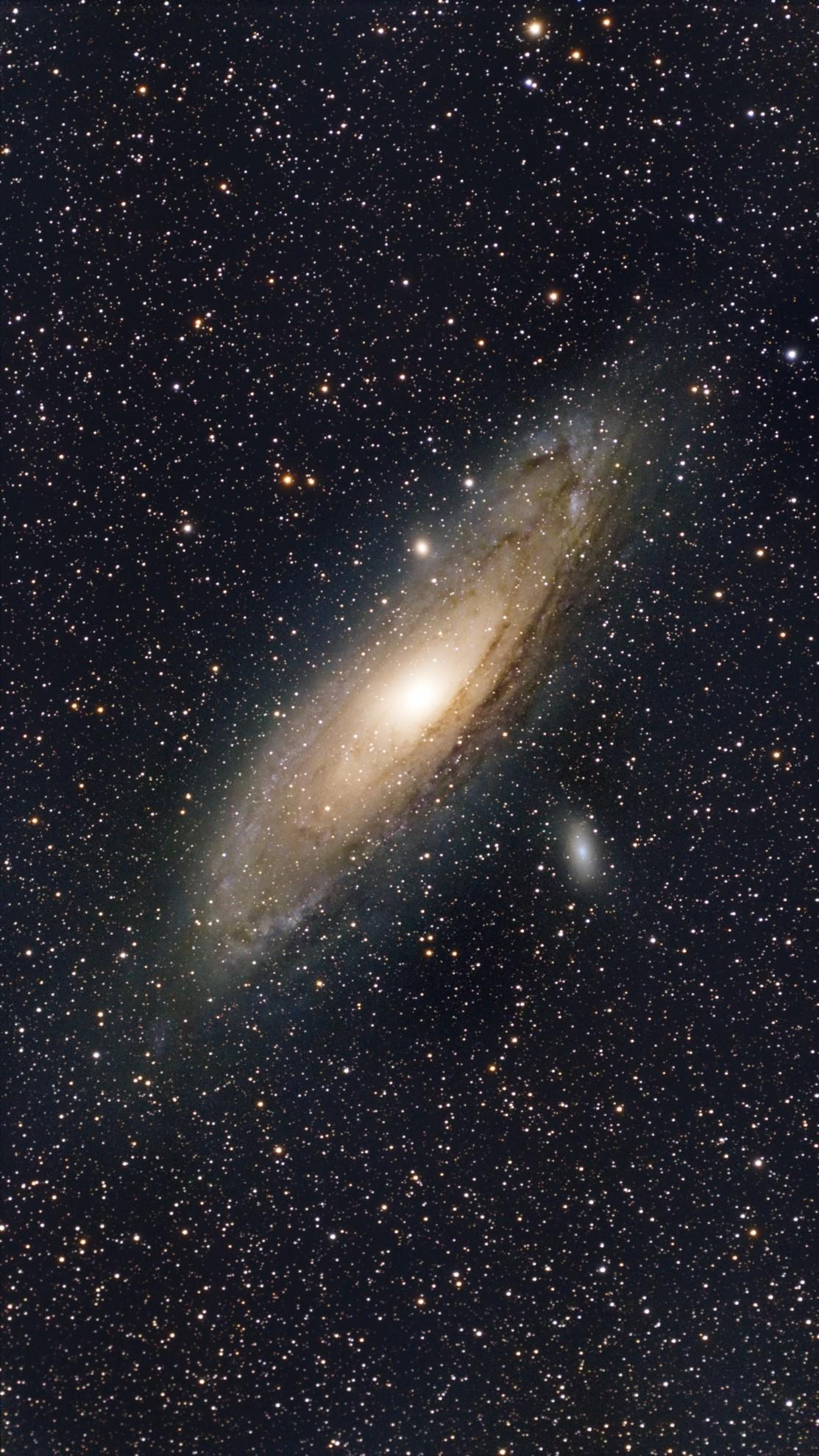
Andromeda M31 galaxy captured using a Seestar S30 Pro, 2 hours total exposure, by Richard Harris
Andromeda Galaxy
The first fall target is the Andromeda Galaxy. If I had to pick one object that has launched more astrophotography obsession than almost anything else, it would be this one. Andromeda is large enough to be obvious, bright enough to reward beginners, and rich enough that you can keep revisiting it for years. Every time you come back, you notice something else. The dust lanes make more sense. The star clouds have more shape. The satellite galaxies stop being afterthoughts and start becoming part of the composition.
The big mistake people make with Andromeda is going too long on focal length too early. They hear galaxy and imagine they need a tighter telescope. Then they cut the object to pieces and spend the rest of the night fighting framing. For many setups, 135mm to 250mm is the sensible range. Push into 300mm or 400mm if your sensor is smaller and you want a tighter emphasis on the core and dust lanes, but know what you are giving up. This is another target that suits the Seestar S30 Pro rather well. At 160mm, you are playing to the object instead of against it. You get the galaxy, room for context, and a composition that makes visual sense.
For camera style, Andromeda is a fine object for a stock mirrorless or DSLR, a cooled color camera, or a monochrome setup if you want to work harder. A ZWO ASI2600MC Pro on a short refractor is a strong modern combination for this target. An ASI533MC Pro can also do very nice work if you are comfortable with a slightly tighter square composition. What I tell people is simple. Do Andromeda well before you decide you are above Andromeda. That sounds obvious, but I mean it. A clean, balanced, naturally processed Andromeda image says more about your judgment than a hundred small, oversharpened galaxy crops.
Heart and Soul Nebulae
The second fall target is the Heart and Soul Nebulae. I am counting them together because that is how most people should think about them at first. They are a pair, and fall is the time when they ride high enough to make that pairing rewarding. The field is rich, the hydrogen signal is strong, and the composition changes beautifully with focal length. That last point is worth slowing down for. If you shoot around 100mm to 200mm, you can treat them as a broad pair. If you move into the 250mm to 400mm range, you can start favoring one over the other and really shape the frame.
This is a textbook target for a modified DSLR or a cooled one shot color camera with a dual band filter. If you have a monochrome camera and real narrowband filters, this is one of those fall targets that will make staying home under light pollution feel less like surrender. A ZWO ASI2600MM Pro is excellent here if you are prepared to put in the work. The ASI2600MC Pro or ASI533MC Pro with a dual band filter also does very respectable work and with a simpler workflow.
Where does the Seestar S30 Pro fit. Naturally, but not identically for every composition. If you want just one of the two nebulae, the tele lens works as a practical middle ground. If you want the full pair with space around them, mosaic mode becomes the honest answer. That is exactly the kind of thing I like about smart scopes when they are done right. Not pretending one frame solves every target, but giving you a straightforward way to handle large objects without turning the night into a cable management exercise.
Double Cluster
The third fall target is the Double Cluster. This is one of my favorite pieces of practical advice for astrophotographers who think every session has to be an epic nebula campaign. The Double Cluster is there for nights when transparency is not perfect, when you want color, when you want a target that looks good without heroic processing, and when you feel like seeing something clear and structured in a single sitting. Two clusters, rich star fields, plenty of color if you keep your exposures sane. There is a lot to like.
This target shines with focal lengths from about 135mm to 400mm depending on sensor size and how tight you want the framing. A stock DSLR works. A cooled color camera works. The Seestar S30 Pro works very naturally here because the field is aligned with what the instrument wants to do. You do not need to bully this target into looking good. You need to expose it properly, preserve the star colors, and stop yourself from overprocessing the background into mush.
Fall is also the season when I remind people that not every image needs to be stretched until the stars look offended. Some of the best fall work comes from cleaner data, moderate saturation, and the good judgment to leave space around the target. That is true for Andromeda, for the Heart and Soul, and certainly for the Double Cluster.
Winter
Winter gives you long nights and no mercy. Your batteries drop faster. Your fingers lose feeling. Cables stiffen up. Breath freezes near optics. But winter also gives some of the strongest introductory astrophotography targets in the whole sky. If summer is rich and sprawling, winter is direct. It puts bright, obvious, educational objects in front of you and asks what you are going to do with them.
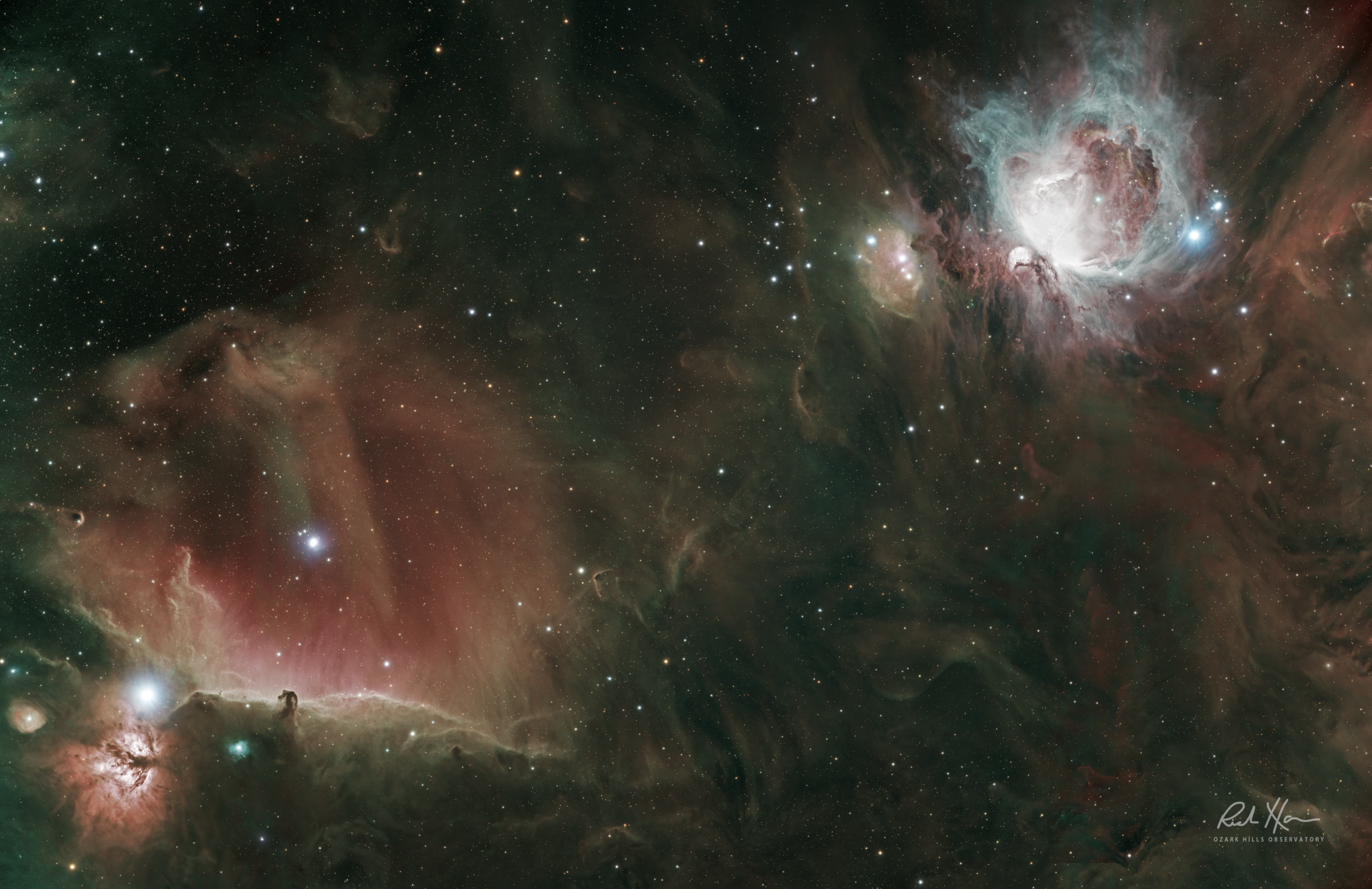
The Great Orion Nebula and surrounding region including the Horsehead and Flame nebulae, captured using a Takahashi FSQ-106EDX4 astrograph and 6200MM on the AM5 mount, 9 hours total exposure, by Richard Harris
The Great Orion Nebula
The first winter target is the Orion Nebula with the Running Man nearby in the same field. I do not care how long someone has been in the hobby, Orion still works. It is one of the few targets that can thrill a beginner and still give an experienced imager plenty to think about. It is bright. It is easy to find. It responds to a broad range of gear. And it has one of the best built in lessons in astrophotography, which is dynamic range. The core gets bright fast. The outer structure asks for patience. If you try to force both with one blunt approach, you learn quickly why technique matters.
For focal length, I think 135mm to 400mm is the sweet practical bracket for most people. A camera lens on a tracker can do it. A short refractor with a cooled color camera can do it very well. A monochrome setup can do even more. The Seestar S30 Pro is also well matched to this target in a straightforward way. Orion and the Running Man sit comfortably in the kind of frame a 160mm smart scope likes. That makes it a good winter recommendation because you can get a satisfying result without building an observatory in your driveway.
The shooting tip here is the thing beginners usually hear but do not always believe. Take shorter exposures for the core if your workflow allows it. Even if you are using a simple rig, give yourself some dynamic range to work with. Do not just stretch the life out of the center and call it done. Orion teaches restraint better than lectures do. It also teaches that ordinary camera gear can still make a real image. That matters, because too many people assume astrophotography only begins once they own a cooled camera and a dedicated telescope. Orion has humbled that argument for decades.
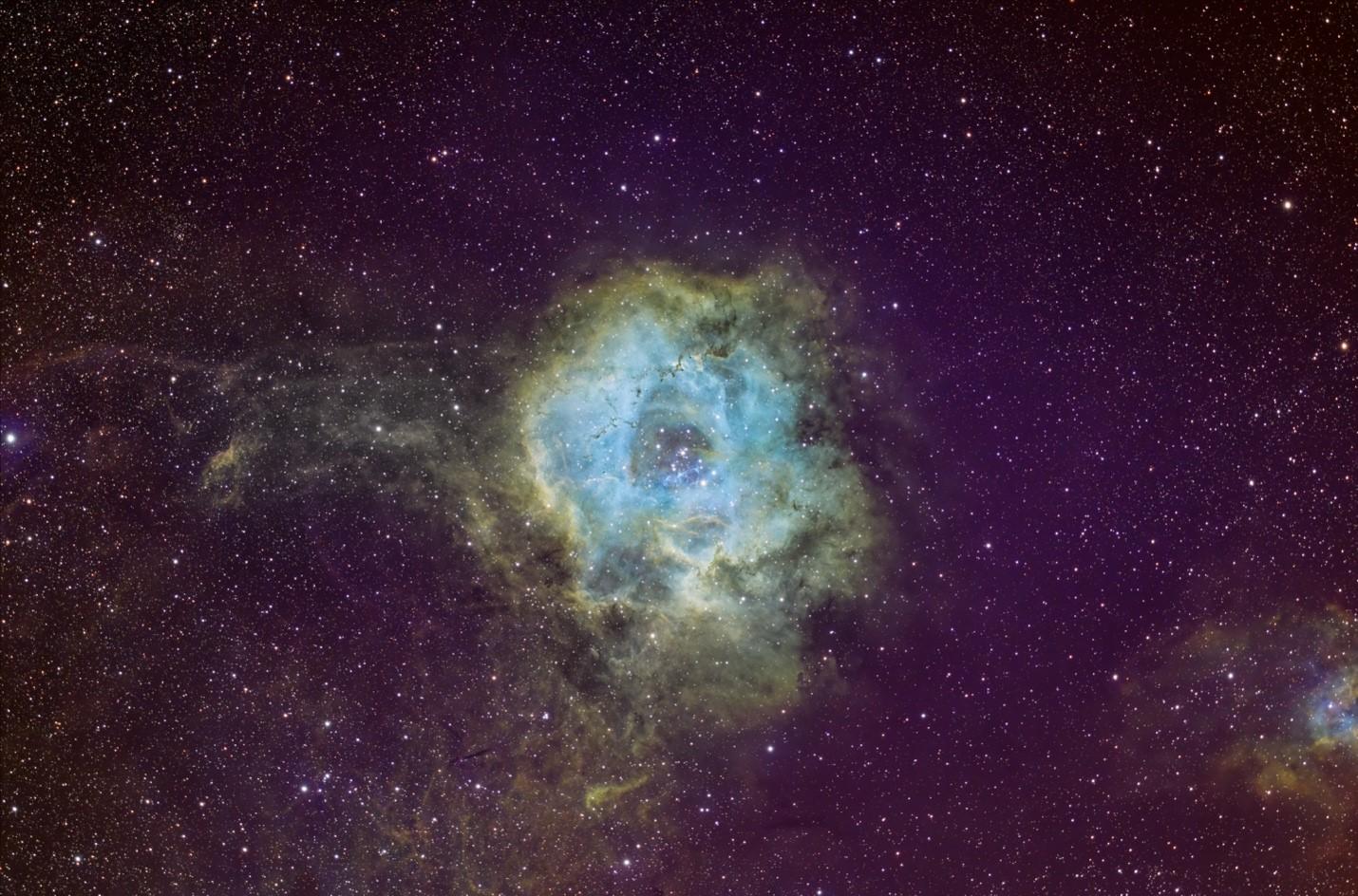
Rosette Nebula captured using a Sharpstar 61 telescope and ZWO 2600MM on the AM5 mount, 4 hours total exposure, by Richard Harris
Rosette Nebula
The second winter target is the Rosette Nebula. If Orion is the classic bright winter lesson, the Rosette is the point where a lot of people begin understanding filters, field size, and the value of total integration. It is large enough to reward modest focal lengths, structured enough to look like a real target instead of an accident, and rich in hydrogen in a way that teaches people very quickly why some emission nebulae respond so well to dual band and narrowband work.
A short refractor in the 250mm to 500mm range is a very comfortable place to be. A cooled color camera such as the ASI533MC Pro with a dual band filter is a fine match. A monochrome camera like the ASI2600MM Pro takes it further if you are working from a suburban site and want to lean into narrowband. The Seestar S30 Pro can image the Rosette, too, though with a looser composition than a dedicated small refractor setup at somewhat longer focal length. But honestly, a looser field on the Rosette is not a problem. Sometimes it is better. The surrounding star field gives the nebula context, and if you want a tighter interpretation later, that is what the larger rig is for.
Winter also demands better field management. If your gear has anti dew control, use it from the start, not after trouble shows up. Keep power warm when you can. If you are running something small and integrated like a Seestar, the simplicity can actually be a real winter strength because there are fewer external points of failure. That is not a glamorous truth, but it is a true one.
I would be remiss if I did not at least tip my hat to the Pleiades in winter skies, because it remains one of the prettiest broad field objects you can shoot when you want blue star color and reflection dust instead of red hydrogen. But if I am keeping this list to ten, Orion and the Rosette are the two winter targets I think teach the most to the most people.
The two targets I never skip in any month
Now for the part that gets overlooked because it shows up too often to feel exotic. The Moon and the Sun. If you want to get better at astrophotography month by month, these are the two targets you should not ignore.
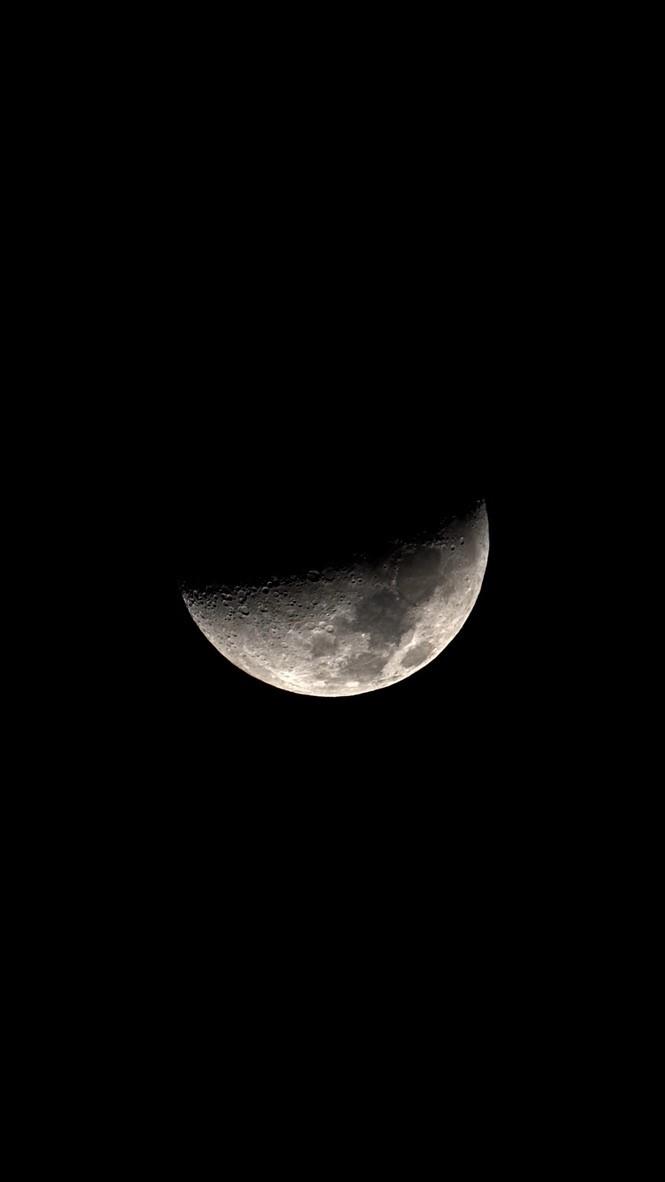
The Moon captured using the Seestar S30 Pro telescope, by Richard Harris
The Moon is one of the best teachers in the whole hobby because it changes all the time and punishes sloppy focus immediately. A thin crescent is not the same exercise as a first quarter. A first quarter is not the same exercise as a full Moon. Near the terminator, where light and shadow meet, you get relief and texture. That is when craters, ridges, and mountain shadows really speak. At full phase, the Moon is bright and easy, but the relief gets flatter, so you start paying attention to different things, ray systems, tonal balance, clean capture, and honest sharpening.
This is exactly the kind of target where the Seestar S30 Pro shines in a quiet, practical way. You do not need a lot of ceremony to get the Moon. You need the target, stable air, and a setup that can focus and track reliably. The Moon is also one of the best excuses to go outside when you do not have three hours for a nebula session. Fifteen clean minutes on the Moon will teach you more about focus and processing discipline than another night of lazy trial and error on a dim object.
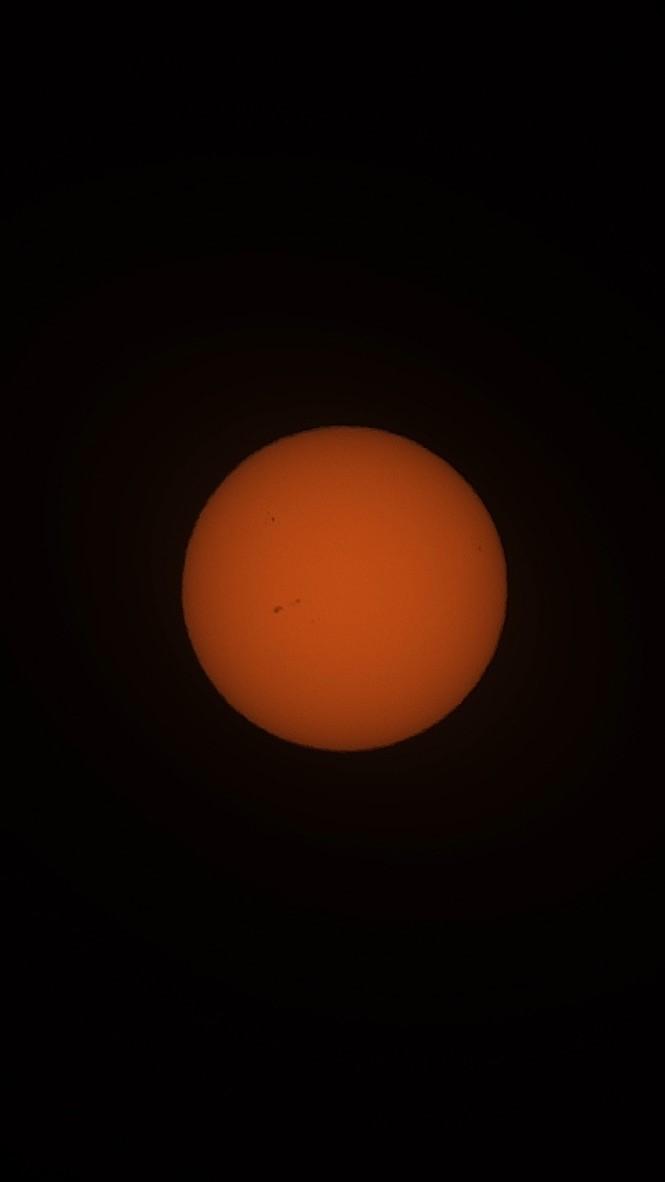
The Sun captured using the Seestar S30 Pro telescope, by Richard Harris
And then there is the Sun. People either ignore it or underestimate it, and both are mistakes. The Sun changes. Sunspots come and go. Texture across the disk in white light has its own appeal. More importantly, solar work gives you a way to keep using your gear even when the night is lost to cloud. A lot of astrophotographers have the habit of thinking the hobby only begins after sunset. That is a wasted habit. If the day is clear, the Sun is there, and it is worth your time.
This is another place where the Seestar S30 Pro earns a very natural mention. The included magnetic solar filter means the instrument is not just a night only novelty. It can move right into solar work without asking you to build a second system just to stay engaged with the sky. That is a bigger deal than it sounds. There are plenty of weeks in a year when the night stays clouded out but the day opens up. If you can step outside and still come back with a useful image, the gear is doing its job.
I do want to add one plain note here because it matters. The Sun is not a casual target. You use a proper solar filter, full stop. Not almost. Not if it seems dim enough. Not if you are only checking for a second. This is one of those parts of astronomy where common sense is not optional. If your filter is not secure, you do not image the Sun. When I think about these two monthly targets, I think about practice. The Moon teaches timing, focus, and processing judgment. The Sun teaches safety, discipline, and the habit of not wasting clear sky just because it happens to arrive in daylight. That is a lot of value from two objects most people stop respecting because they are always around.
In the end, this hobby comes back to the same lesson as guitar. The basics never really stop being basic. The G chord is still a G chord. Orion is still Orion. The Moon is still the Moon. What changes is you. Your ear changes. Your eye changes. Your patience changes. Your judgment changes. Each season puts a different set of objects in front of you, but more than that, each season asks a different question. Spring asks whether you can be patient. Summer asks whether you can compose. Fall asks whether you can frame. Winter asks whether you can manage light and conditions without losing your nerve. The Moon and the Sun ask whether you are paying attention all year, or only when a new object shows up on some social feed.
If you give these ten targets a fair shot, really a fair shot, you will not just come away with images. You will come away understanding your own gear better, your own habits better, and your own taste better. And that is when the hobby starts getting good.
Author BIO:
Meet Richard Harris. He is the founder and editor-in-chief of ScopeTrader, with over 30 years of experience in astronomy and astrophotography. He serves as the director of the Ozark Hills Observatory, where his research and astrophotography have been featured at NASA’s INTUITIVE Planetarium, scientific textbooks, academic publications, and educational media. Among his theoretical contributions is a cosmological proposition known as The Harris Paradox, which explores deep-field observational symmetry and time-invariant structures in cosmic evolution. A committed citizen scientist, Harris is actively involved with the Springfield Astronomical Society, the Amateur Astronomers Association, the Astronomical League, and the International Dark-Sky Association. He is a strong advocate for reducing light pollution and enhancing public understanding of the cosmos. In 2001, Harris developed the German Equatorial HyperTune – a precision mechanical enhancement for equatorial telescope mounts that has since become a global standard among amateur and professional astronomers seeking improved tracking and imaging performance. Driven by both scientific curiosity and creative innovation, Harris continues to blend the frontiers of astronomy and technology, inspiring others to explore the universe and rethink the possibilities within it. When he’s not taking photos of our universe, you can find him with family, playing guitar, or traveling.
ASIWeek Honors & Your Astrophotography Journey My name is Konstantinos Beis. I am a 48-year-old originally from Athens, Greece, but I have been living in the UK for the past
From Seestar to Pro: Dominik Popławski’s Journey into Deep-Sky Imagin Hello. My name is Dominik Popławski. I live in Poland. I’m a painter and computer graphic designer. Astronomy has been
My name is Eric Wright and I’m a 39 year old Astro photographer and cybersecurity technician in the Cleveland, Ohio area (United States). I am the current Secretary for the
Some astrophotographers spend years searching for the perfect image. For Deqian Li, the journey began only in 2024—yet within a remarkably short time, several of his images have already been
Part 1: What’s New in ASIAIR V3.0 New Features Optimized & Fixed Telescope Network is now live No matter where you are, as long as your device is online, you