Being an astrophotographer is the most romantic job in the world.
But behind that romance lies a canvas of isolation and peril.
From standing helpless and alone at the Baima Snow Mountain pass to capturing the dancing aurora over a New Zealand lighthouse, his story blends deep-sky precision with raw survival. Ultimately, it led Zhong Wu all the way to the podium at the Royal Observatory Greenwich—proving how far a star-chaser will go to find his place between heaven and earth.
Who is Zhong Wu?
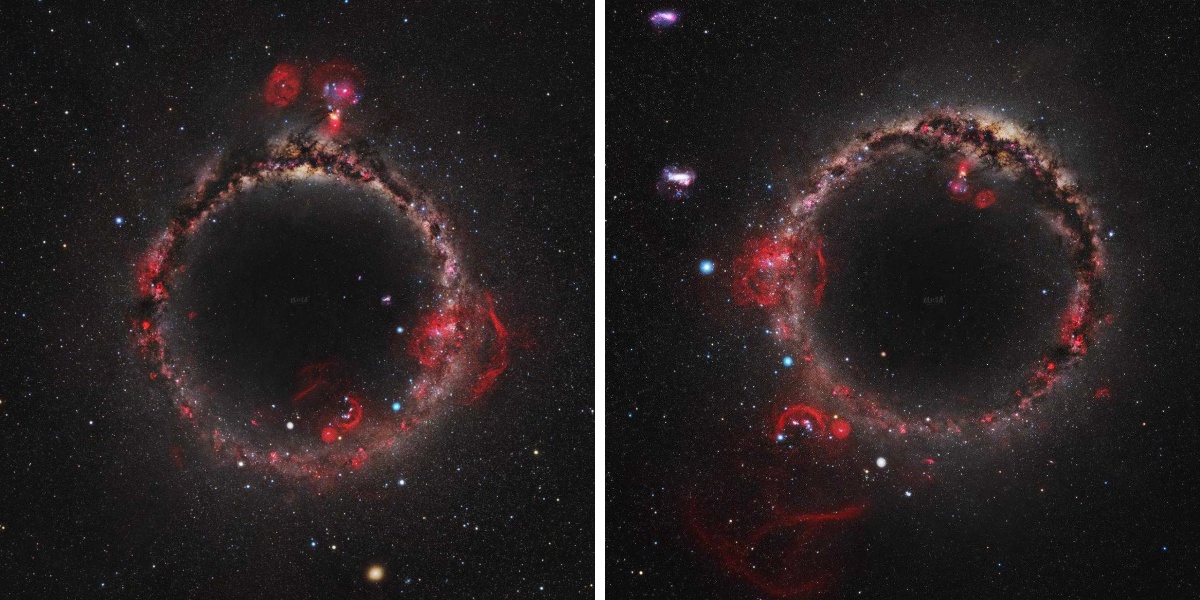
Zhong Wu, winner of the Galaxies category at the 2021 Astronomy Photographer of the Year awards for his piece The Milky Ring. His image, Star Track in Kawakarpo, was also named runner-up in the Skyscapes category in 2017.
The Road To Winner
Why He Embarked on the Astrophotography Path
- The Turning Point at Lugu Lake: After graduating with a degree in Advertising Design, he left his office job after just three months. The definitive catalyst was a winter trip to Lugu Lake, where he witnessed a breathtaking canopy of stars but was frustrated by the inability of his point-and-shoot camera to capture the moment. This failure sparked a resolution to acquire a proper camera and master the craft of documenting the night sky.
- Finding Meaning on Niubei Mountain: His path gained profound personal meaning during a shooting expedition on Niubei Mountain, where he met the woman who would become his wife.
- Seizing an Untapped Frontier: Recognizing that very few photographers in China were taking nightscape photography seriously at the time, he chose to learn everything from scratch and commit to the pursuit full-time.
Challenges Faced Along the Way
- Navigating a Niche and Isolating Field: Operating in a highly niche domain, his early years were spent traveling to remote corners of the world and dedicating endless hours to refining his processing skills. This lifestyle naturally brought a deep sense of isolation, an inherent reality he eventually chose to embrace.
- The Emotional and Financial Strain of Resignation: Stepping away from a structured career path created a vulnerable period of transition. He attributes his ability to sustain this grueling 12-year journey entirely to the unwavering belief and support of his wife following his resignation.
His Unique Artistic Style
- A Globally Informed, Evolving Aesthetic: Rather than remaining stagnant, his artistic eye is in a state of constant evolution, driven by regularly studying international portfolios to learn, adapt, and implement new techniques.
- The Foreground as the Absolute Soul: The true hallmark of his work is a deeply held composition philosophy: the foreground is the ultimate soul of a nightscape. He believes that without a distinct, recognizable terrestrial anchor, a starry sky loses its grounding narrative. Consequently, his signature style is defined by how meticulously he scouts and pairs his earthly landscapes with the celestial canvas above.
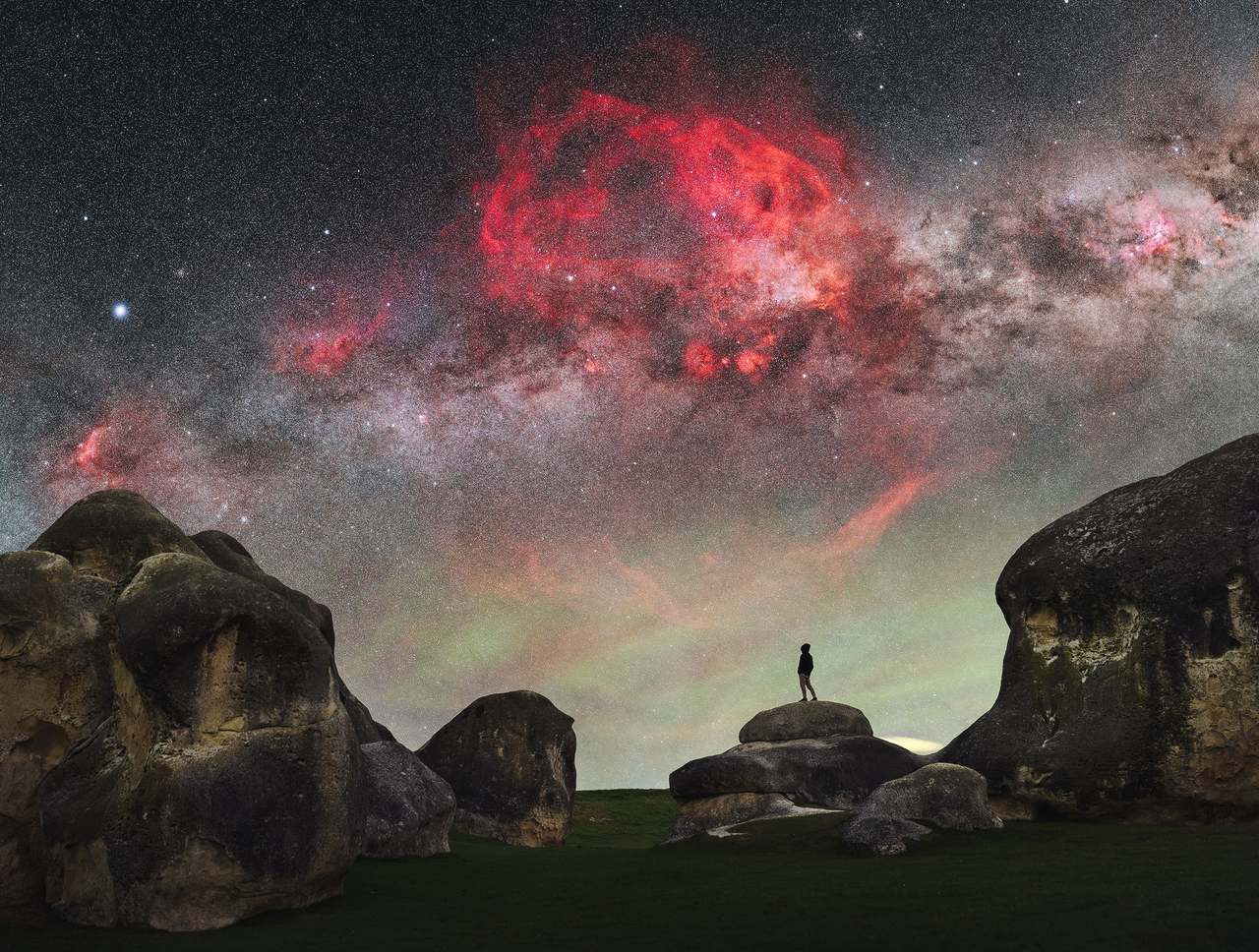
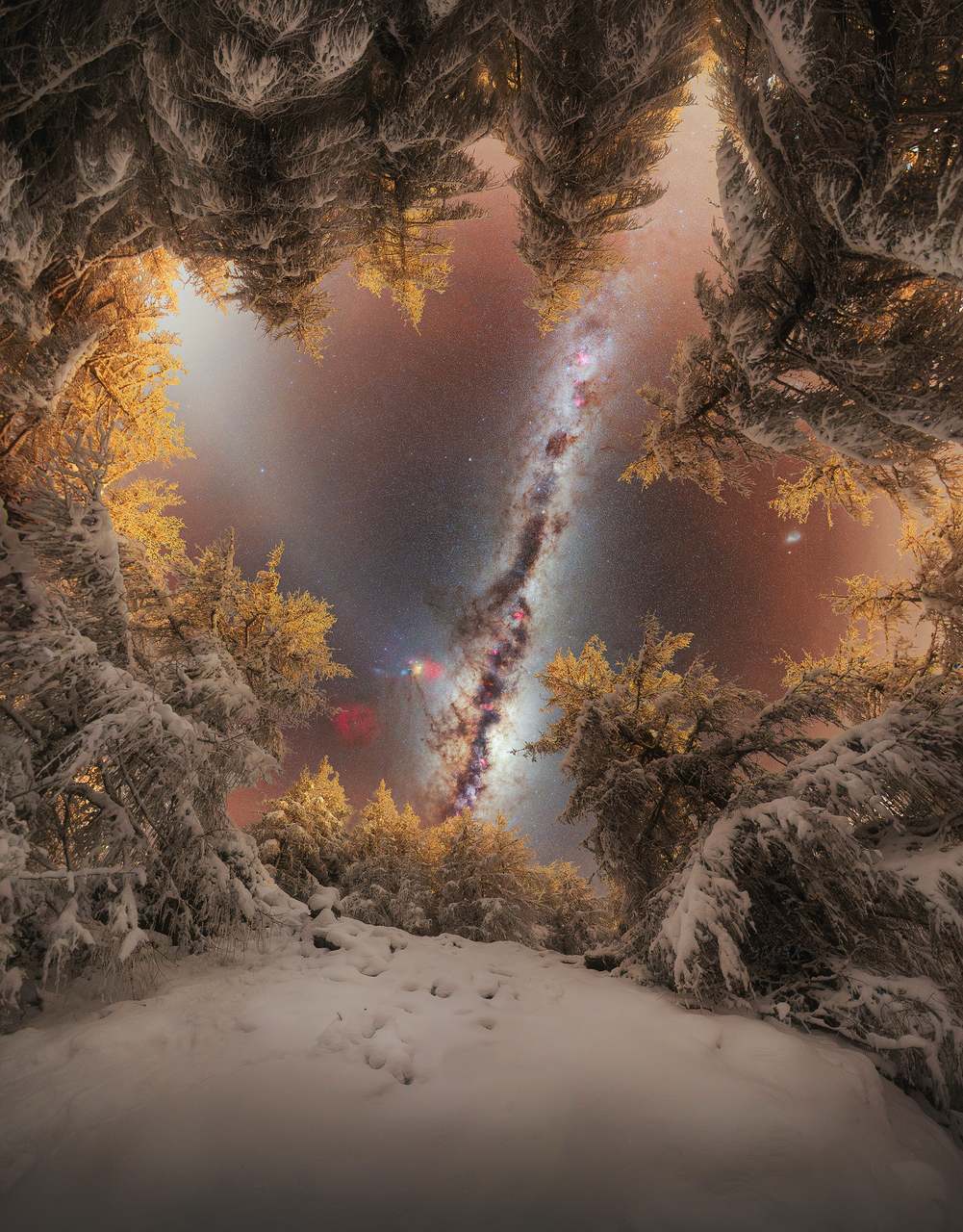
The Awarded Image-The Milky Ring
Zhong Wu meticulously planned for a 6-panel mosaic (3 panels for the Northern Hemisphere and 3 for the Southern Hemisphere). The goal was to capture both the summer and winter Milky Way from both hemispheres, catching the galactic core and arms both as they culminated at the meridian and when they sat low on the horizon, all while trying to minimize atmospheric extinction and poor seeing.
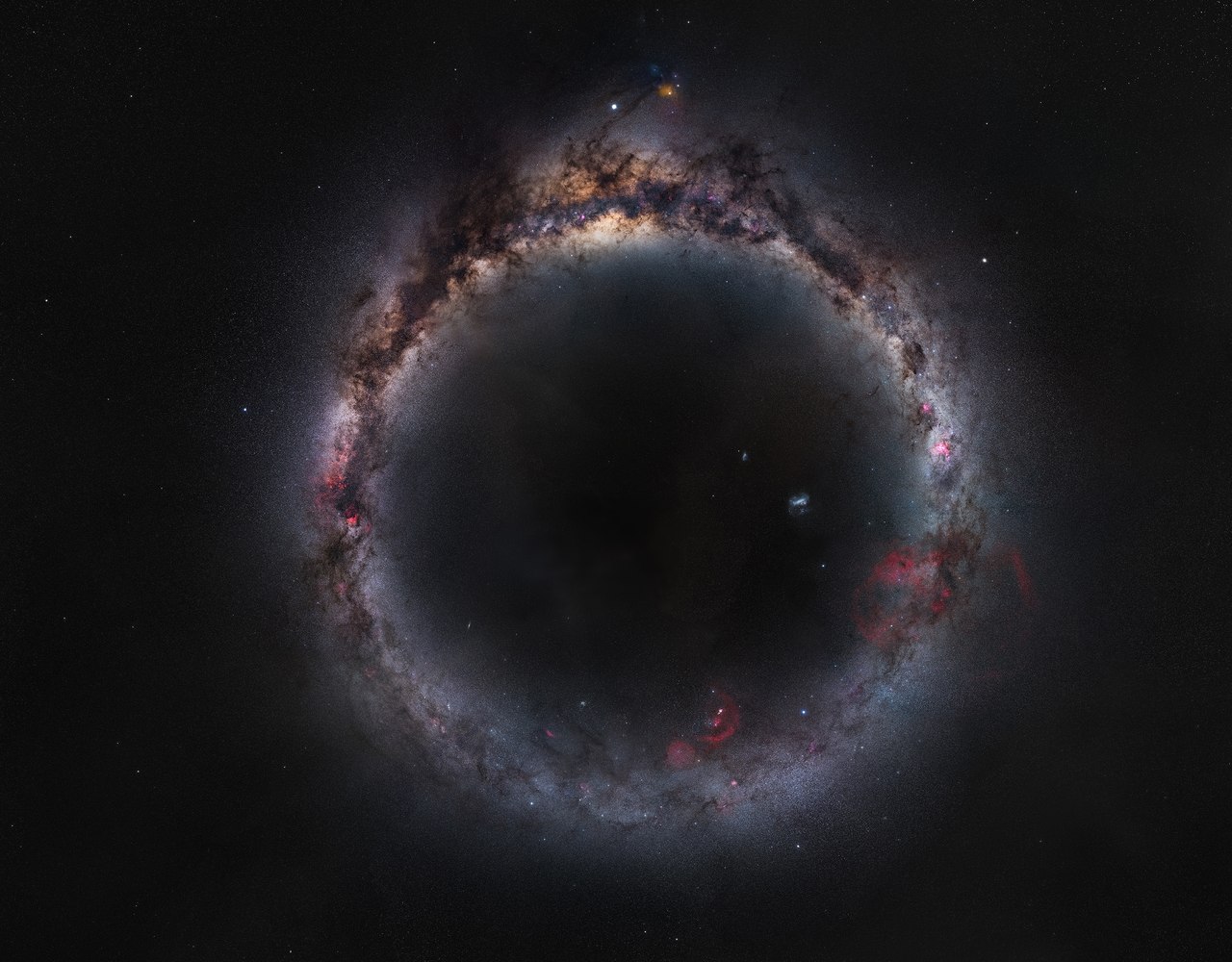
The core idea of the project was born in 2018. After winning runner-up for a star trails piece of the Meili Snow Mountains in 2017, the photographer felt the urge to push his creative limits. To achieve something unprecedented—seamlessly blending the night skies of both the Northern and Southern Hemispheres into a single, unified image.
The Specific Technical Details
- Optics & Camera Settings: One Sigma lens wide open at $$f/1.4$$, paired with an unmounted camera body bumped to ISO 6000
- Tracking & Mounting: Entirely untracked setup, opting out of using an equatorial mount
- Acquisition Strategy: A 6-second shutter speed per single sub-exposure, capturing 10 frames per panel for noise reduction
- Data Scale: 300 to 400 frames required for each individual section of the panoramic mosaic, totaling over 1,600 raw exposures across the entire project
- Post-Processing Pipeline: Multi-panel stitching executed via PTGui into a 360-degree panorama, followed by a three-day processing workflow in Photoshop to enhance Milky Way contrast, pull down non-galactic background brightness, restore natural interstellar colors, and subtly boost emission nebulae (H-alpha regions)
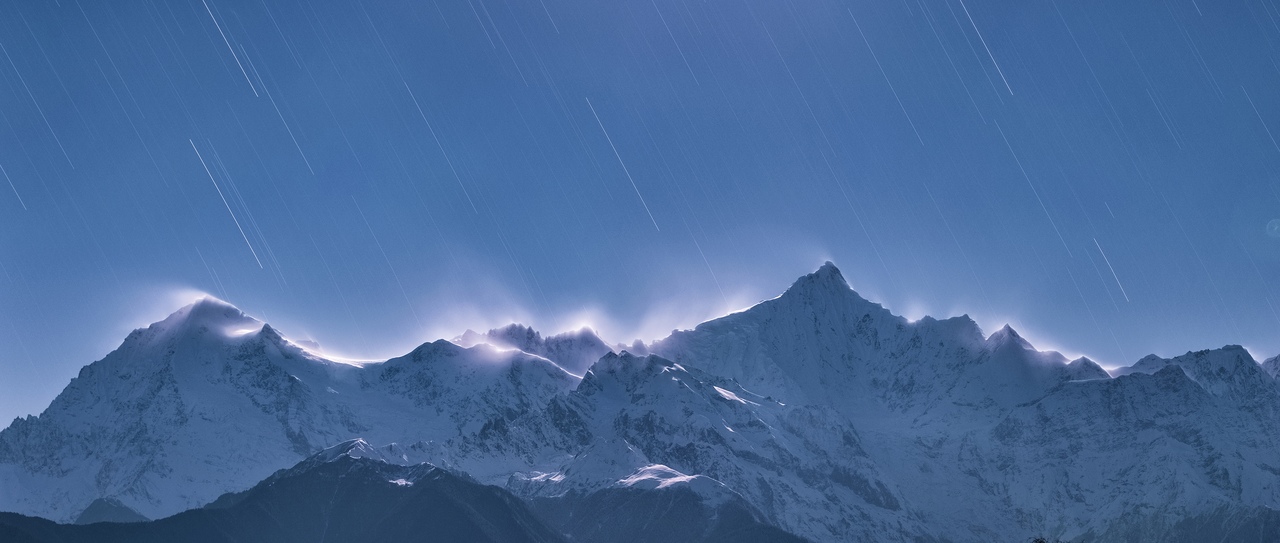
The Awarded Image-Star Track in Kawakarpo
The moon was positioned along the tidal direction, acting as a strong rim-backlight that illuminated the wind-blown clouds and mist swirling around the snow peaks. Paired with the star trails, it created a striking contrast.
Interestingly, that shot was a happy accident. At the time, I was just waiting for the moon to set so I could shoot a Milky Way arch, and I casually ran a 15-minute star trail sequence. I never expected it to turn out so beautifully.
The Specific Technical Details
- Optics & Camera Settings: f/2.8, ISO 800, with a single 900-second (15-minute) exposure
- Post-Processing: a slight bump in contrast to accentuate the glowing clouds and mist, while preserving the naturally cool, blueish color temperature of the raw file
The Story Behind Images
Behind the Lens: Peril and Survival in the Wilderness
- For an astrophotographer, capturing the perfect dark sky often means stepping into environments where danger strikes without warning. Zhong Wu’s twelve-year journey is defined not just by patience, but by raw survival.
- The Baima Snow Mountain Entrapment (Extreme Weather & Isolation)
During the way to a pristine dark-sky location, his 4×4 rig accidentally slid off the road and became trapped in a deep drainage ditch. Stranded with absolutely zero cellular service, he spent a grueling hour digging the vehicle out of the snow drift entirely by hand. - The Mount Gongga Encounter (Stalked by Wolves)
While tracking and shooting the night sky over Mount Gongga from the remote Heishi viewpoint near Beijing, the darkness brought unexpected company. After hearing strange rustling noises in the pitch black, a sweep of his headlamp revealed three pairs of glowing white eyes staring directly at him and his shooting partner. Realizing they were being watched by wolves, they abandoned the shoot, packed their heavy gear in a heartbeat, and made a retreat down the mountain to safety. - The Lianbao Yeze Stand-off (The Roadside Brown Bear)
Attempting to shoot a late-night tracker sequence in the Lianbao Yeze scenic area, Zhong Wu was warned by local park rangers of active brown bears foraging nearby. Undeterred, he convinced a ranger to stand guard over him in the dark while he hurriedly knocked out his imaging sequence. Right as they evacuated through the park gates, they encountered a massive brown bear foraging directly on the roadside. Fortunately, the bear showed no immediate aggression, allowing a clean escape.
The Canvas of Romance: Love Beyond the Peril
While Zhong Wu’s twelve-year journey under the stars is marked by isolation and harrowing dangers, its true foundation is an enduring romance—written in the stars and captured through his lens
I am incredibly grateful to my wife. She has always believed in me, and it was her unwavering support after I resigned that allowed me to keep pushing forward.
- A Destiny Written in the Cosmos: Their love story began exactly where his passion lies—out in the wilderness, chasing the pitch-black night skies. It was during a stargazing expedition that he crossed paths with the woman who would become his wife.
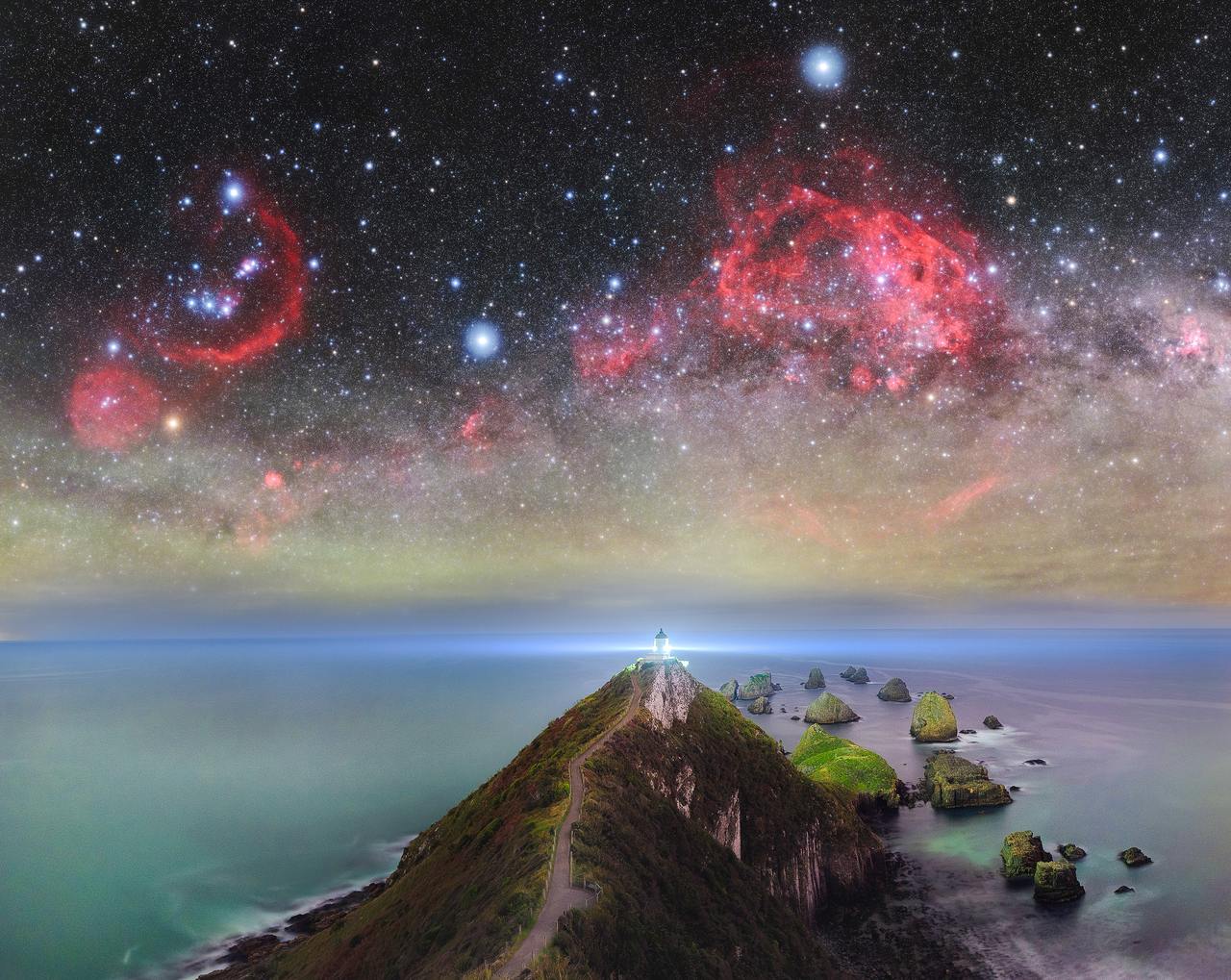
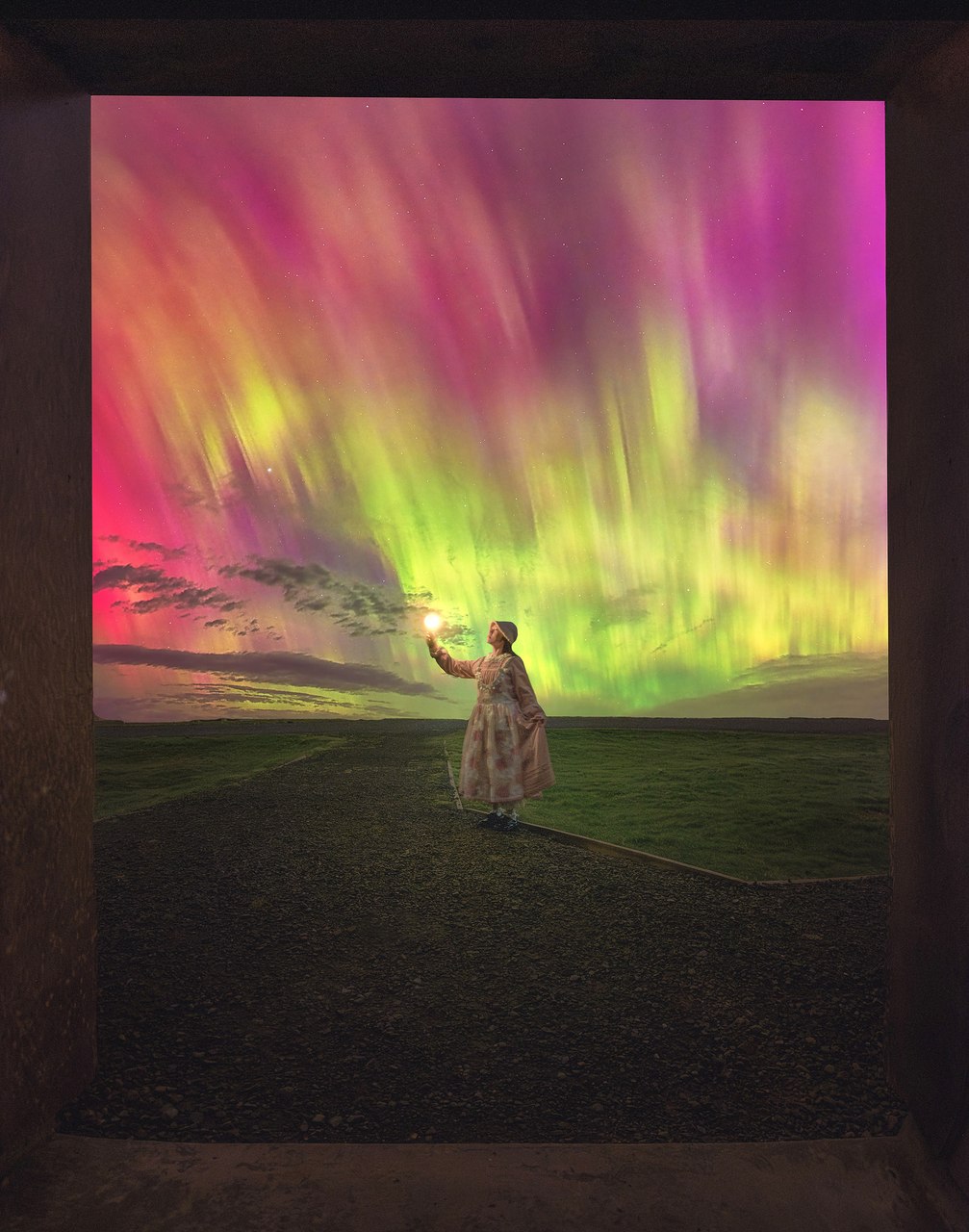
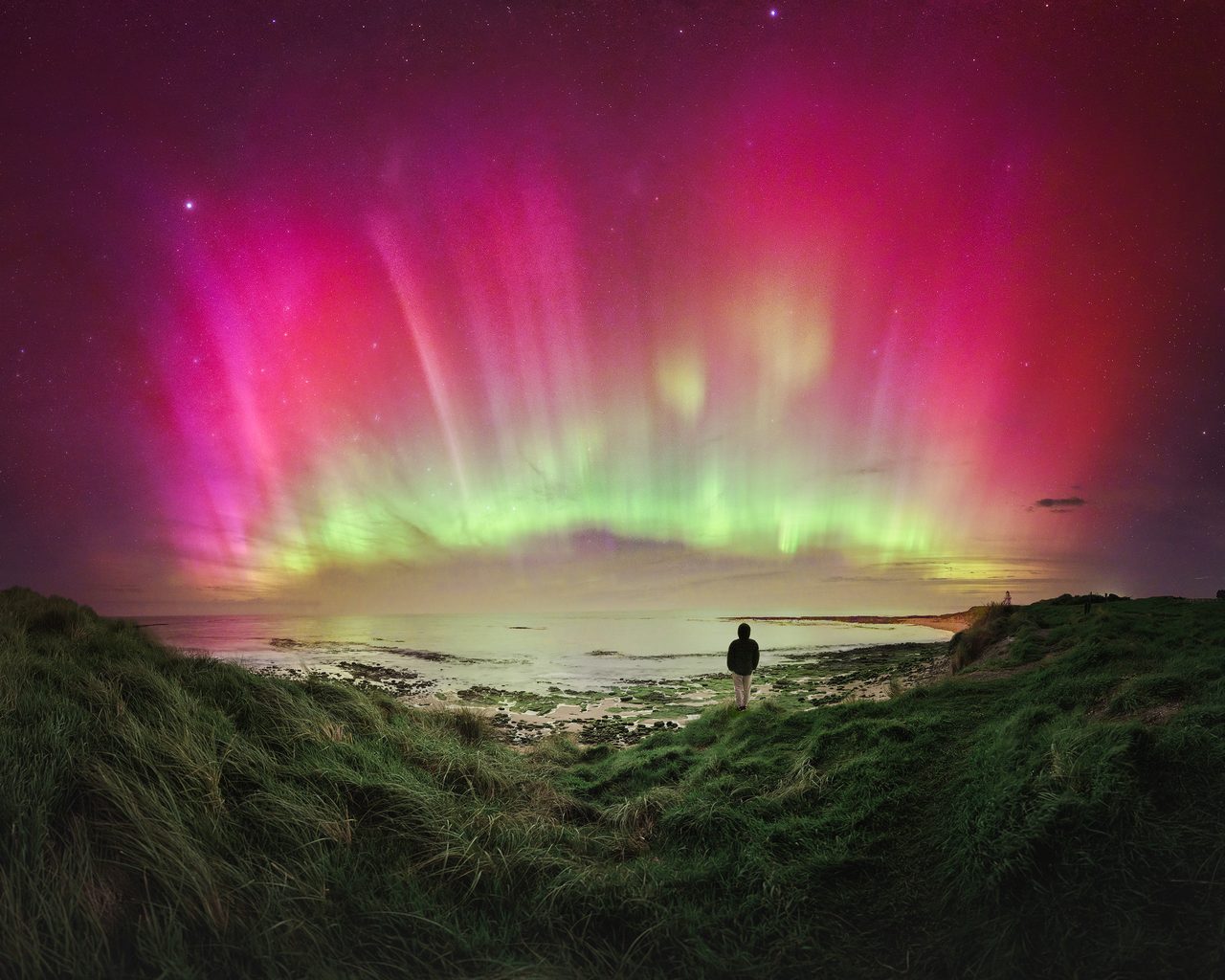
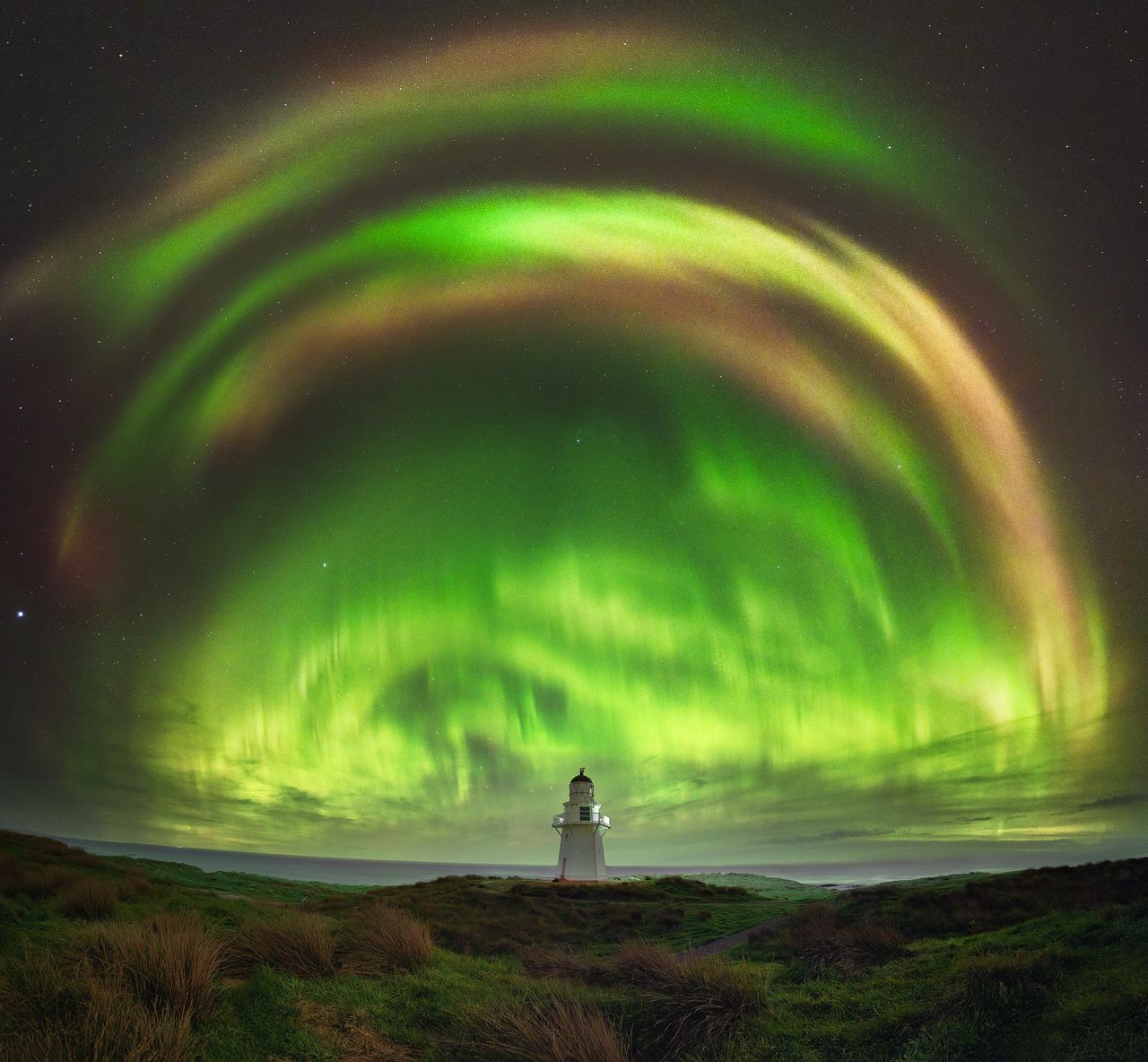
- The Muse: Aurora piece and another personal favorite were both captured last year while she was standing right beside me at that lighthouse in southern New Zealand.
- The Silent Support: Astrophotography can be a lonely, grueling pursuit filled with bitter cold and dangerous terrain. Yet, through every low point and isolating moment of his full-time career, his wife has been his unwavering anchor, providing the crucial support that allowed him to survive and persist.
Technical Q&A: Astrophotography in Urban Environments
When struggling with heavy light pollution, Zhong Wu suggests two primary pathways:
- Infrared Astrophotography: Use infrared astrophotography to capture the “IR Milky Way,” which effectively cuts through urban light pollution to map the physical presence of the cosmos.
- Smart Telescope Integration: Utilize systems like the Seestar series to bypass traditional setups. These allow for capturing emission nebulae, deep-sky targets, and the moon directly from balconies or sidewalks.
Technical Q&A: Nightscape Portraiture
To achieve sharp focus on both the subject and the stars while maintaining balanced lighting, Zhong Wu recommends:
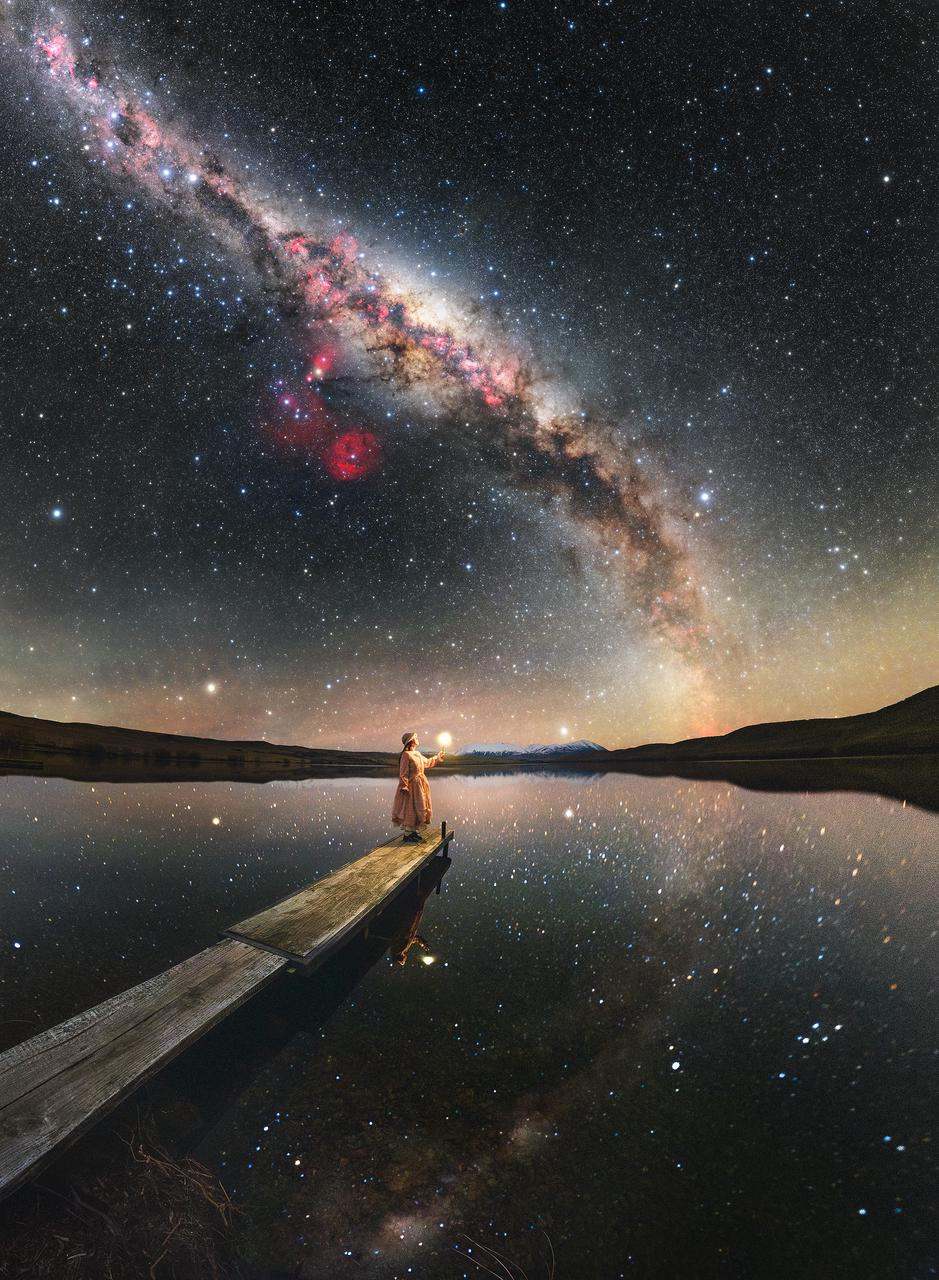
- Technique: Perform a “focus-bracketed depth-of-field blend.” Take two separate exposures—one focused on the stars (infinity) and one focused on the foreground subject.
- Execution:
Model Discipline: The subject must remain motionless; encourage the model to hold their breath during the exposure.
Lighting Styles: Choose between silhouettes, ambient hand-held lighting, or backlit flash photography. - Consistency: If the model moves or twitches during the sequence, the shot must be retaken to maintain integrity.
Strategic Advice: Southern Hemisphere Field Trips
For July expeditions targeting the Southern Hemisphere winter sky, Zhong Wu highlights a clear trade-off:
- New Zealand (Recommended): Offers dynamic foregrounds (glaciers, jagged peaks) and a compact geography, allowing for rapid movement to chase clear skies.
- Western Australia: Provides more stable weather patterns but suffers from uniform, flat landscapes and massive driving distances between sites.
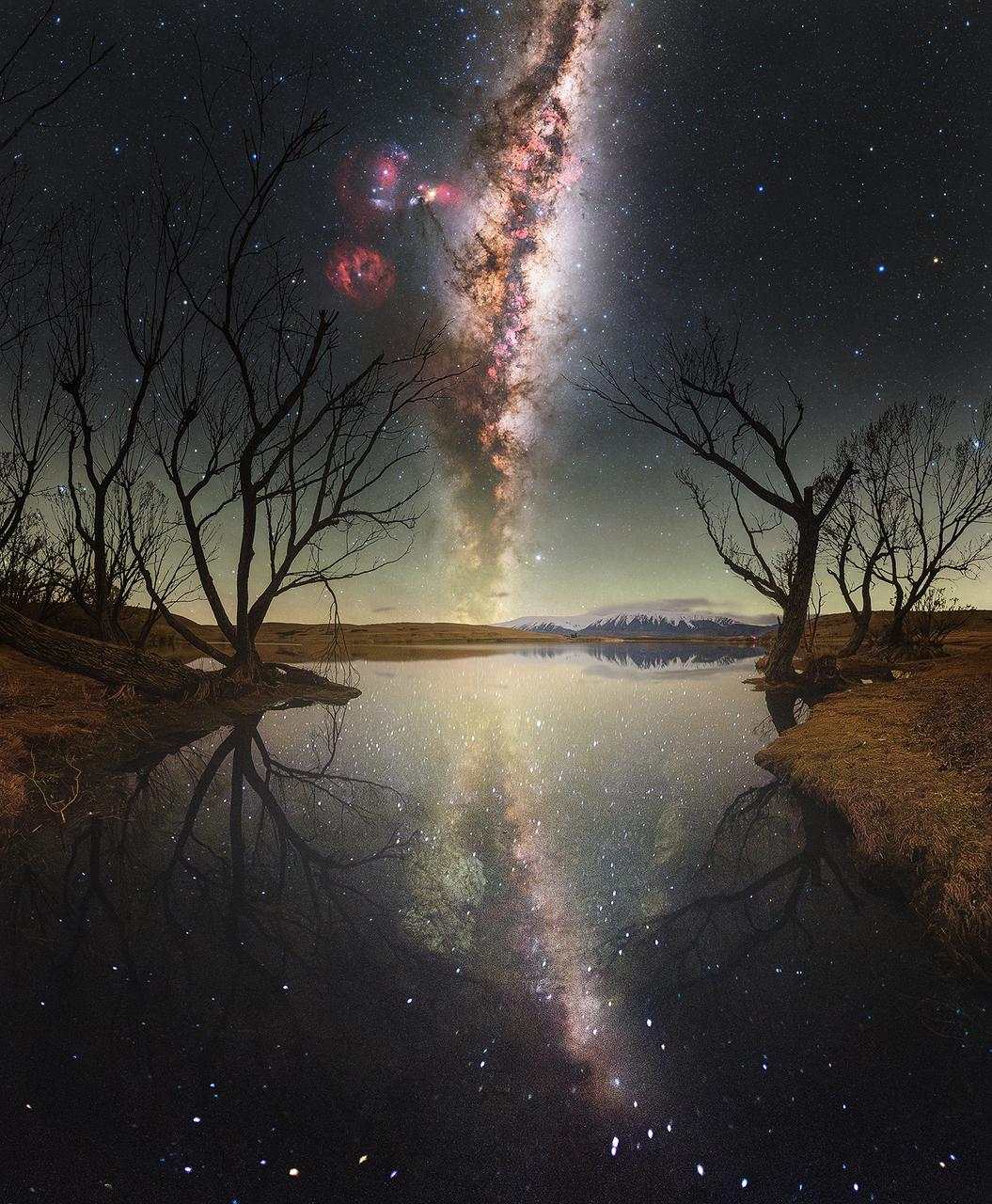
The Aesthetics of Widefield Nightscapes
Zhong Wu’s signature style—blending landscapes with deep-sky structures—is defined by:
- Technological Evolution: Leveraging astro-modified cameras to capture faint, red H-alpha structures that were previously inaccessible to standard sensors.
- Narrative Focus: Since widefield shots inherently have lower resolution for fine details, the focus shifts to storytelling.
- Visual Synthesis: By merging terrestrial anchors with celestial nebulae, the goal is to create an “otherworldly” experience that introduces audiences to the specific beauty of a Milky Way patch.
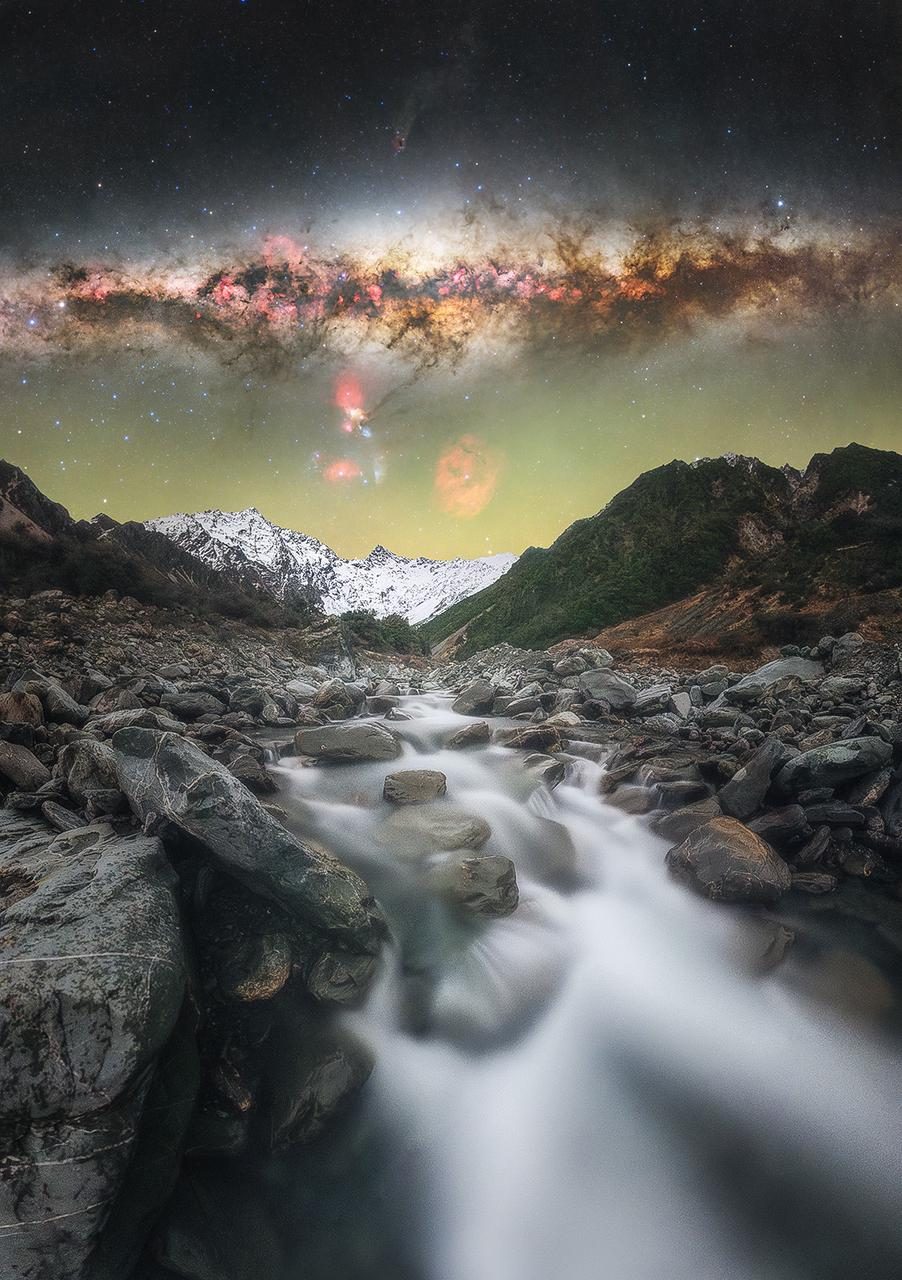
Artistic Portfolios
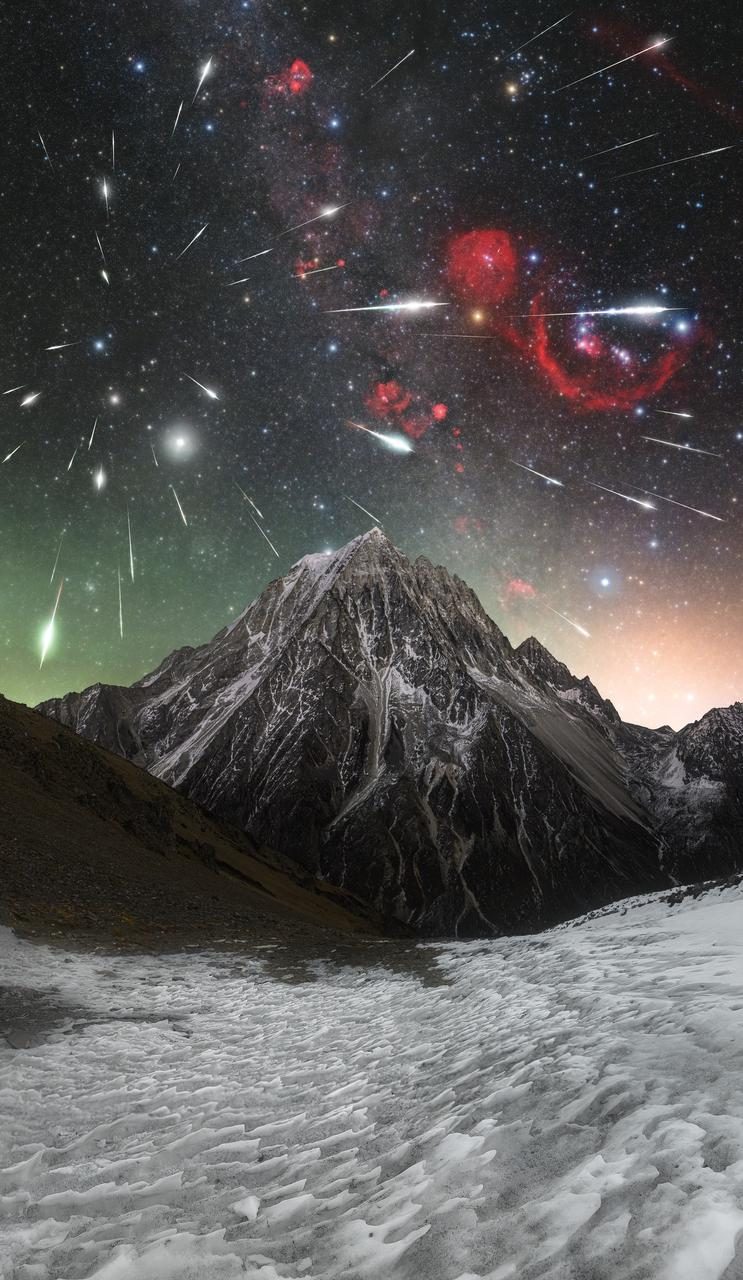
- Geminid Meteor Shower over Yala Snow Mountain
Location: Yala Snow Mountain, Western Sichuan, China
Equipment: 24mm wide-angle lens.
Tactics: Utilized a diffusion filter during the field acquisition phase
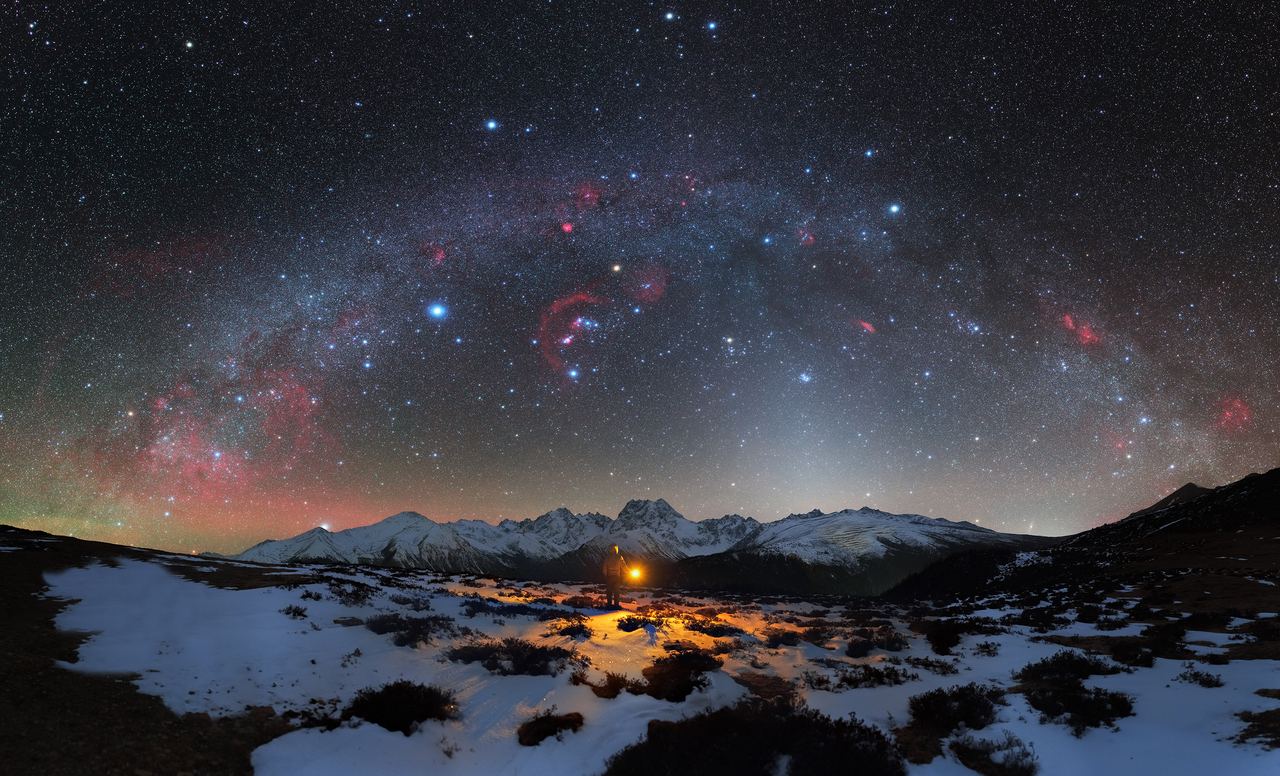
Composition: Framed a sweeping snow ridge as a leading foreground element to complement the rugged snow peak, the winter Milky Way, and Barnard’s Loop.
Processing/Atmosphere: Enhanced and accentuated the soft, glowing effect of the bright meteors in post-processing, which was initially captured using the optical diffusion filter.
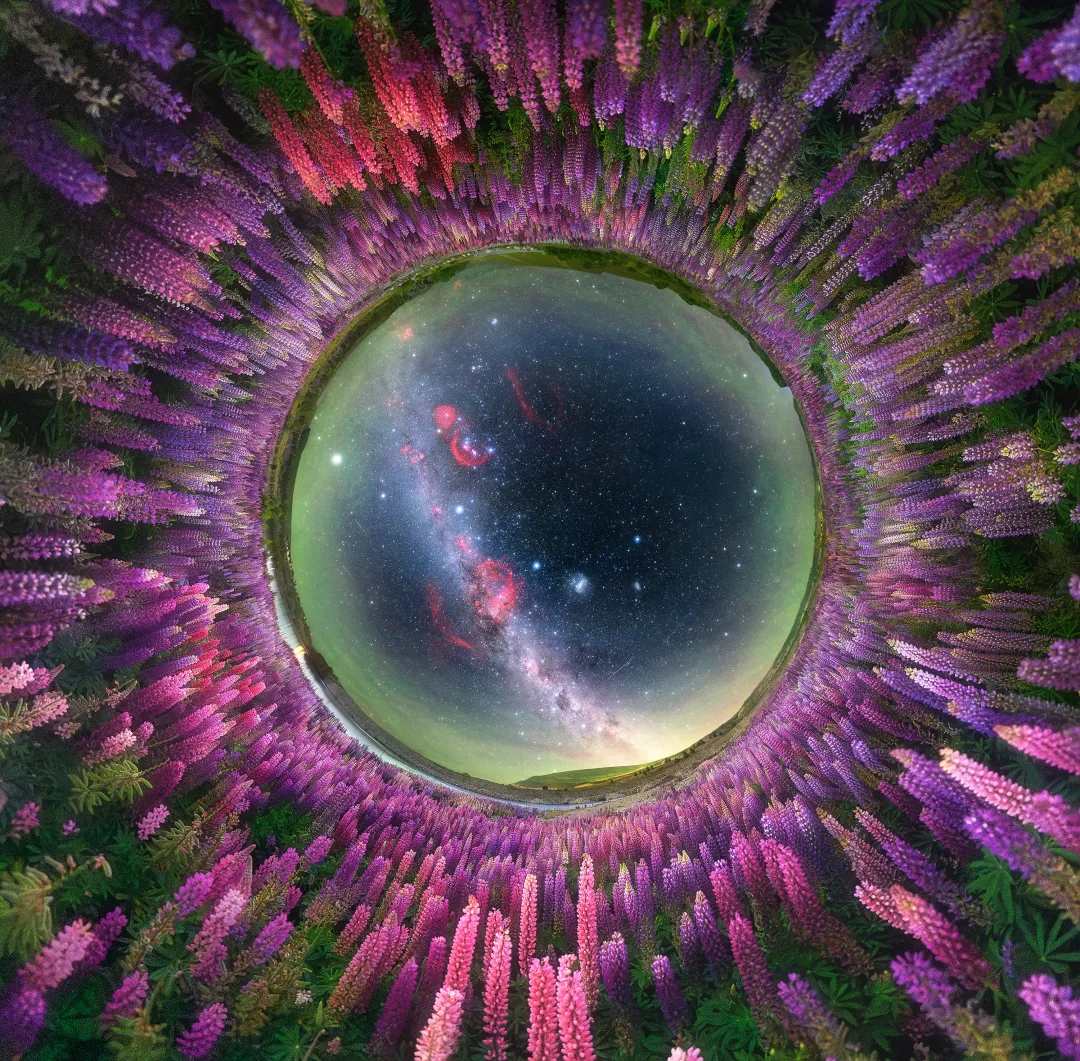
- The Lupine Kaleidoscope
Location: South Island, New Zealand
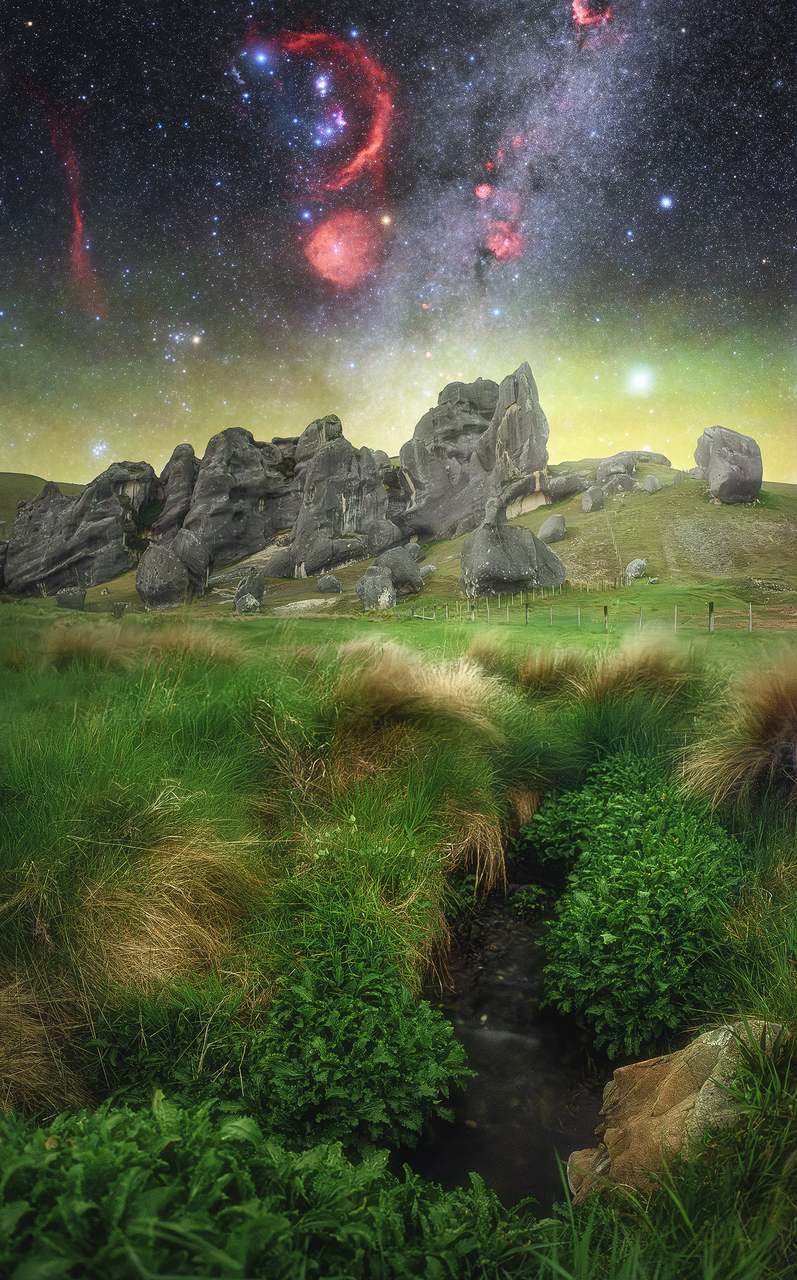
Composition: Positioned the camera deep within the center of a massive carpet of blooming lupines.
Atmosphere: Used the panoramic mosaic structure to allow the sea of flowers to visually “wrap around” the sky, creating a far more immersive and impactful perspective than conventional framing.
- Waipapa Aurora Panorama
Location: Waipapa Point Lighthouse, southernmost tip of New Zealand’s South Island
Equipment: Fisheye lens paired with multi-panel panoramic stitching
Tactics: Chased as a long-term bucket-list shot triggered by space weather forecasts predicting an intense KP8–KP9 geomagnetic storm.
Composition: Anchored the entire composition using the historic Waipapa Point Lighthouse as a strong terrestrial foreground.
Atmosphere: Used the ultra-wide fisheye stitch to document the grand scale of the entire event, capturing dancing auroral curtains spanning across the sky that rivaled the arctic skies of Iceland.
- Milky Way Over Snowy Forest
Location: Lake Alexandrina, near Lake Tekapo, New Zealand
Tactics: Widefield untracked system timed perfectly on an entirely windless night
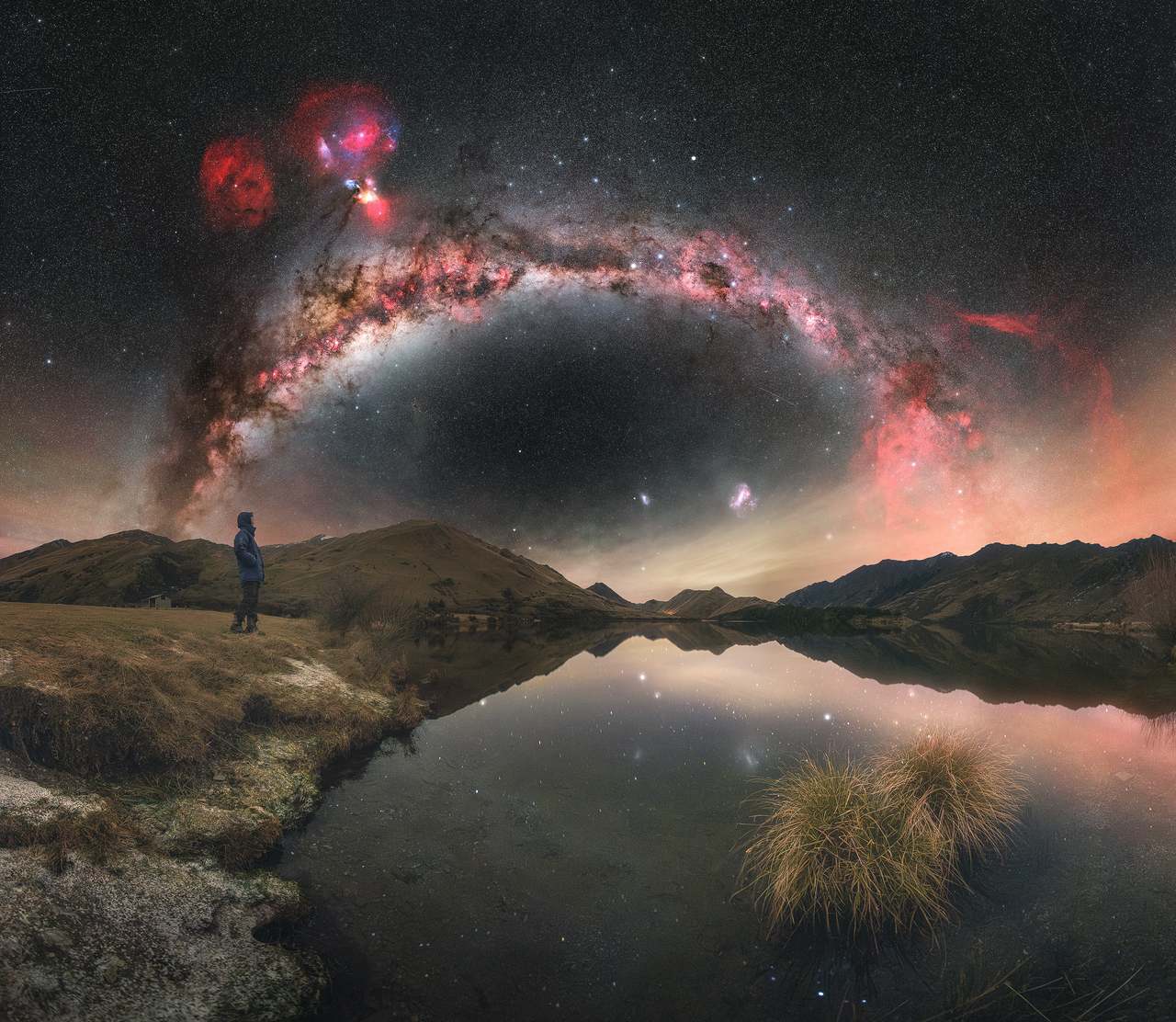
Composition: Leveraged a lesser-known destination away from tourist crowds to capture pristine, glassy water acting as a perfect mirror for the Milky Way.
Atmosphere: Emphasized symmetry, stillness, and the pure, undisturbed reflection of the cosmos.