A little more than a century ago, astronomers were still debating the true nature of those faint, cloudy smudges that appeared in their eyepieces. Telescopes had already grown remarkably capable, and the observers behind them were careful and experienced. The sky itself had not changed. What remained uncertain was the scale of the universe.
For centuries the Milky Way was assumed to be essentially the whole of creation, a vast island of stars surrounded by emptiness. The hazy objects scattered among the constellations were cataloged as “nebulae,” a Latin word that simply means clouds. Some of these objects resolved into clusters of stars when viewed with larger instruments. Others stubbornly refused to sharpen, even in the largest telescopes of the late nineteenth and early twentieth centuries.
By the early 1900s the question had become unavoidable. Were these spiral nebulae nearby objects forming inside our own galaxy, or were they something far more distant? In 1920 the issue reached its public climax in what became known as the Great Debate between Harlow Shapley and Heber Curtis. Shapley argued that the Milky Way was immense and contained everything we could see, including the spirals. Curtis suggested a far more radical possibility. He believed that at least some of those spirals were separate stellar systems, distant “island universes” far beyond the boundaries of the Milky Way.The argument could not be settled by theory alone. It required evidence.
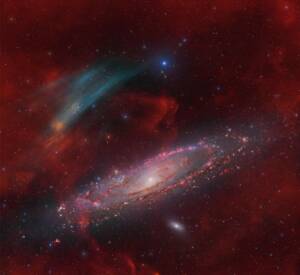
That evidence arrived only a few years later at Mount Wilson Observatory in California. Using the newly completed 100-inch Hooker Telescope, Edwin Hubble began studying individual stars inside the Andromeda nebula. In 1923 he identified Cepheid variable stars whose brightness changes followed a relationship discovered earlier by Henrietta Swan Leavitt. Because the true brightness of these stars was known, their observed brightness could be used to measure their distance.
The calculation produced a shocking result. Andromeda was far outside the Milky Way.
The faint spiral nebula was not a nearby cloud of gas or a small stellar cluster. It was an entire galaxy, a vast gravitational system containing billions of stars and separated from us by distances so large that the human mind still struggles to picture them.
Almost overnight the known universe expanded beyond imagination. The Milky Way was no longer the universe itself. It was only one galaxy among many scattered through a far larger cosmos.
Today, the argument has flipped from are those smudges galaxies to how many galaxies are there. Older estimates often centered around numbers like 100 billion galaxies in the observable universe. More recent work suggests the observable universe may contain on the order of 2 trillion galaxies. If you do the math, 2 trillion is 2,000 billion, which is about twenty times higher than 100 billion. The punchline is not the exact number, because the exact number depends on definition, detection limits, and models. The punchline is that our first instinct, even with good instruments, is usually to underestimate what is out there.
For amateur astronomers and astrophotographers, spring is the season where this becomes practical. Every year, when the winter showpieces start sliding west and the bright summer Milky Way star clouds are not yet dominating the night, galaxy season shows up. The sky in the classic spring constellations is comparatively empty of Milky Way clutter, and that emptiness is the point. You are looking out of the plane of our galaxy and into deep space where galaxies fill the background.
From an imaging standpoint, galaxies are honest targets. They are broadband objects. Most of what you are recording is starlight, dust lanes, and the general glow of billions of unresolved stars. That means you can do real work with straight RGB, with LRGB, or with a modern one-shot color camera. You do not have to force galaxies into narrowband just to make them cooperate. You can, but you do not have to.
There is also a practical reason galaxy season hooks people who like results. A bright galaxy will often show recognizable structure sooner than a faint emission nebula that really needs deep integration or multiple narrowband channels to look like anything other than noise. A few hours on a good spring target can get you a usable image you can build on. That said, if you want the faint outer halo, tidal scuffs, or the dusty background glow that sometimes surrounds a galaxy field, galaxies can demand serious integration too. Galaxies are not always quick. They are just straightforward about what you are chasing.
Before we get to targets, I want to talk about variety, because galaxies are not all the same even when they look similar at first stretch.
Spiral galaxies are where most of us start. Face on spirals give you arms, dust, and star forming regions. Tilt them and you get dust lanes that tell you instantly which side of the disk you are seeing. Barred spirals add a central bar that changes the geometry of the core and the arm structure. Elliptical galaxies are a different discipline. They are smooth and bright toward the center, which pushes you into careful exposure control and processing to keep the core from blowing out while you try to tease out the outer envelope. Lenticular galaxies live between spirals and ellipticals, often with a disk but without obvious spiral structure. Irregular and interacting galaxies are where galaxy season stops being polite. Tidal distortions, starburst regions, and warped dust lanes remind you that galaxies grow by encounters.
All of that ties back to focal length and resolution. Not because a spiral needs one focal length and an elliptical needs another, but because the apparent size and the detail you want dictate your image scale.
If you want to frame big nearby galaxies or galaxy chains that stretch a degree or more, you are usually in the 300 mm to 700 mm focal length neighborhood, sometimes even shorter if you are using a larger sensor. If you want medium sized classics like M 51, M 63, and M 64 to show arm texture and dust lanes without cropping half the night away, many imagers settle into a middle band around 800 mm to 1,500 mm. If you want smaller Virgo cluster members to look like galaxies instead of bright grains of rice, you can push past 1,500 mm into the 2,000 mm class, but now the atmosphere, tracking, and pixel scale have to be handled with discipline. A longer telescope does not automatically buy you detail if your seeing and sampling do not support it.
That is galaxy season summed up. Now let us go hunt.
Ten galaxies you should not miss during galaxy season
1.M 51 the Whirlpool Galaxy
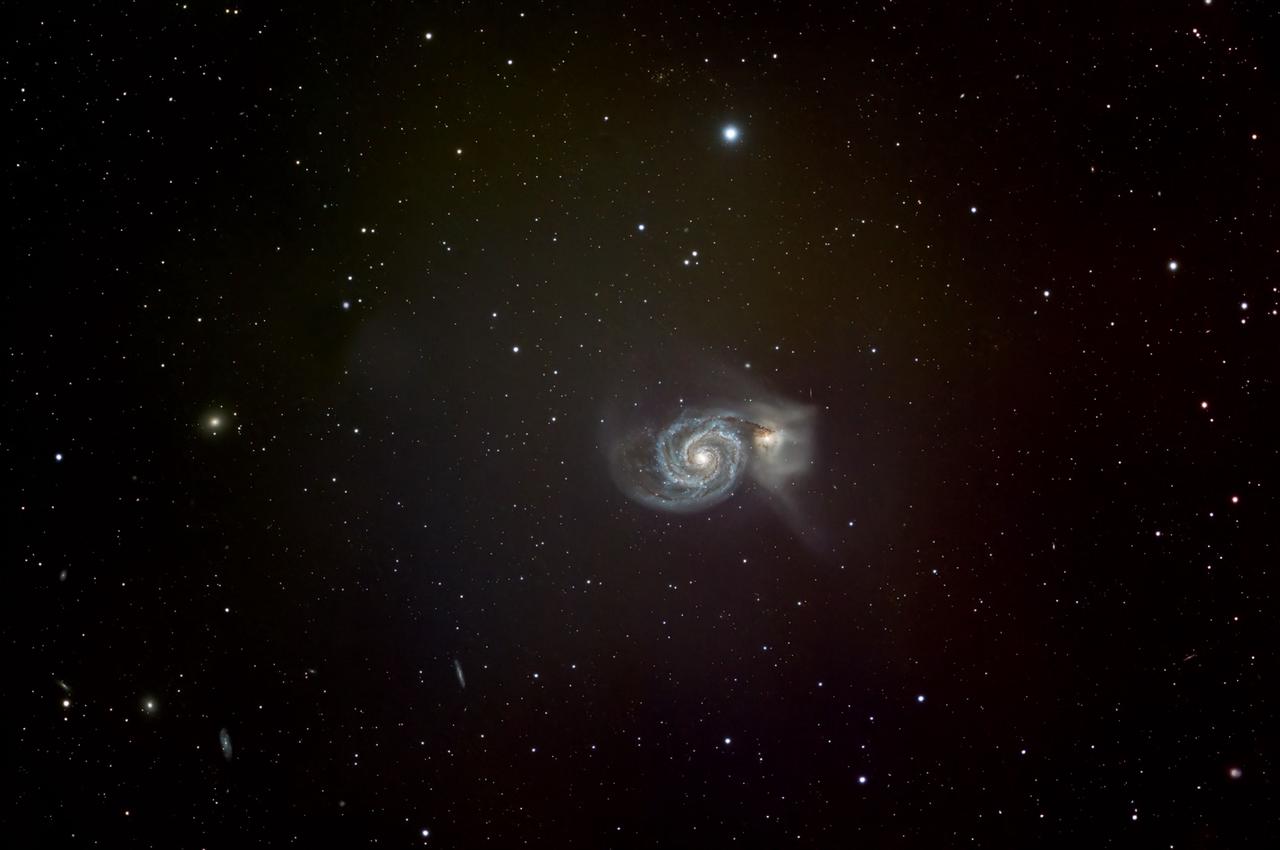
This deep-space portrait of the Whirlpool Galaxy was captured by Richard Harris using a TEC APO 180 f/7 Fluorite Apochromat refractor. Paired with a ZWO 6200MM-P and RGBL filters, Harris achieved 5 hours of total integration time, bringing out the delicate tidal structures of this iconic spiral. Many other galaxies are viewable in the background.
This is the spring standard for a reason. It is bright enough to be forgiving, structured enough to reward good sampling, and interesting enough that you can revisit it every year and still find something new in your own data. The companion galaxy is part of the composition, and the interaction gives you a built in lesson about gravity.
2.M 81 and M 82 in the same field
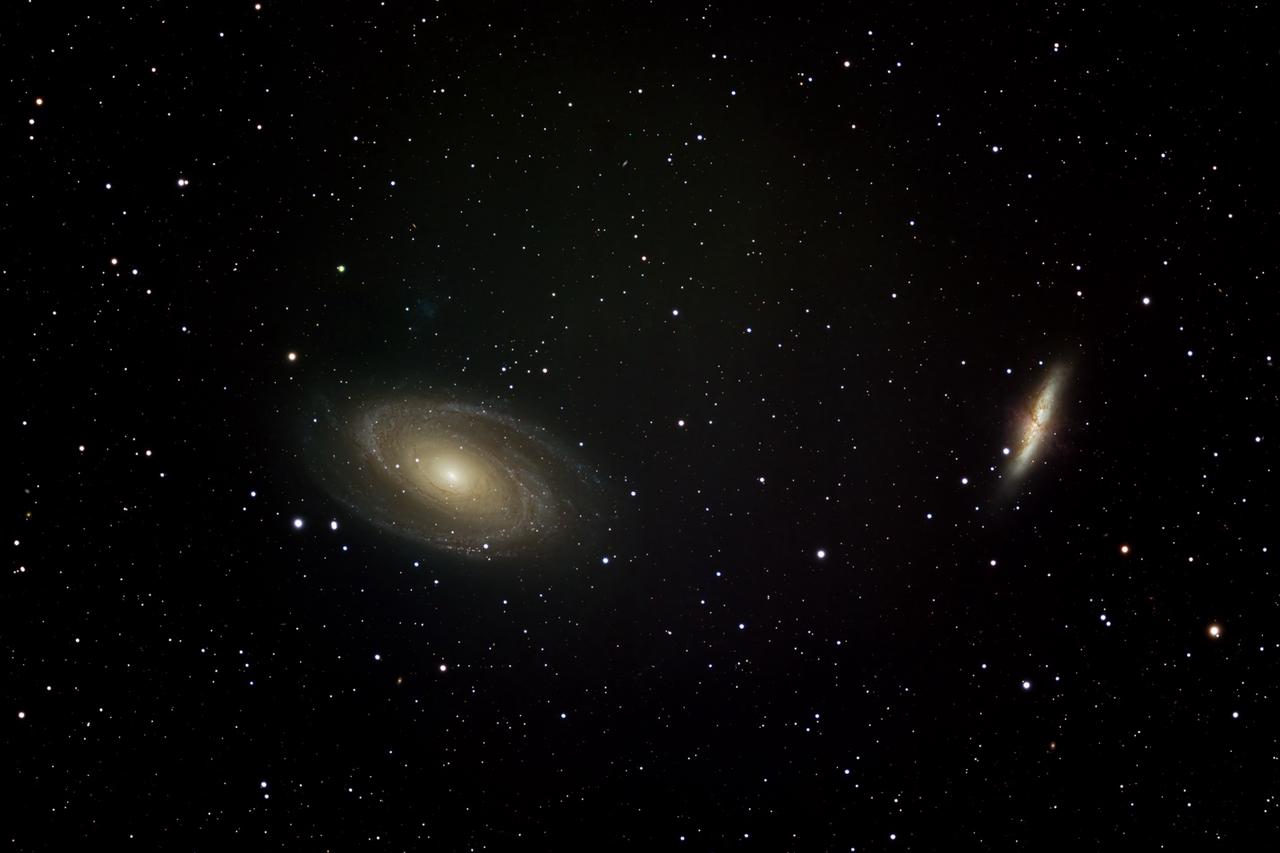
Bode’s (M81) and the Cigar Galaxy (M82). In this striking wide-field view, Richard Harris captures the gravitational interplay between M81 and M82. Utilizing the exceptional clarity of the TEC 180 refractor and a ZWO 6200MM-P, this image represents just 3 hours of total integration, showcasing the stark contrast between M81’s perfect spirals and the high-energy starburst activity within M82.
This pair is one of the best demonstrations of why galaxy season is not just about isolated pinwheels. You get a classic spiral and a starburst companion in one frame, and the wider field context often pays off. On truly dark nights, this region can also reward the patient imager with faint dusty background structure.
3.M 101 the Pinwheel Galaxy
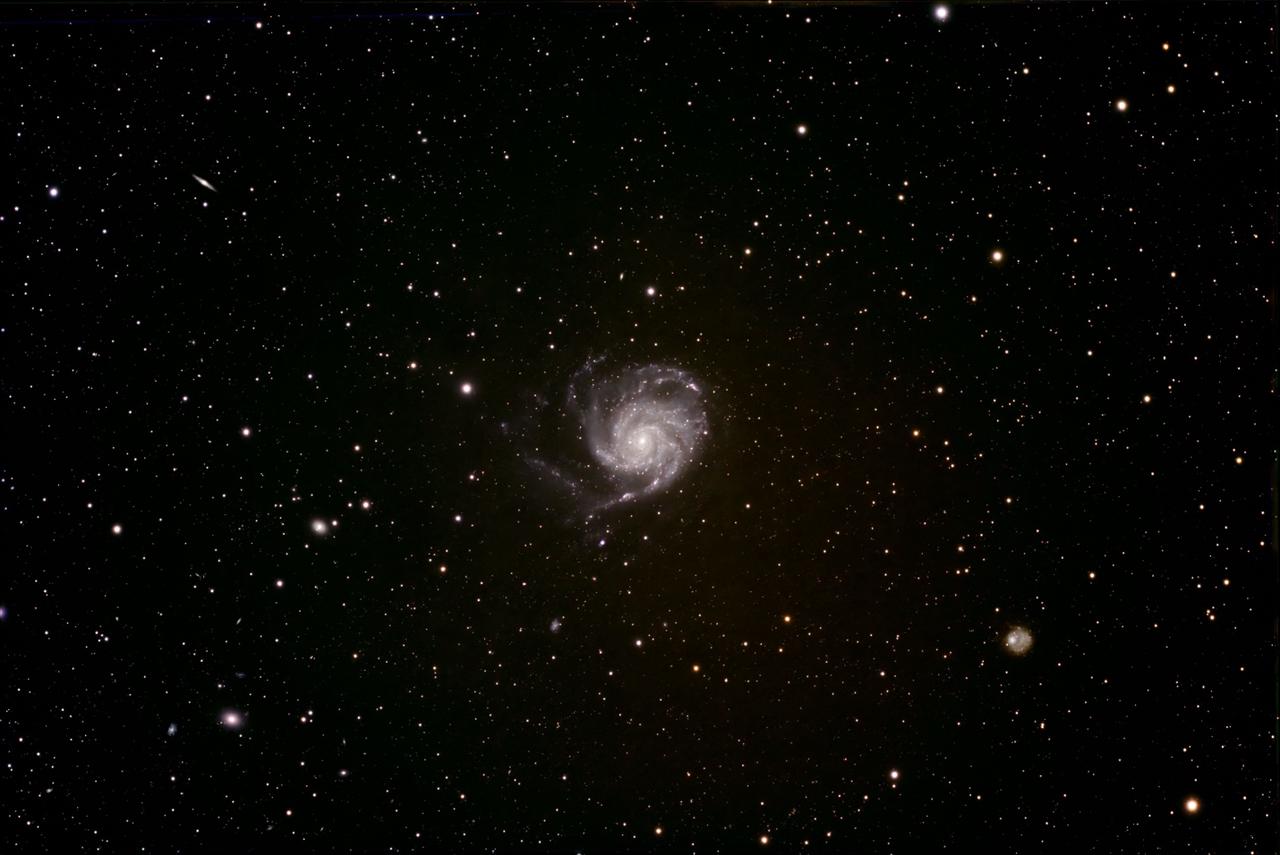
The Radiant Spirals of M101. Astrophotographer Richard Harris presents a deep-space look at the Pinwheel Galaxy, utilizing the Askar FRA600 and a ZWO 2600MM-P camera. By blending traditional LRGB data with narrowband SHO (Sulfur, Hydrogen, and Oxygen) filters, Harris highlights the glowing HII star-forming regions that define this massive spiral’s structure.
M 101 is big, structured, and easy to frame with moderate focal lengths. It is also a good test of your processing habits because the arms can be subtle compared to the core. Many people clip M 101 by getting impatient with background noise. If you are careful and you have real integration, it cleans up.
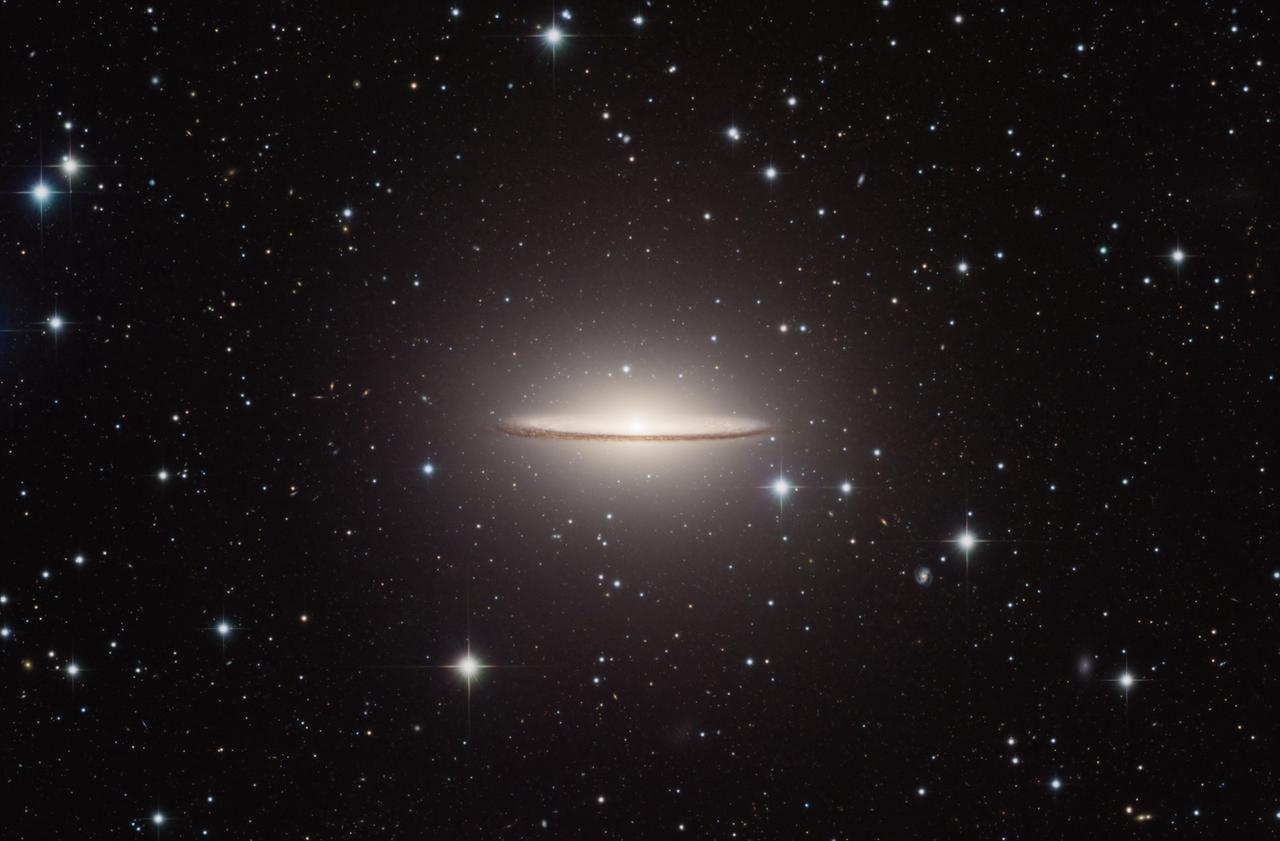
4.M 104 the Sombrero Galaxy
A Deep-Space Portrait from the Southern Hemisphere. Utilizing remote integration from a CDK 24 in the pristine skies of Chile, Richard Harris reveals the stunning dust lane and glowing core of the Sombrero Galaxy. This 8-hour LRGB composite demonstrates the incredible resolution and clarity achievable with professional-grade optics and world-class seeing conditions.
Sombrero is a lesson in dust lanes and dynamic range. The bright bulge and that dark band force you to manage exposure and stretching with intent. It is also one of those galaxies that looks good even when it is small in the frame, because the geometry reads clearly.
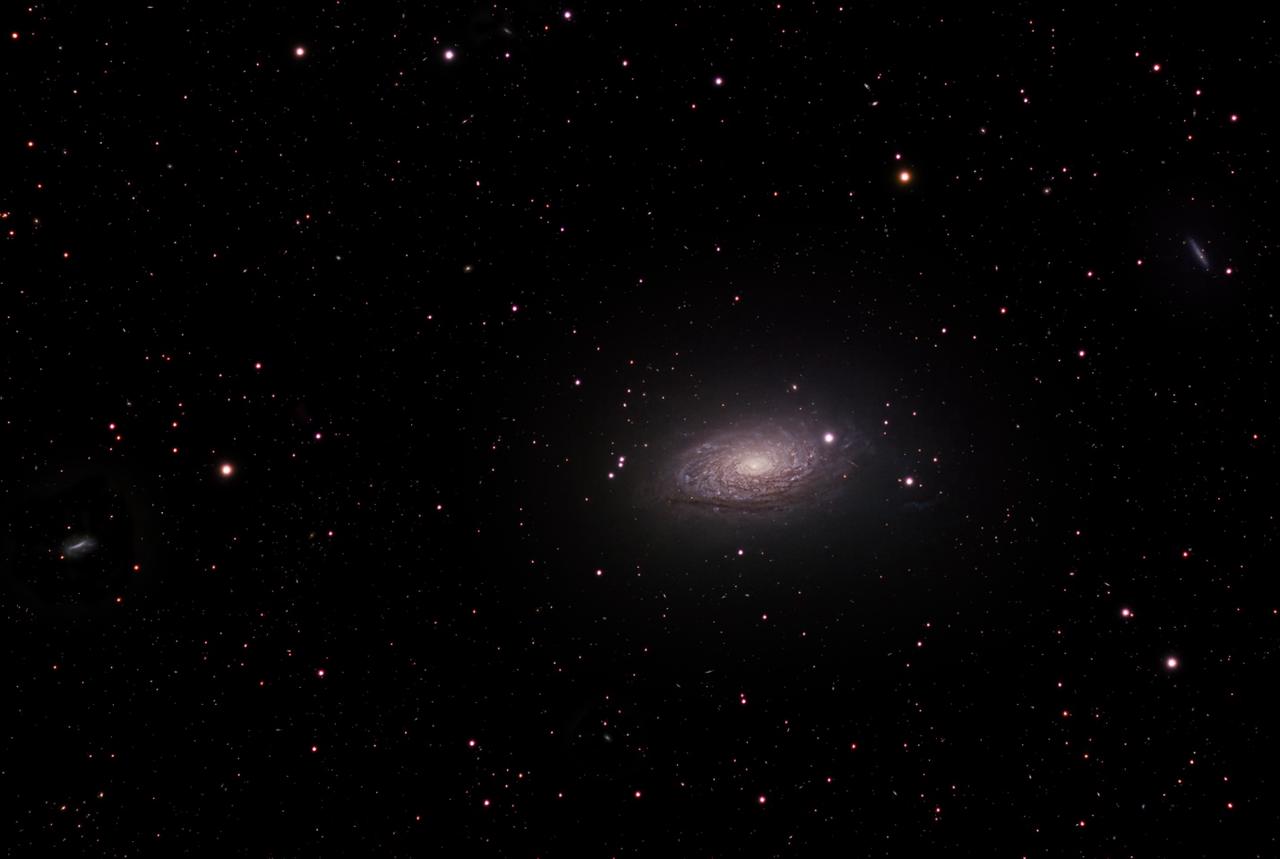
5.M 63 the Sunflower Galaxy
The Sunflower in Bloom. Astrophotographer Richard Harris utilizes the exceptional contrast of the TEC 180FL to reveal the tight, multi-armed structure of M63. Captured in March 2024, this RGB composite showcases the “flocculent” nature of the Sunflower Galaxy, where hundreds of star-forming regions decorate its swirling dust lanes.
M 63 is a strong choice when you want spiral texture without the huge footprint of M 33 or M 101. It has structure that comes forward nicely in LRGB and also works well with one shot color under decent skies.
6.M 64 the Black Eye Galaxy
This one is a personal favorite for showing that a galaxy can be compact, bright, and still full of character. The dark feature near the core is not subtle. It is also a great target when your seeing is only average, because the main shape still survives.
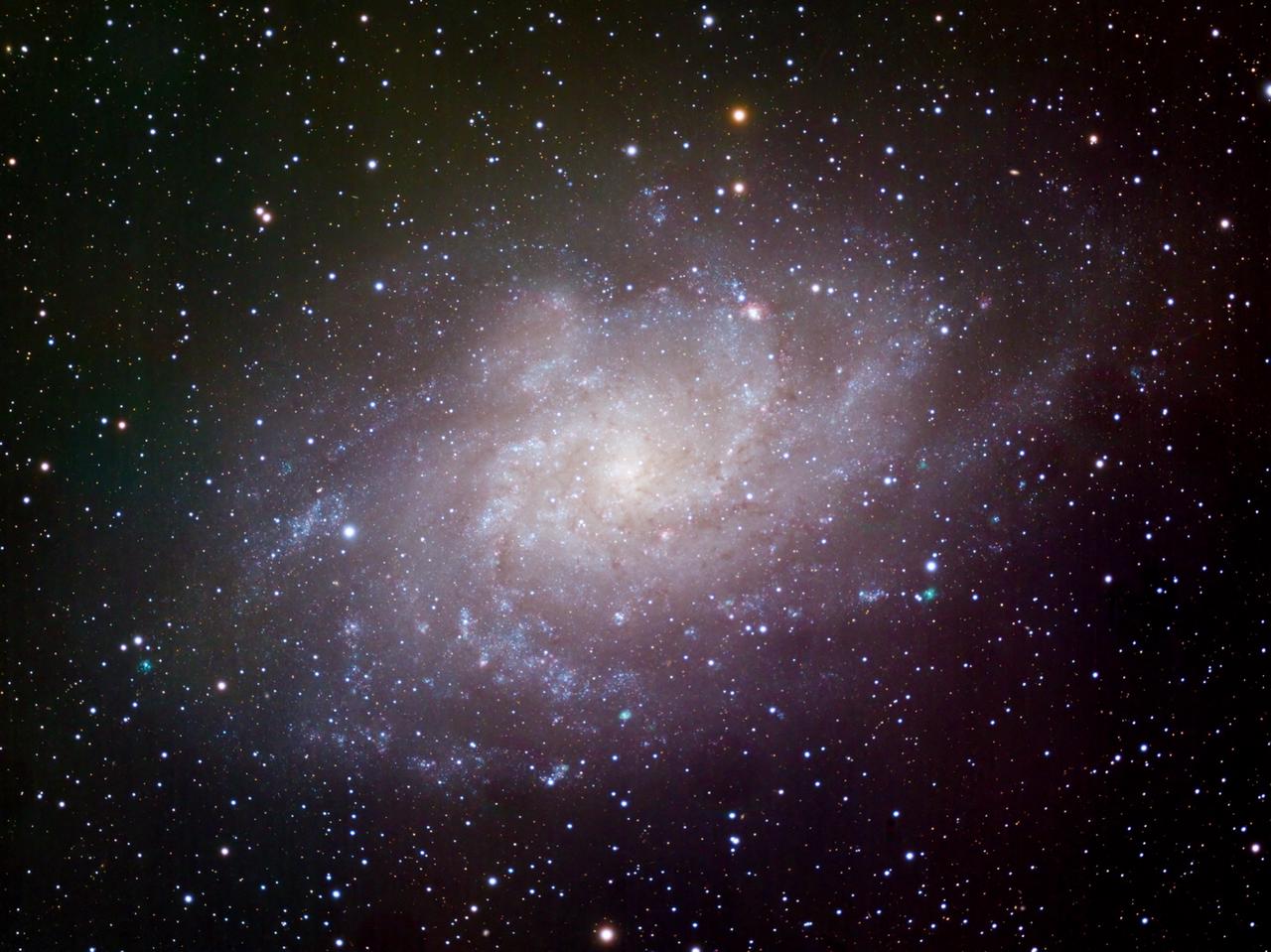
7.M 33 the Triangulum Galaxy
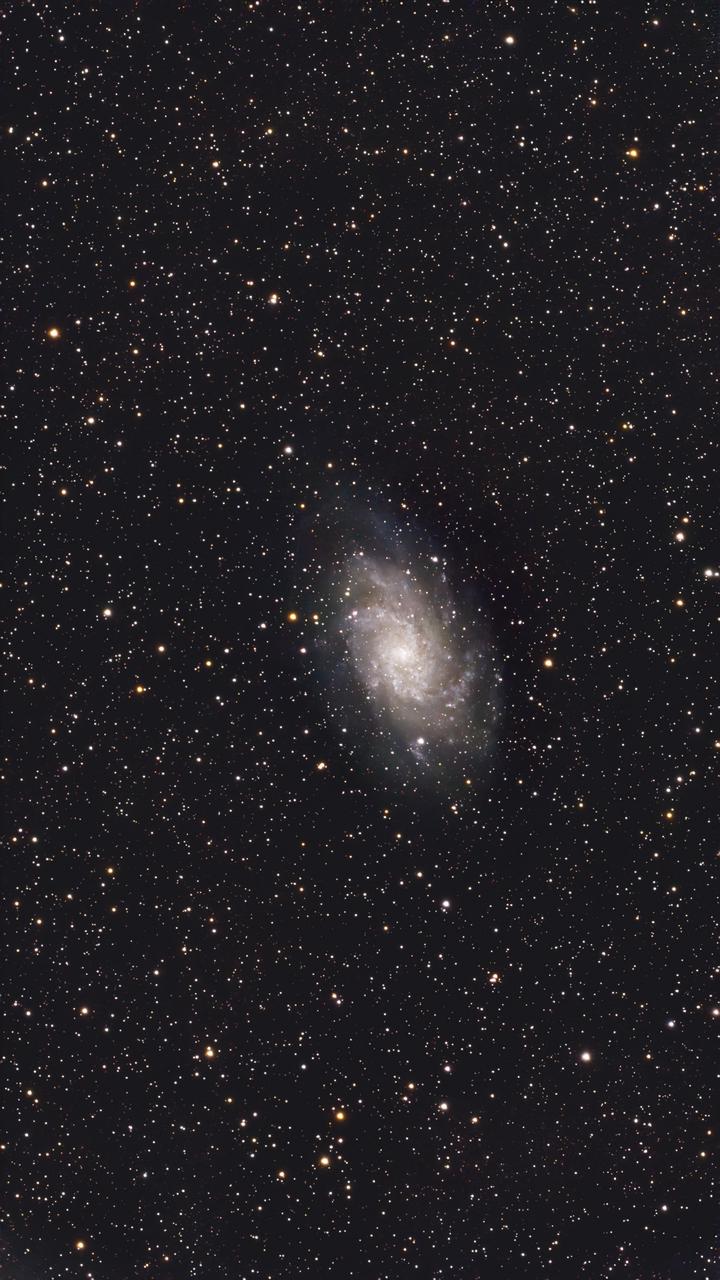
A High-Efficiency View of Triangulum. In just 1.6 hours of total integration time, Richard Harris captures the expansive spiral structure of M33. Utilizing the TEC 180FL and a ZWO 6200MM-P in Bin 2 mode, this image highlights the galaxy’s prominent HII star-forming regions and delicate dust lanes, proving the power of high-end optics and sensitive sensors under the right conditions.
Strictly speaking, M 33 is at its best outside the core of spring, but early in galaxy season it can still be within reach, and it is worth it for the scale and the star forming regions. It is also one of the galaxies that makes you appreciate shorter focal lengths and wider fields.
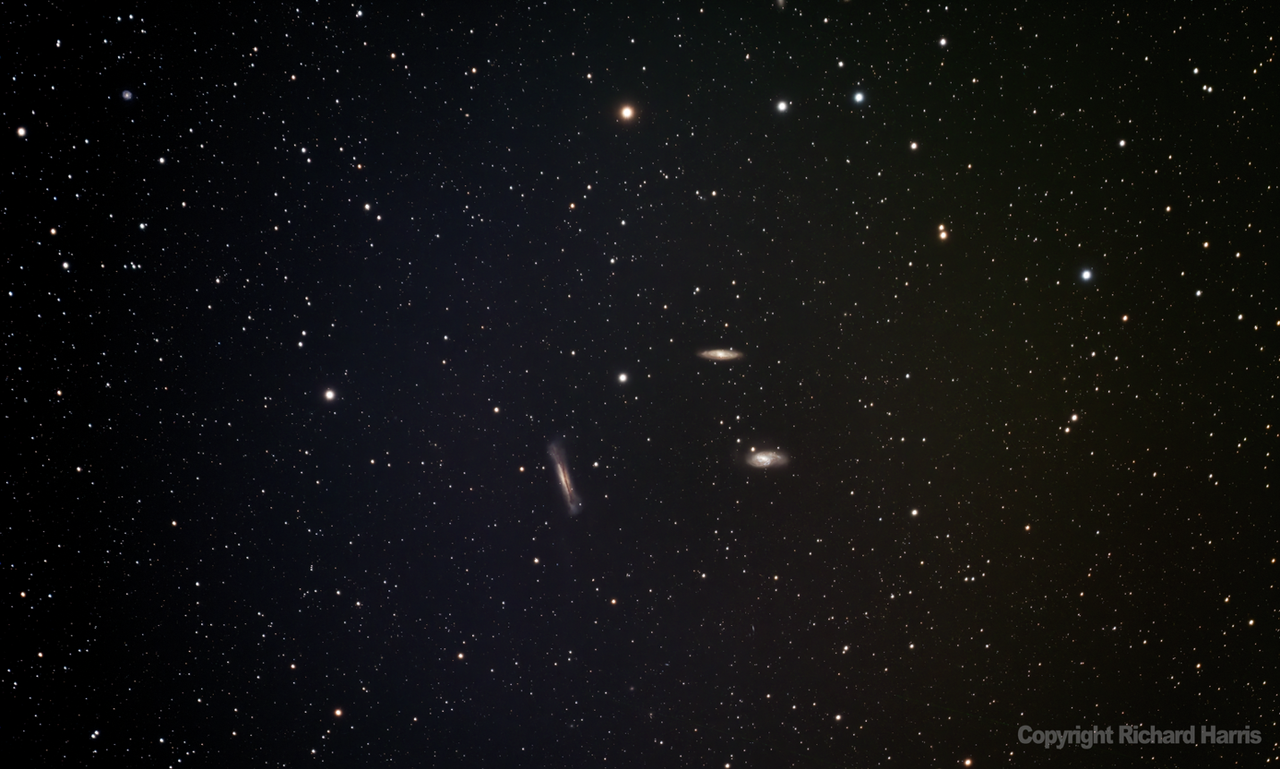
8.The Leo Triplet rising in Leo
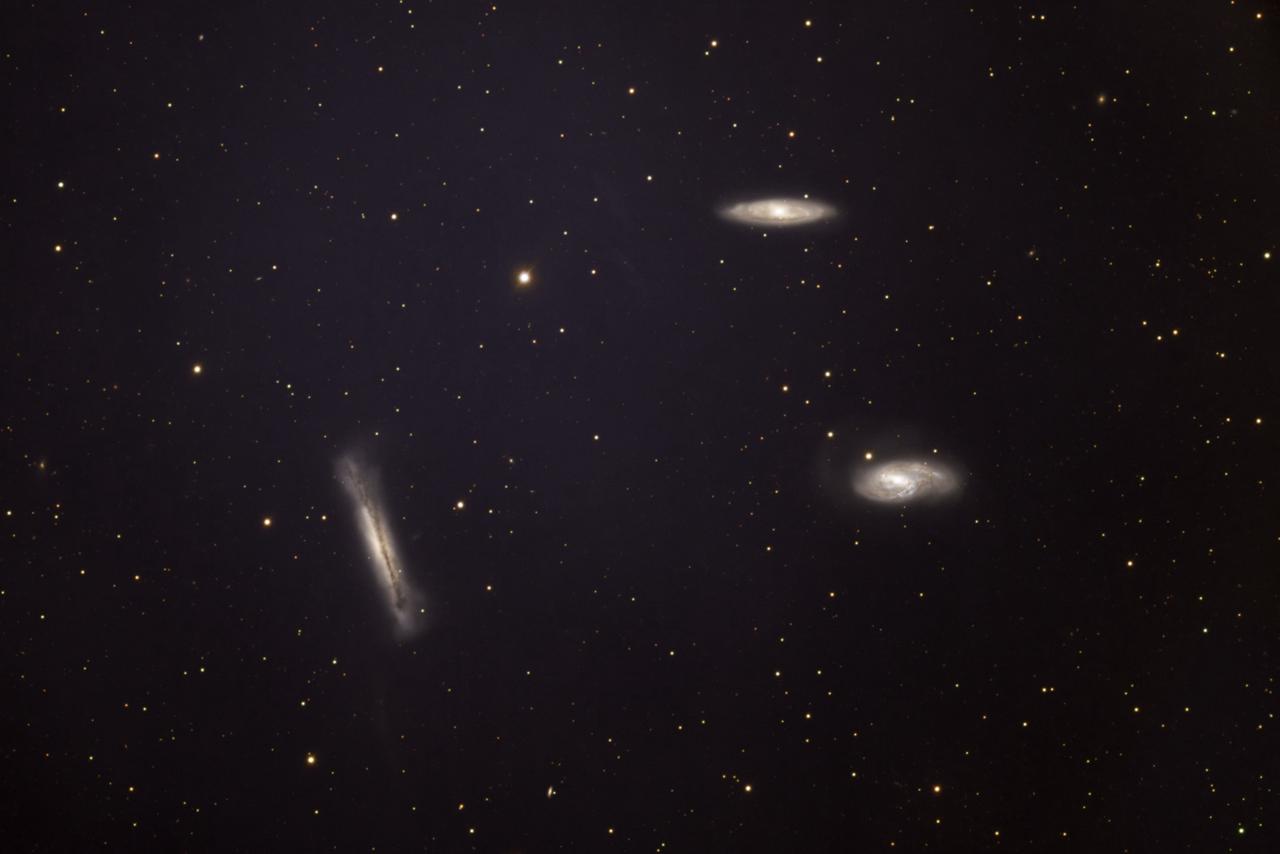
Three Galaxies in One Frame. Astrophotographer Richard Harris captures the famous Leo Triplet, a group of three interacting spiral galaxies – using the compact but powerful Meade 6000 70mm Quadruplet. This wide-field view, totaling 1.6 hours of LRGB data, provides the perfect context for the gravitational relationship between M65, M66, and the “Hamburger Galaxy” (NGC 3628).
This is where galaxy season starts feeling like you are not just photographing one object, you are photographing a neighborhood. Three galaxies in one frame with different orientations and different personalities. It is also a good test of your gradient control because Leo often sits in sky that is not perfectly clean from suburban light.
9.Hickson Compact Group 68
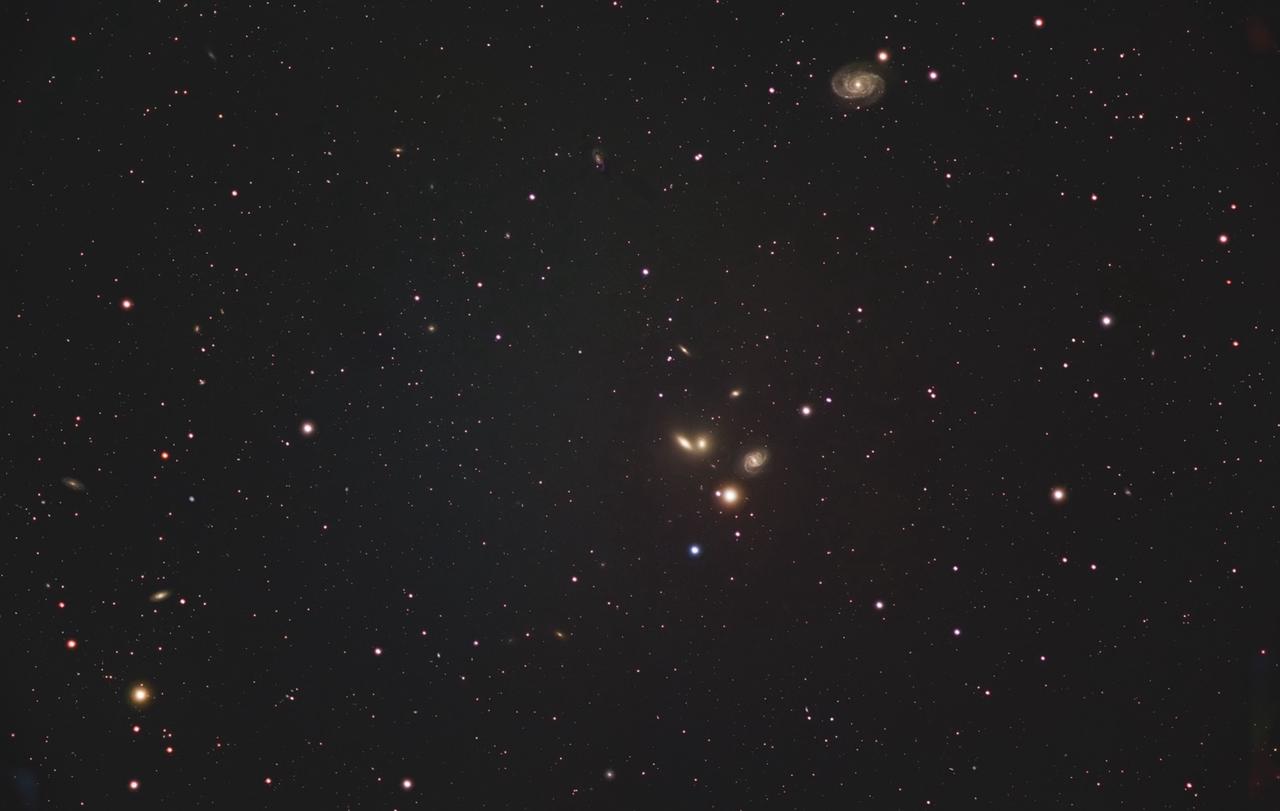
A Study in Density: Hickson 68. Astrophotographer Richard Harris utilizes the long focal length and fluorite clarity of the TEC 180FL to dive into one of the sky’s most iconic compact groups. This RGB composite of HCG 68 centers on the interacting pair NGC 5353 and 5354, revealing a composition that feels deliberate and crowded, where the surrounding region is packed with galactic neighbors. Total Integration: 36 mins x 3 filters = 108 minutes (1.8 hours).
This is where you stop thinking in single objects and start thinking in density. This compact group gives you a composition that feels deliberate – a tight gravitational huddle where the galaxies almost seem to be whispering to one another. It also scales beautifully. A short refractor captures the entire group as a sparkling ‘block party’ in a deep-space field, while a longer system like the TEC 180 lets you dive into the subsection where NGC 5353 and 5354 are locked in their cosmic dance, making every individual member of the group truly matter.
10.NGC 4565 the Needle Galaxy
Edge on spirals are addictive once you start seeing dust lanes cleanly. NGC 4565 is a spring benchmark because the thin profile reads well and the lane structure gives you a real resolution target. If you are watching the eastern sky as the season ramps up, pay attention to what is rising behind these headline objects. Virgo and Coma Berenices are not just constellations. They are directions where you are aiming out of the Milky Way plane and into rich galaxy territory.
How I approach galaxy season with real gear and realistic expectations
I have been an amateur astronomer a long time, long enough that I still remember when astrophotography meant film, notebooks, and a tolerance for disappointment. These days I run a software business, I edit for ScopeTrader, and I still make time to be a citizen scientist under the stars because the sky does not care what your day job is.
My current galaxy season revolves around two very different tools.
One is a RASA 11 v2 on the AM7 mount. Fast optics change the rhythm of a night. At f 2.2, you can build signal quickly and you can take advantage of shorter sub-exposures. For galaxies, I like the RASA when I want context, when I want to work a region, or when I want to capture detail quickly across a moderate field. It is also surprisingly useful when you want to include companions and background galaxies instead of zooming so far in that the target becomes isolated and clinical.
The other is a TEC 180 FL, and I often pair it with a Quad TCC reducer when I want a wider field than the native focal length provides (about 900mm total at F/5). This is my detail instrument. It is the rig that lets me turn spring galaxies into structure, not just shape. The TEC is a top-shelf instrument, and I feel lucky to be able to use it night after night. Optical clarity really comes out when you focus in on galaxies because unlike nebulae or large swaths of IFN, galaxies mean detail, and contrast – which nothing but a refractor can give you best, mostly because there is no central obstruction (secondary mirror) with refractors.
Now, what matters most for galaxies is not one perfect telescope design. It is matching the telescope to the apparent size of what you are shooting, and matching the image scale to your conditions.
A good overall galaxy telescope usually lives somewhere between medium and long focal length, with a field that can frame the target plus some breathing room. That can be a corrected Newtonian, an RC, a well corrected SCT, or a high quality refractor in the 100 mm to 180 mm class. You want good stars across the field, stable focus, and a system that you can guide well.
But I will say this clearly because it saves people time and money. Do not rule out small aperture scopes. A 60 mm or 80 mm refractor can be a galaxy season hero because it can frame Markarian’s Chain, include the Leo Triplet with space around it, or pull in the broader environment around M 81 and M 82. A smart telescope can do real galaxy season work too, especially if you treat it as a wide field survey instrument rather than trying to force it into small galaxy detail it cannot physically resolve.
M33 galaxy as taken using the Seestar S30 Pro, just 60 minutes exposure.
There is another reason wide field matters, and it is one of the quiet rewards of spring imaging. Some galaxy fields, especially under dark skies and with fast optics, are surrounded by faint dusty background glow that is not part of the target galaxy at all. If you are lucky and patient, you can capture that integrated flux nebula structure in the same frame. It adds depth and it also adds a serious processing challenge because it lives at the edge of what your system and your sky can support.
Finally, galaxies love company. Some of the best spring compositions are pairs or groups. M 51 with its companion. M 81 and M 82 together. The Leo Triplet. Markarian’s Chain. Even outside spring, Andromeda has companions like M 32 that make the story richer. Galaxies are often found in groups and clusters, and that is not just a catalog coincidence. It is a reminder that gravity builds structure in families.
Camera choices from mono to one shot color
For galaxies, both monochrome and one shot color cameras can deliver serious results.
A monochrome camera with filters is the classic path for a reason. You control the data. You can collect luminance for fine structure and then add RGB for color. If your seeing supports it and your optics are up to it, mono plus luminance is a straightforward way to push detail without turning your processing into guesswork.
One shot color has a different strength. It is efficient in the field. You collect color and luminance information in one go, and modern OSC sensors do this very well when the target is broadband, which galaxies are. For a lot of galaxy season work, especially with limited clear nights, an OSC camera is the difference between getting the project done and not getting it done.
Where people get tripped up is not mono versus color. It is pixel match.
Pixel match is about image scale. It is the relationship between your pixel size and your focal length, and it determines how many arcseconds of sky land on one pixel. Too coarse and the galaxy becomes soft and blocky. Too fine and you oversample the seeing, which means you create bigger files and noisier data without gaining real detail.
I aim for an image scale that matches my typical seeing. If the atmosphere is blurring stars to a couple arcseconds, I do not build a system that samples at a fraction of an arcsecond per pixel and pretend I am buying free resolution. Detail comes from matching the system to the sky and then collecting enough clean integration to support processing.
Galaxies compared to nebulae and star clusters
Galaxies are not just faint things in black space. They are structured. Dust lanes, cores, asymmetric arms, faint outer halos, and tidal scars all live on different brightness levels in the same object. That is why galaxies reward good resolution, and why the type of telescope and camera you use can change the final result in a way that is obvious even to non astronomers.
Nebulae, especially emission nebulae, are often a filter game. Narrowband can isolate the signal and let you work under moonlight or light pollution in a way broadband often cannot. Galaxies are less forgiving of bright skies because their signal is spread across the spectrum and the skyglow is too. That is why galaxy season, for many of us, becomes the season where we either travel to darker skies or we get serious about gradients, calibration, and honest background work.
Star clusters are a different problem. They are often bright enough that you are managing star color and saturation more than you are digging for faint low contrast structure. When you photograph a galaxy, you are always walking the line between enough stretch to reveal the arms and not so much stretch that you crush the core or invent structure that is not there.
This is why I tell people to treat galaxy imaging as a discipline in restraint. Good calibration. Good focus. Good sampling. Good integration. Then process like a scientist with an artists eye but a low tolerance for fiction.
Practical workflow notes that keep the results honest
If you want your galaxy season to go well, plan around three things: object size, image scale, and sky quality.
Start with size. Pick targets that fit your field. Cropping is fine, but constant heavy cropping usually means you brought the wrong focal length to the job.
Then match your image scale to your sky. If you are imaging from a place where stars rarely get tight, do not chase extreme sampling. Build a setup that turns your typical nights into efficient data collection.
Third, respect the sky. Galaxies are broadband. Darker skies matter. Moonlight matters. Light pollution matters. You can still do galaxy season under suburban skies, but you have to be more careful with gradients and you have to accept that the faintest outer features will be harder to validate.
Finally, decide what you are actually trying to capture. If your goal is a clean, well resolved galaxy with believable color, you can often do that without marathon integration. If your goal is to dig out tidal features and faint dust, understand that you have signed up for long total exposure time and careful processing. That is not a problem. It is just the job.
Galaxy season is here. The targets are up. The learning curve is real. And the payoff is not a slogan. It is the simple fact that you can point a telescope at a faint smudge, collect its light in your backyard, and know that a century ago we did not even agree what that smudge was.
Author BIO:
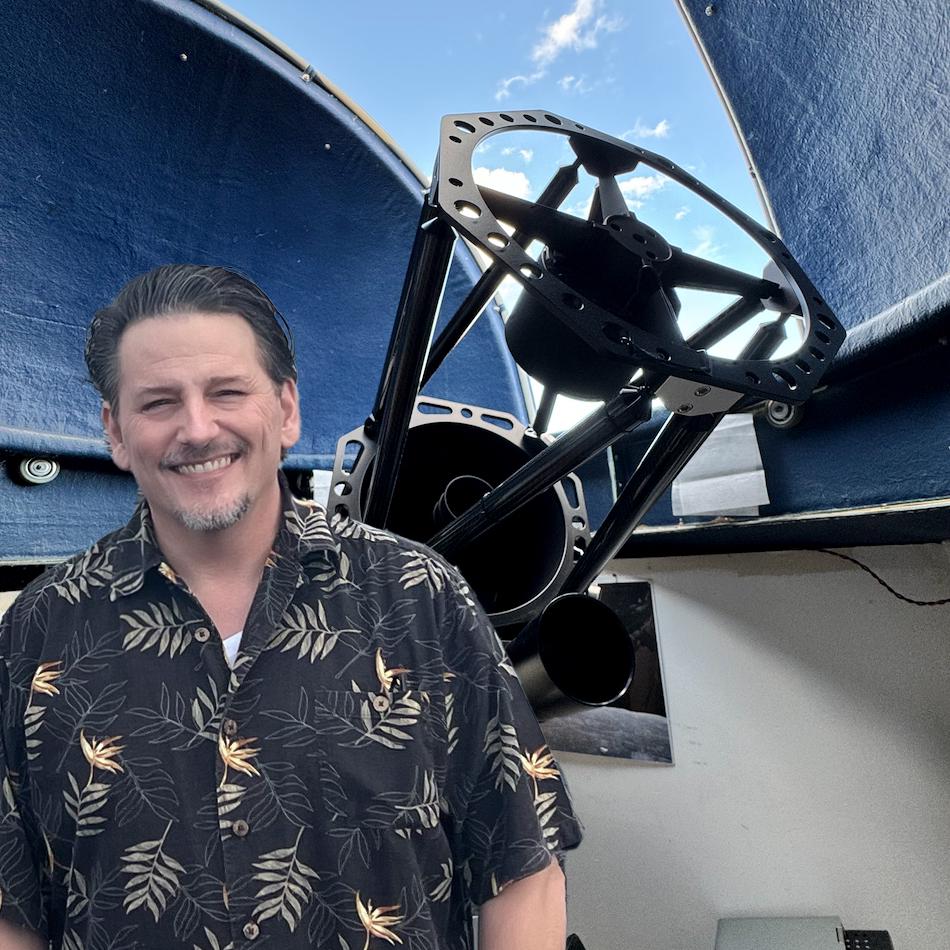
Meet Richard Harris. He is the founder and editor-in-chief of
ScopeTrader, with over 30 years of experience in astronomy and astrophotography. He serves as the director of the
Ozark Hills Observatory, where his research and astrophotography have been featured at NASA’s INTUITIVE Planetarium, scientific textbooks, academic publications, and educational media. Among his theoretical contributions is a cosmological proposition known as The Harris Paradox, which explores deep-field observational symmetry and time-invariant structures in cosmic evolution. A committed citizen scientist, Harris is actively involved with the Springfield Astronomical Society, the Amateur Astronomers Association, the Astronomical League, and the International Dark-Sky Association. He is a strong advocate for reducing light pollution and enhancing public understanding of the cosmos. In 2001, Harris developed the German Equatorial HyperTune – a precision mechanical enhancement for equatorial telescope mounts that has since become a global standard among amateur and professional astronomers seeking improved tracking and imaging performance. Driven by both scientific curiosity and creative innovation, Harris continues to blend the frontiers of astronomy and technology, inspiring others to explore the universe and rethink the possibilities within it. When he’s not taking photos of our universe, you can find him with family, playing guitar, or traveling.