
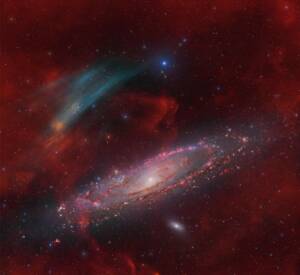
Discovery of the M31 [OIII] emission arc
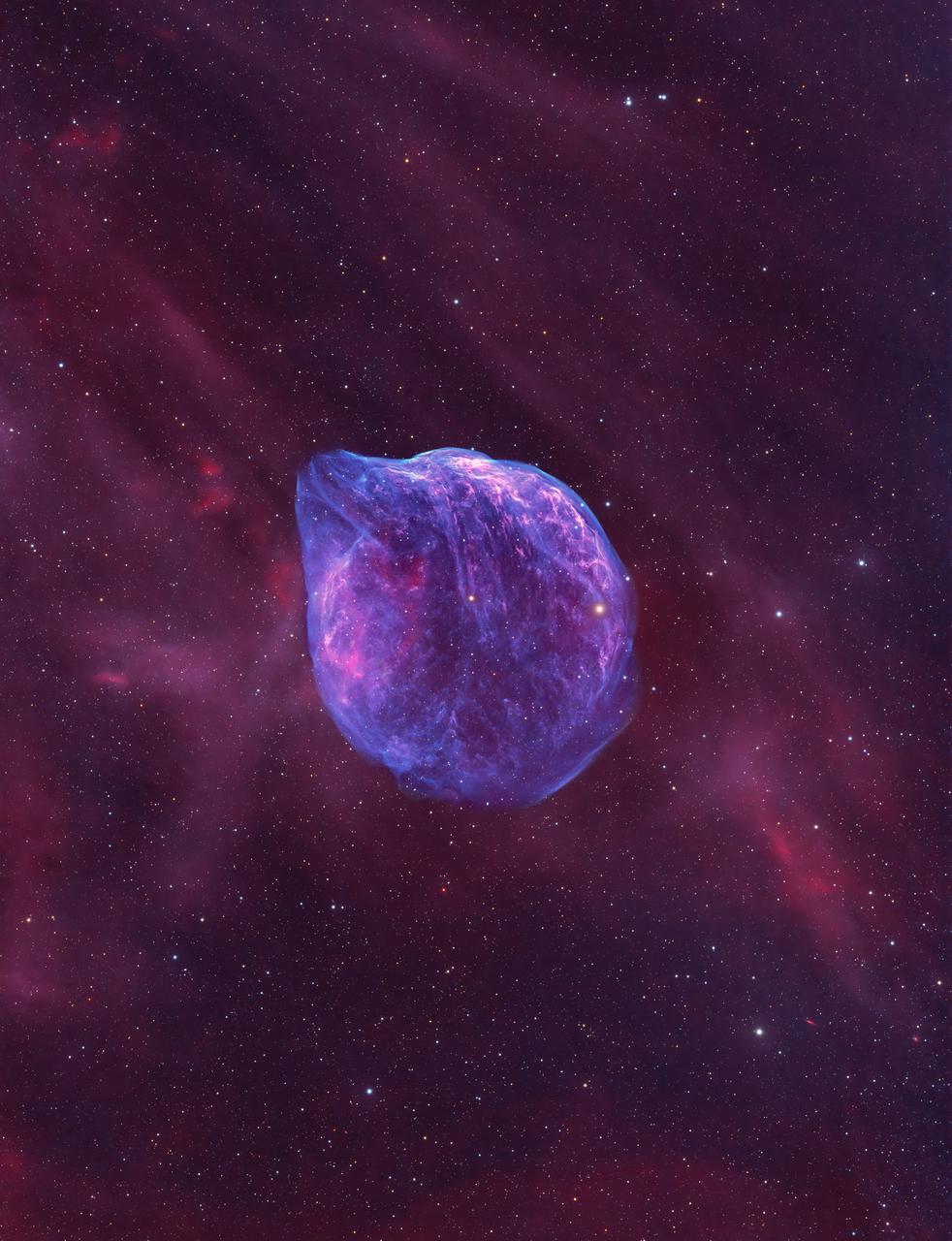
Recently, a major discovery by an international team of amateur astronomers and scientists has become a huge online hit, and this new discovery is just located in one of the
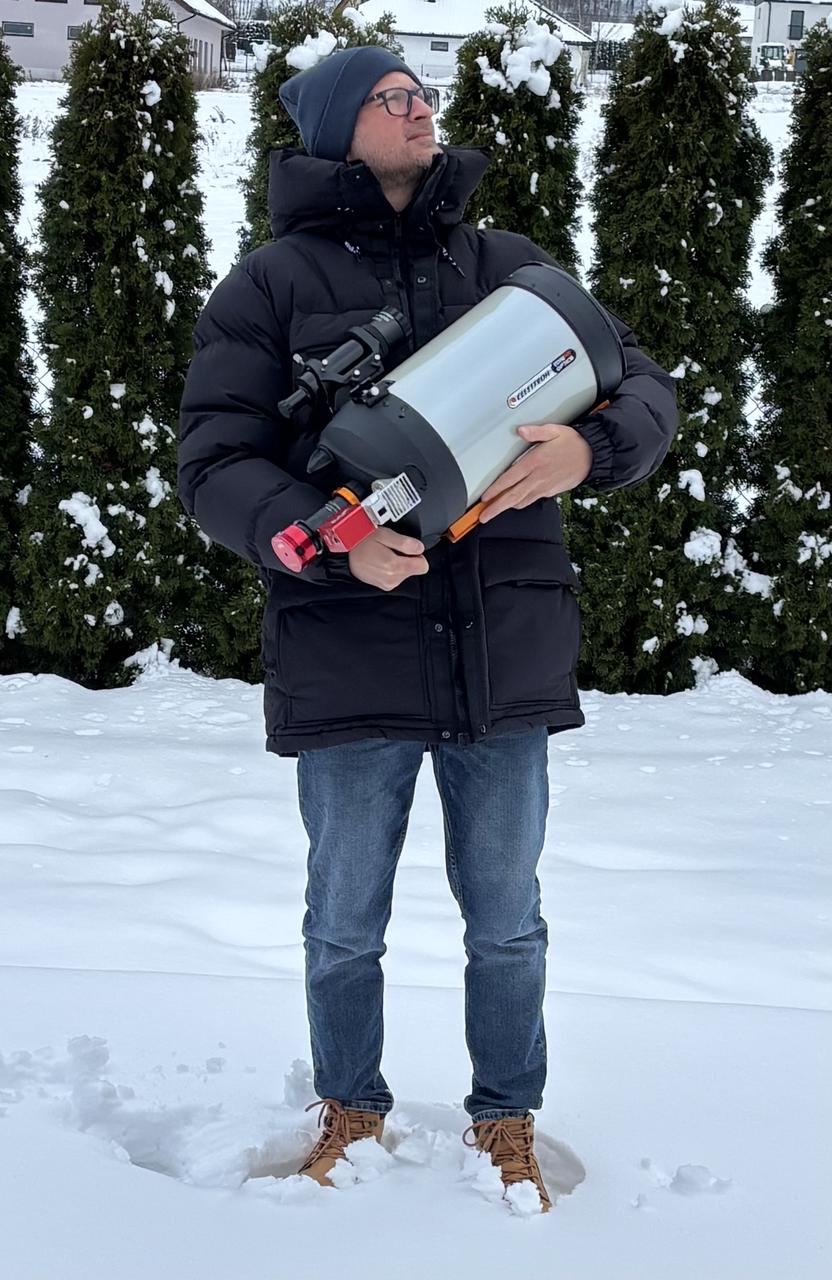
Hi everyone. My name is Alex, and I am an astrophotographer. I would like to start by thanking You for choosing my picture among all the great pictures You receive. It´s really an honor.
I´ve always been interested in astronomy, since I was a child. My father used to take me to the planetariums and every year I admired looking at the “falling stars”, the Perseids. Whenever a lunar eclipse or sun eclipse happened, I was always looking. All my life I´ve been looking up at the night sky wondering and trying to imagine all the amazing sights there are. Astrophotography is my way of achieving that. My first step was looking at the moon with my gear and then I got interested in taking pictures, not just looking. My first picture was M42 Orion, it will always have a special place in my heart.
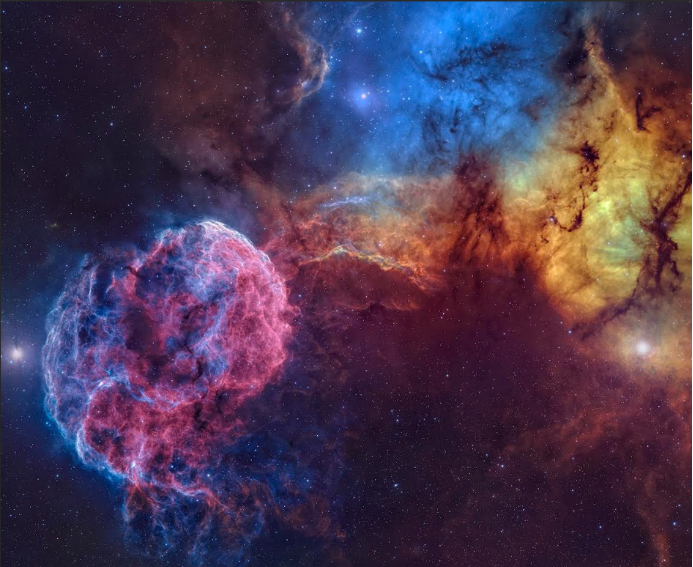
For this picture I used:
Takahashi FSQ85EDX
ZWO Asi2600mm Pro
Zwo AsiAir Plus
SW Wave I150
Antlia Filters 3nm
Exposure time 20 h
Editing the data I used Pixinsight and PhotoShop.
During the years and developing my experience I tried different telescopes and accessories but after trying them all I prefer Takahashi, Celestron edgeHD8 and my RedCAT51. All my cameras are ZWO mono, and I am really satisfied with them.
I usually shoot from my backyard at home or remotely. But I also travel with my mobile setup to catch darker and cloudless skies. My favorite moment is the first frame, and the second favorite moment is when the image is stacked. Then my imagination kicks in and I want to achieve the same picture as I see it in my head.
The greatest challenge for me was improving my editing, processing the images. It takes a lot of time and focus to get the picture I want.
Different challenges appear on the way. For example, when you shoot remotely, you cannot fix problems yourself, you depend on others. That can be challenging because you can´t do anything but wait until the problem is fixed. When you shoot at home it’s easier because you can fix everything by yourself. Still, it can be challenging finding the problem, but I think astrophotographers are persistent people. Problem solving people.
The Processing,it’s really takes time. One can see the image before you make it, but you must make it as you imagine it. Sometimes though it’s hard to get it right but I don’t give up and the result is always stunning, even for me. It takes a lot of time though. Sometimes, unfortunately, the picture doesn´t result in the image that I have. I try to collect many hours of data, it’s important to me, then I go through every shot and erase those I´m not satisfied with. After that it’s the processing of the colors and it is important to me to get the colors right. As I said before this takes time, a lot of time and the most difficult is to get the colors right. It is sad to say but although I succeed and get the colors right, it all depends on where you look at the picture. Sometimes my pictures look different on other screens and the colors aren´t as my original.
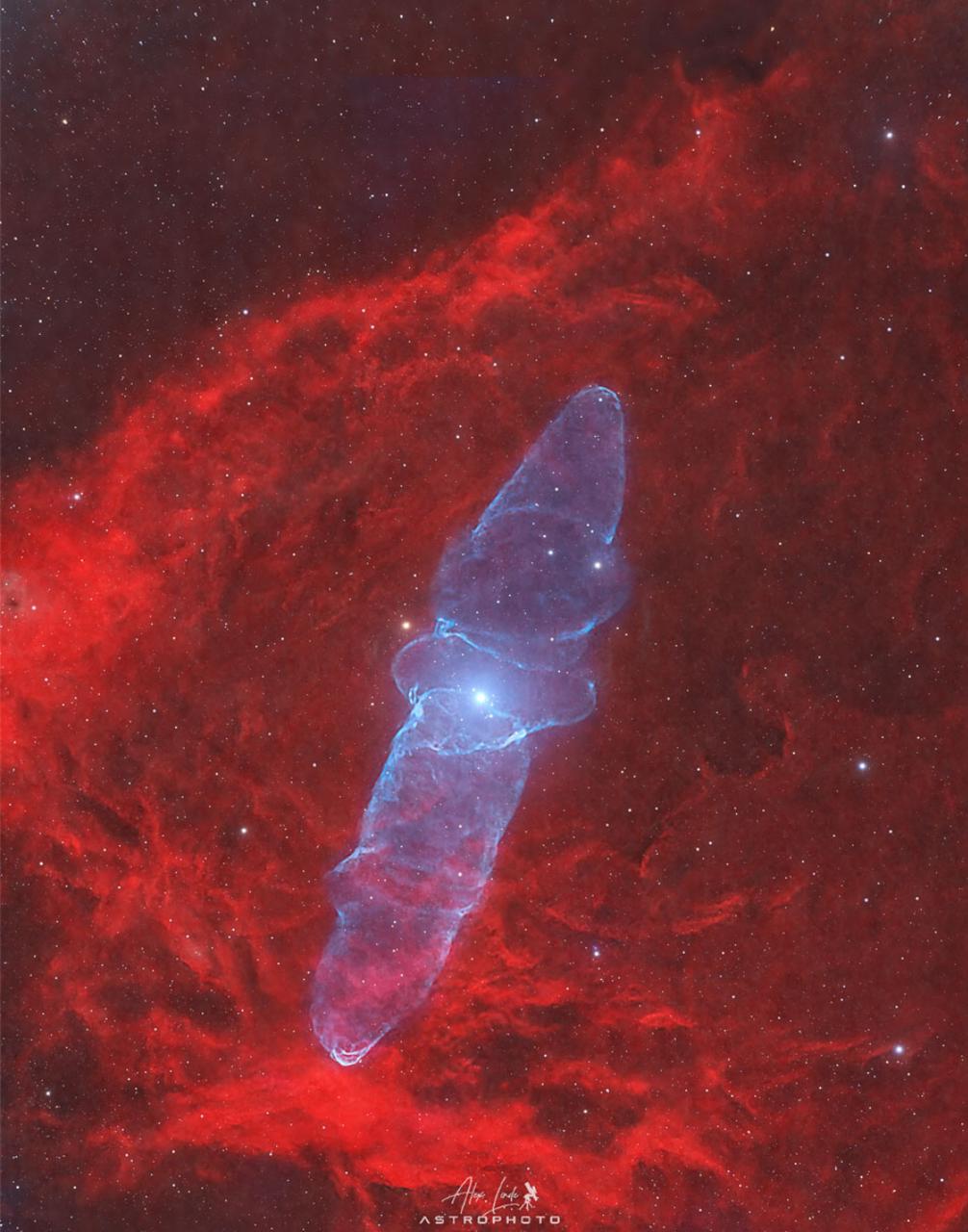
Astrophotographers probably know how hard it is to achieve the perfect picture. But if I had to pick one I´m really proud of it would be the one NASA selected as an APOD (Astronomy Picture Of the Day, Sh2-129, or Ou4: The Giant Squid Nebula). APOD: 2024 June 17 – Ou4: The Giant Squid Nebula It really took me time and effort to get it as I wanted it and the fact that NASA chose it made me even prouder.
NGC 2170, the Angel Nebula, is my favorite celestial target because it consists of so many dynamics, contrasts, it´s colorful and there´s a lot happening in it. Every single picture I take consists of so many other objects, and it awakes my interest but it’s not possible to photograph them all. The sky really has no limit.

Dolphin Head Nebula or Sh2-308 is a really beautiful object (to me). Thanks to filters and cameras of today we can see inside the dolphins head, like some kind of X-ray. We are able to see what is happening there and that it contains a wonderful nebula (Hydrogen Alpha) which is covered in oxygen emission. And we can see every gas in that amazing scenery.
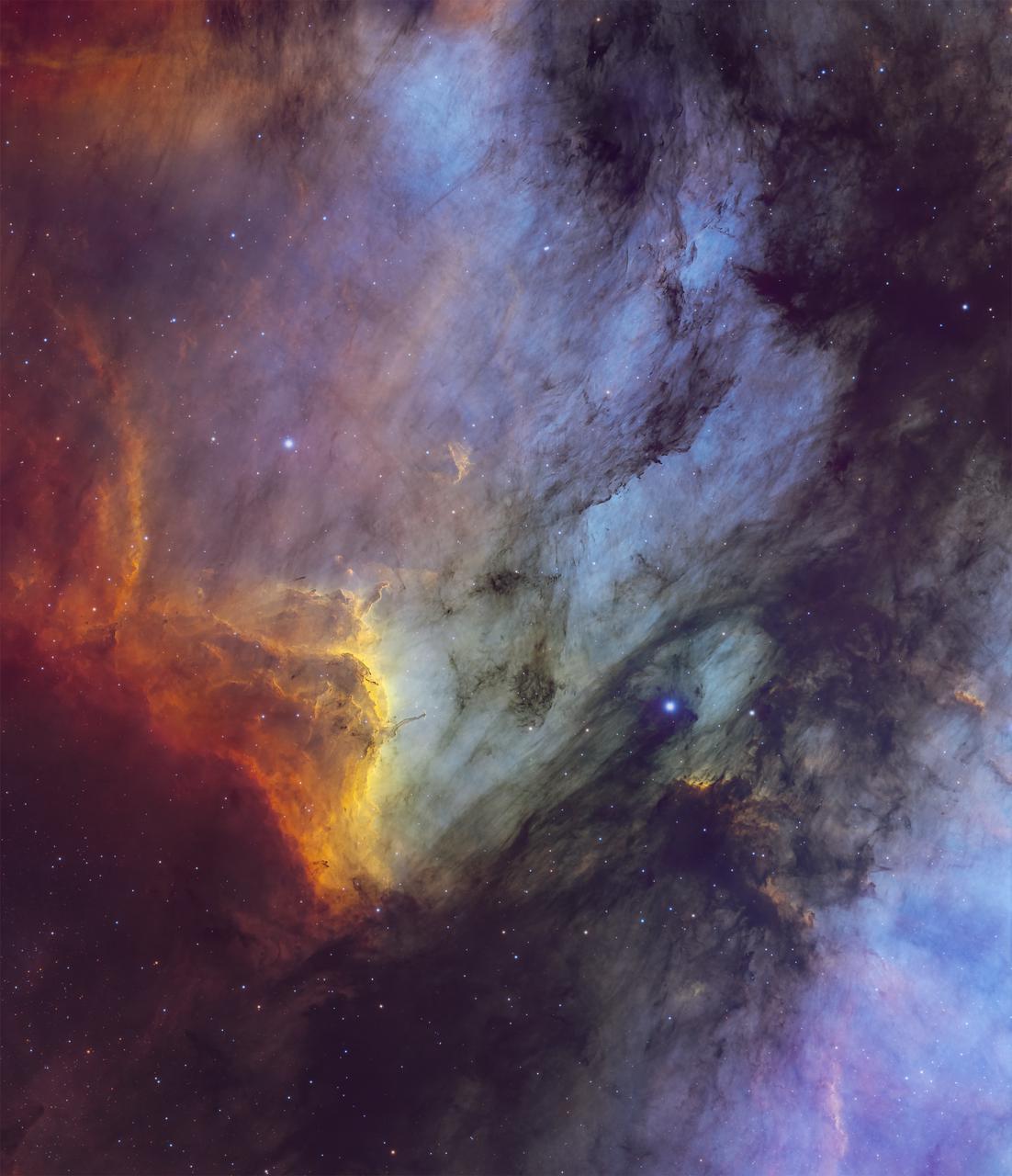
The Pelican Nebula or IC5070 is in the constellation of Cygnus. I am a fan of Fine Art Astrophotography and here is one of the reasons why. This is where our creativity begins, but it never ends; there are simply no limits. With a nebula so rich in various gases, we can edit photos without limits, with contrasts and, above all, with colors to our imagination, without limits.
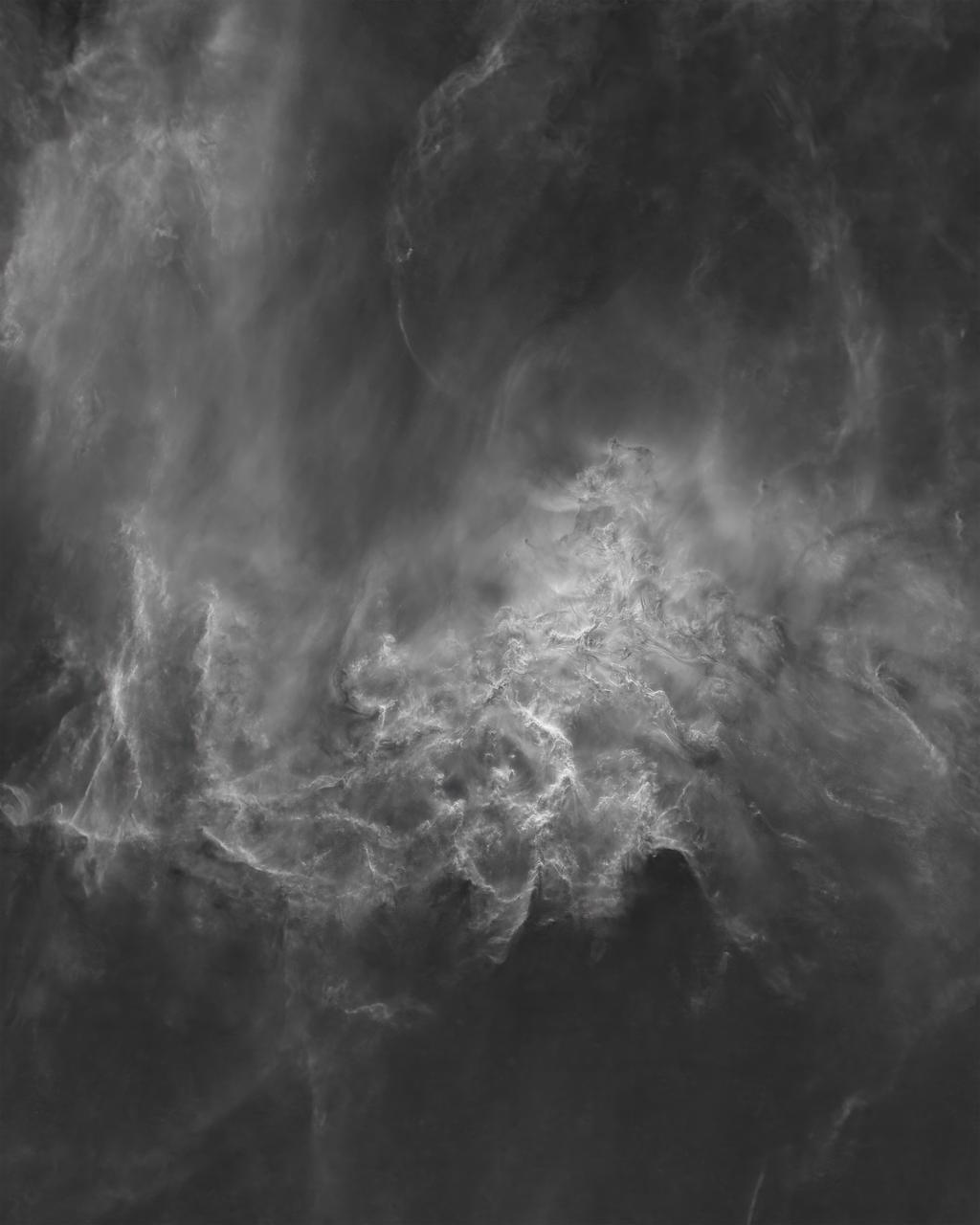
The Flaming Star Nebula in Black & White is also one of my favorites and we shouldn’t be afraid of experimenting. Black and white astrophotos can also be beautiful. Here you can see two filters connected (Ha (Hydrogen alpha) and Sii (Sulfur) ) but without colors. I think that such photos makes us more aware of all the details, the contrasts and the dynamic.
I have a new project ongoing, that means a collaboration with my friend and maybe you will see it soon. I hope to achieve my dream and photograph celestial targets from the southern hemisphere of the Earth, the other side.
Because of astrophotography I have met great people on my way. I would like to take the opportunity and mention some of them: EASST , SAAF , PTMA and many many more.
I started using ZWO Products 2021 and got stuck with them. ZWO has been with me from the beginning, and I am very satisfied with my ZWO products. I am convinced that if you (ZWO) develop the equipment for the better then us (astrophotographers) also develop our skills in making more beautiful photos.
Recently, a major discovery by an international team of amateur astronomers and scientists has become a huge online hit, and this new discovery is just located in one of the
A little more than a century ago, astronomers were still debating the true nature of those faint, cloudy smudges that appeared in their eyepieces. Telescopes had already grown remarkably capable,
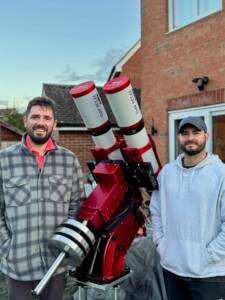
Every astrophotographer knows the feeling. The equipment is ready, the forecast looks good, and the clouds arrive with impeccable timing. This is the story of how two backyard imagers finally
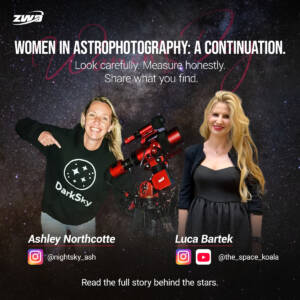
Under the Same Sky: Women in Astrophotography Author: Richard Harris For most of my life, astronomy has been a quiet constant. Telescopes have changed. Cameras have changed. Software has changed.
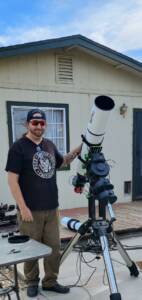
It’s the kind of journey that begins with one look up at the sky… and never really ends. When the world slowed down during 2020, Jonathan Hayton found himself looking
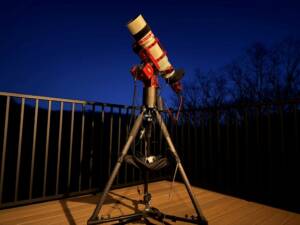
Astrophotography takes no prisoners when it drops below 30 degrees outside – and let’s be honest, it’s hard enough on a calm 70-degree night with low humidity. If you’re not