
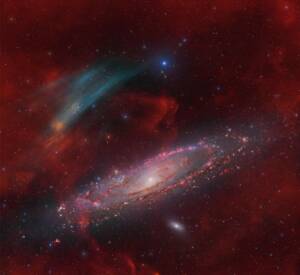
Discovery of the M31 [OIII] emission arc
Recently, a major discovery by an international team of amateur astronomers and scientists has become a huge online hit, and this new discovery is just located in one of the
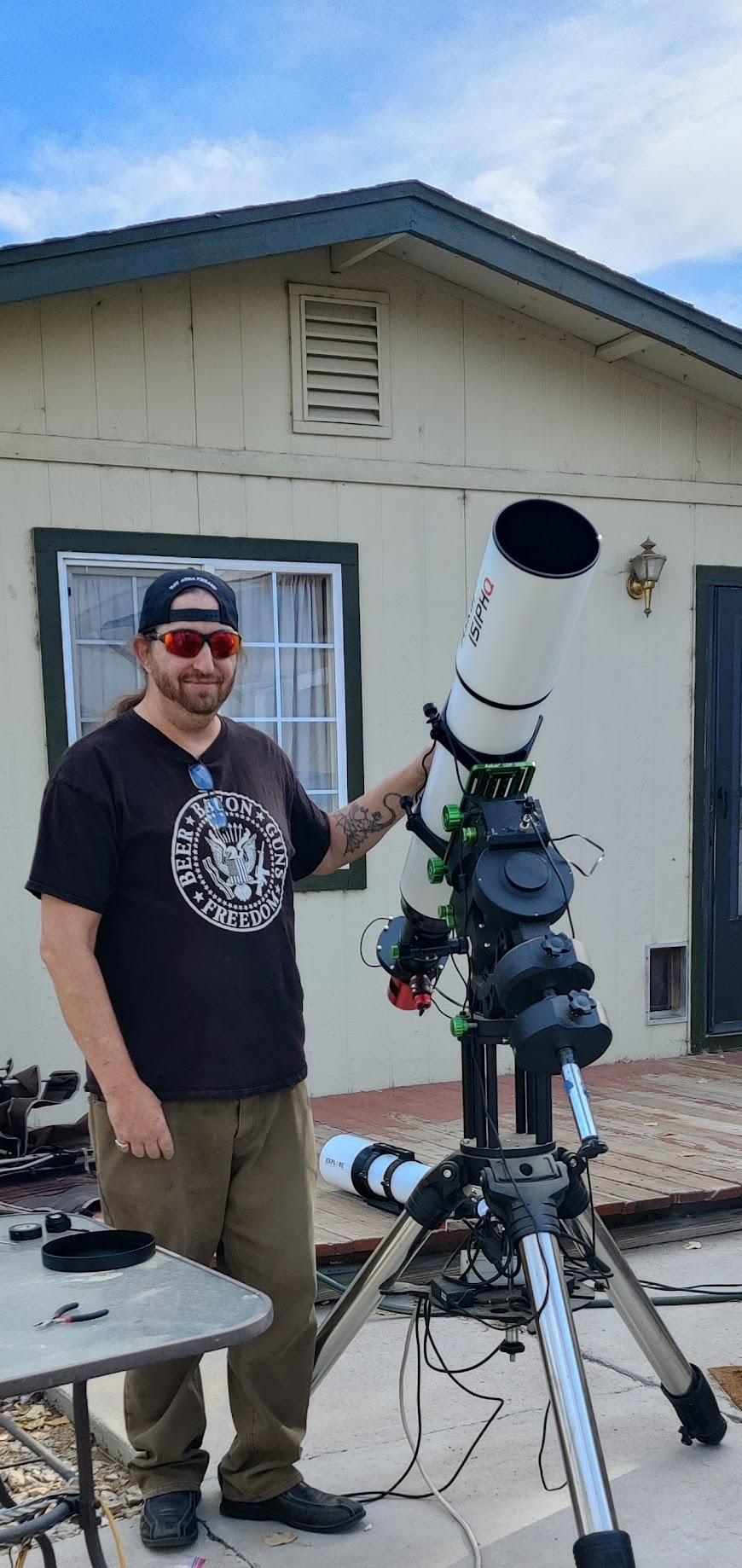
It’s the kind of journey that begins with one look up at the sky… and never really ends.
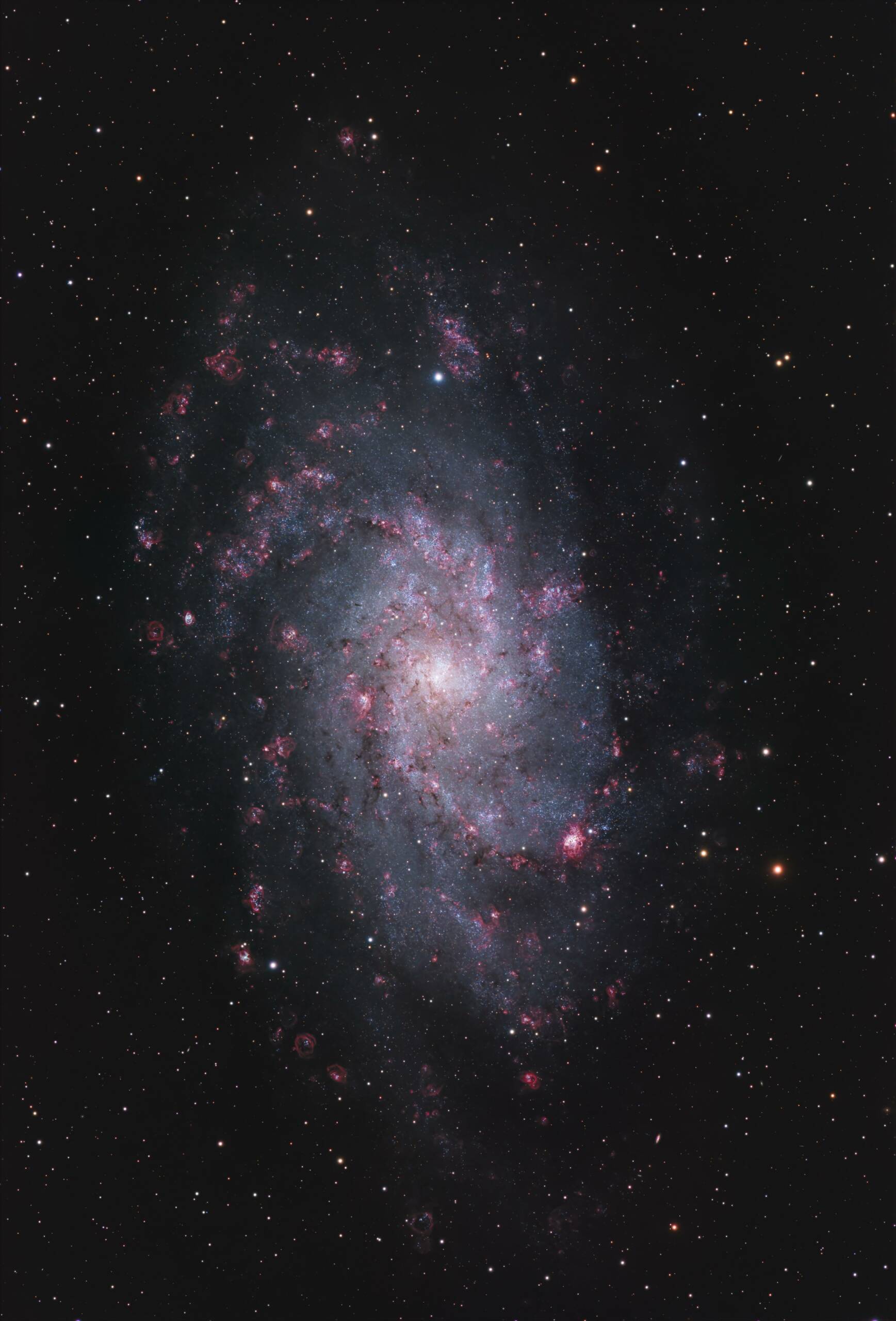
When the world slowed down during 2020, Jonathan Hayton found himself looking up. One day, he stumbled upon an image of the Andromeda Galaxy (M31) taken by a local astrophotographer — just a DSLR and a lens. “I thought to myself, I want to take a great picture just like that.”
That single image changed everything. Confined at home but driven by curiosity, Jonathan began his own astrophotography journey.
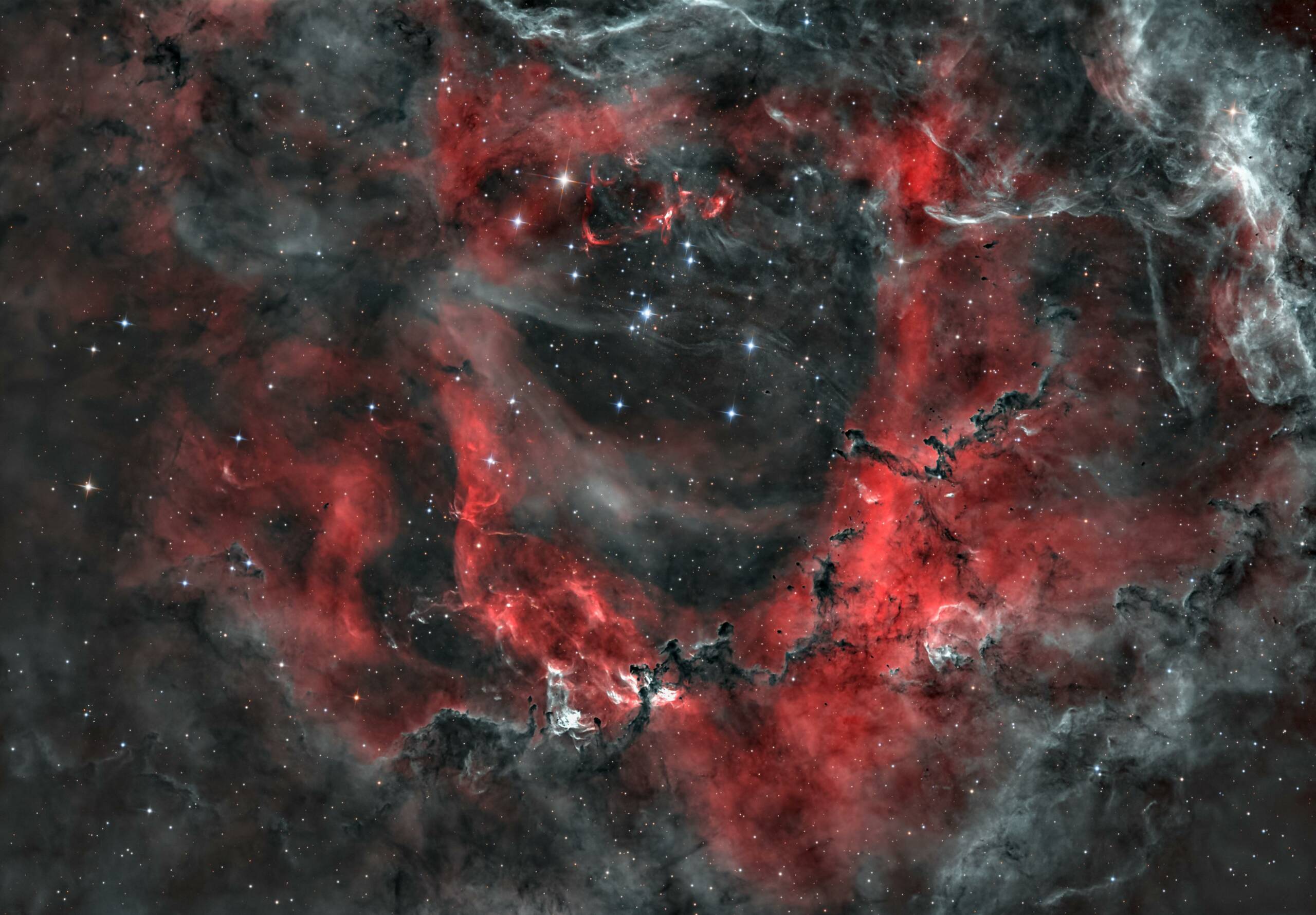
Starting small, he experimented with a DSLR and lens, then gradually upgraded — first adding a tracker, then moving to a full equatorial mount, OTA, and eventually a dedicated astro camera: the ZWO ASI183MC-Pro. “On every clear night, I was out imaging—spending countless hours reading tutorials, processing data, and reprocessing with newly learned techniques.”
Now in his fifth year, Jonathan manages multiple setups — sometimes running as many as five rigs at once, a level of dedication few can match. Though he thinks that it “starts to feel like work,” it’s clear that his passion for the night sky has only deepened.
Today, Jonathan favors portable precision. His main setup features a Sharpstar 94 EDPH Triplet with a 0.8x reducer (414mm at f/4.4), paired with the ZWO ASI2600MM-Pro, ZWO EFW, EAF, and the ZWO ASIAIR Plus — all riding on the ZWO AM5n.
While he’s experimented with everything from 14mm lenses to large Newtonians, one upgrade stands out. “The AM5 mount has been a real game-changer — light, powerful, and beautifully engineered. Combined with ASIAIR, it made everything so intuitive.”
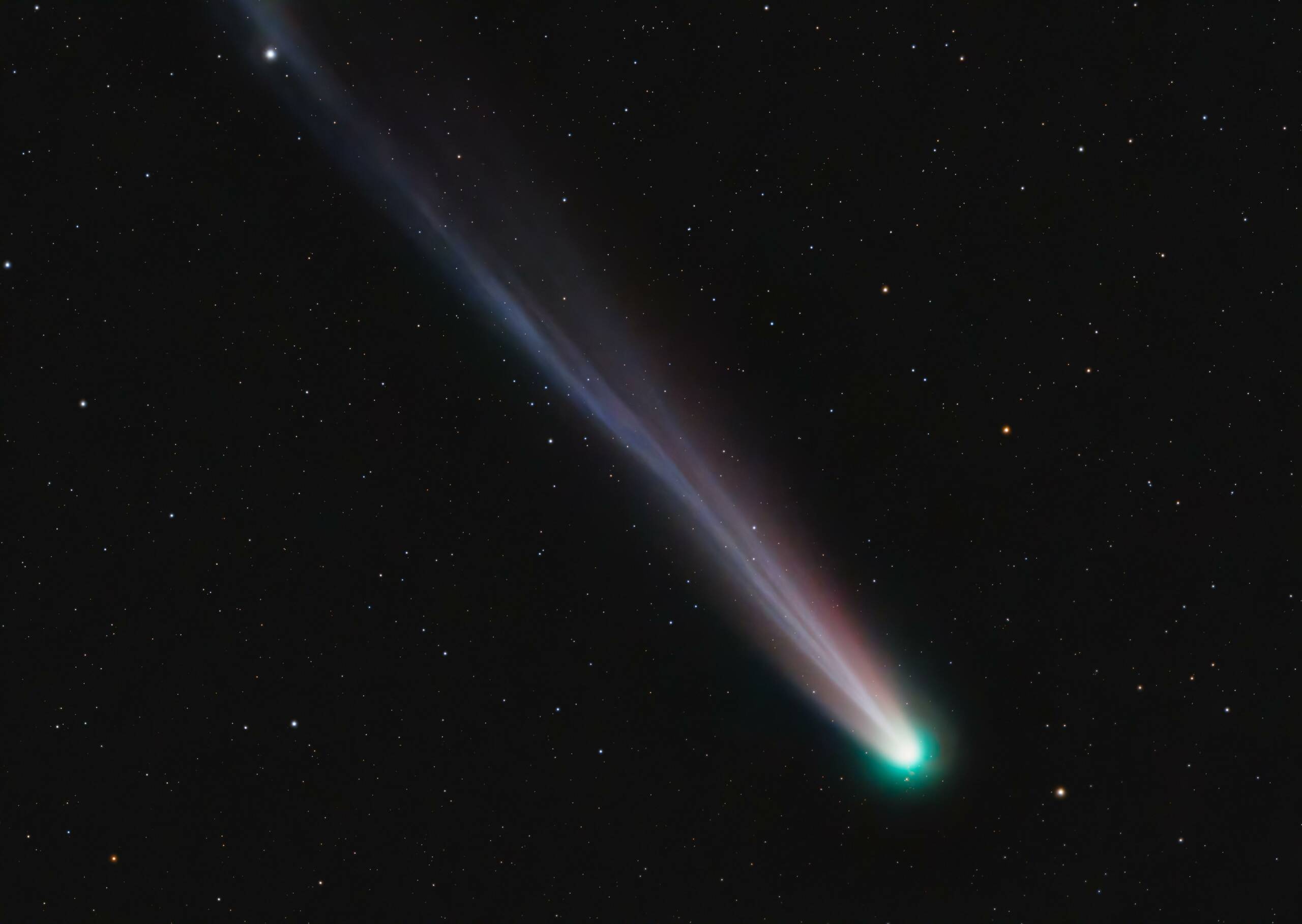
Most nights, Jonathan images from his Bortle 4–5 backyard in Northern Nevada, but he still chases darker horizons when he can. One night in May 2024 stands out vividly.
“The forecast promised clear skies after new moon — perfect conditions. I had no idea aurora would appear. The display was incredibly bright and dynamic. I was completely awestruck and spent hours just watching. No deep-sky imaging happened that night!” Even now, his favorite moment remains that first subframe appearing on screen. “It still gives me that whoa! excitement every time.”

Astrophotography, he says, teaches patience more than anything. The nights can be long, the conditions harsh — especially in winter, battling dew and cold. “The photons we’re collecting are ancient and will still be there tomorrow. There’s no need to rush. Even if a project takes years, the result is worth it.”
I do all my post-processing in PixInsight. I usually image targets over multiple nights, doing quick stacks after each session to check framing and data quality. Once I have enough integration time for good signal-to-noise, I perform subframe selection to reject poor frames and create a final stack from the best ones.
From there, the workflow is flexible depending on the data. For narrowband SHO, I start with GradientCorrection to remove gradients, then apply Russell Croman’s BlurXterminator in “correct only” mode to the individual channels. Next, I combine them via ChannelCombination. After that, it’s adaptive—I evaluate the data and adjust steps as needed (e.g., using LinearFit to balance SHO channels if proportions look off, then recombining).
Typical steps follow: background neutralization and extraction, star removal, denoising, and stretching with Generalized Hyperbolic Stretch (GHS). I then refine the starless layer with Curves for saturation and contrast, stretch the stars separately, and recombine everything for the final touches.
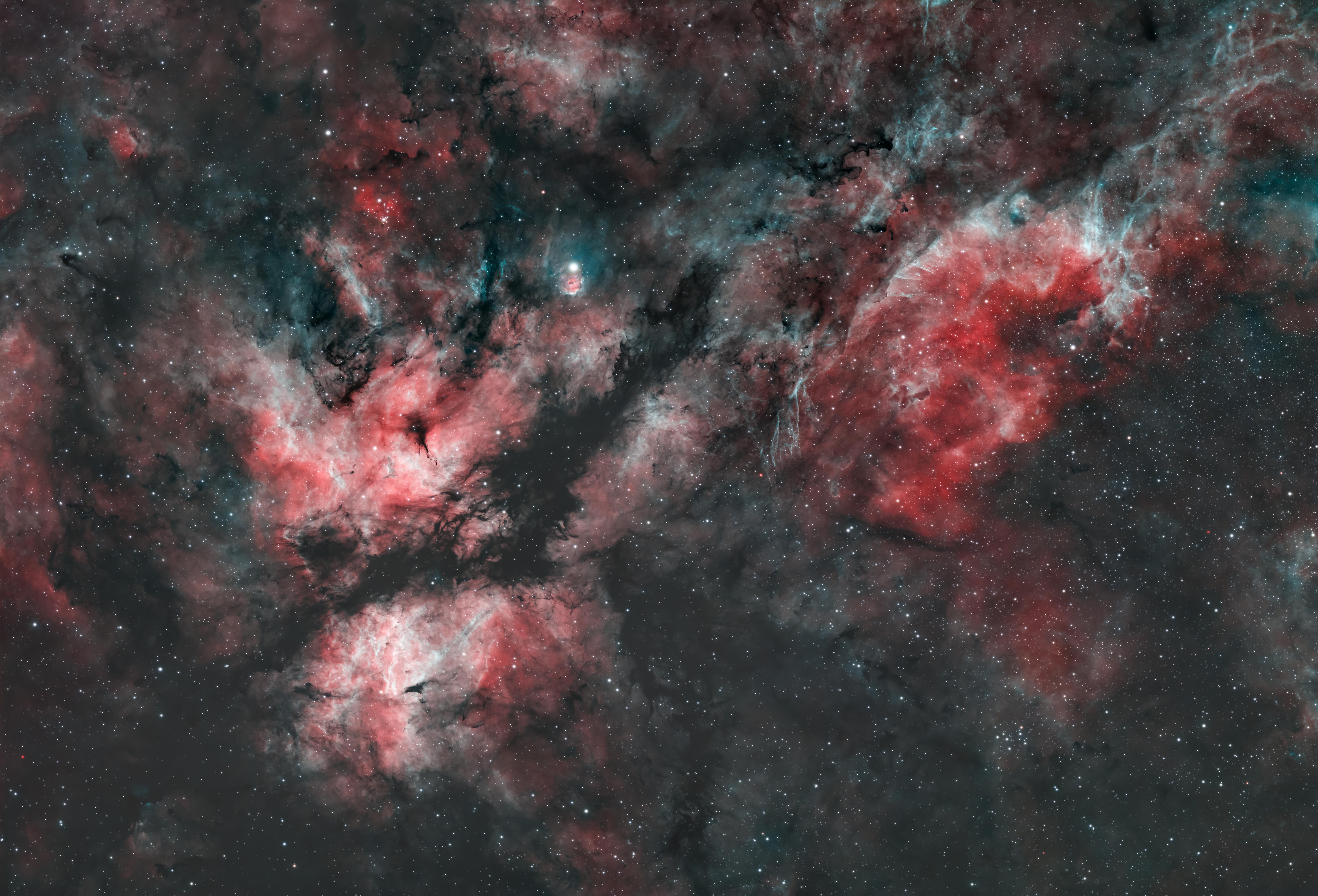
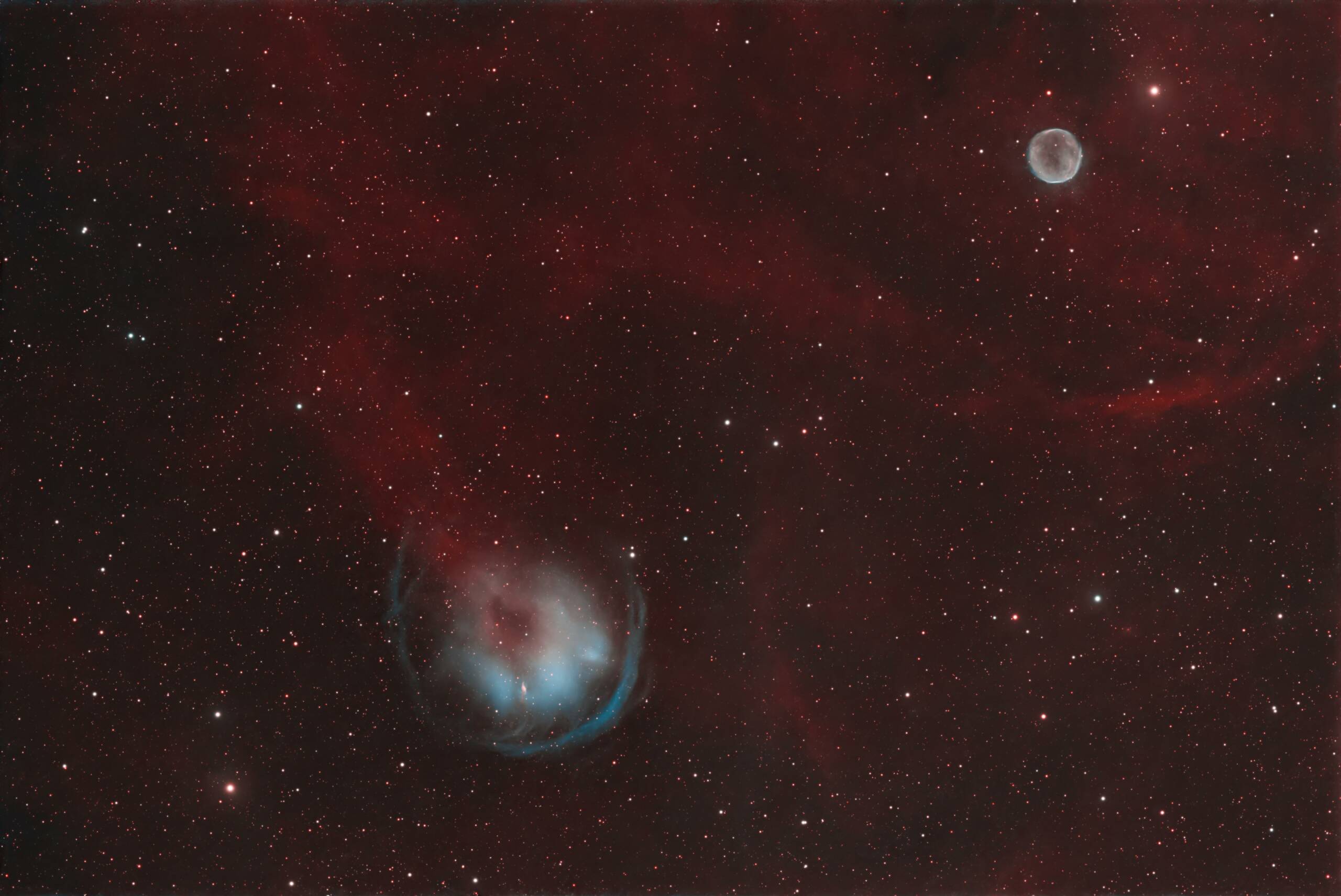
Of all his work, Jonathan is most proud of his NGC 6888 (Crescent Nebula) mosaic — over 200 hours of SHO data collected across two years, combining it with his earlier WR-134 project. “It’s a reminder that everything in the night sky is interconnected.”
And when the North America Nebula (NGC 7000) rises each year, it signals something personal for him — the start of warmer nights and new beginnings. “It’s my tradition. Every year, it’s my first-light target for new gear.”
Jonathan plans to return to the Golden State Star Party this June, reuniting with friends under the California sky. “I don’t have anything specific locked in yet… but an imager can always dream! The William Optics Pleiades 68 Astrograph is a strong contender for my next wide-field OTA—its fast f/3.8 optics look incredible for deep-sky work.”
From his very first ASIAIR, Jonathan has been part of the ZWO ecosystem, using multiple ZWO cameras, mounts, and accessories that now form the backbone of his rigs. “People sometimes call the ASIAIR a ‘lock-in,’ but I see it as a positive — everything just works together seamlessly.”
Recently, a major discovery by an international team of amateur astronomers and scientists has become a huge online hit, and this new discovery is just located in one of the
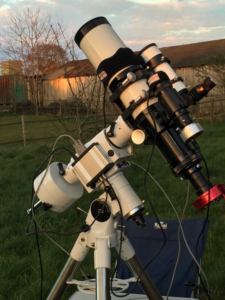
Hi, I’m Christopher Rose. My own personal interest in astronomy started when my parents got our own black and white television so we could watch the first man to land
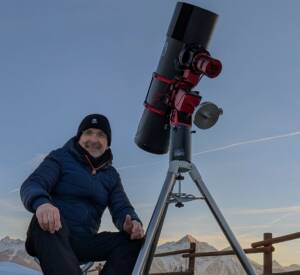
Hi, my name is Alessandro Cipolat Bares, I’m 72 years old , I live in Aosta, in the Aosta Valley, a mountainous region in the heart of the Western Alps.
My name is Julien De Winter (@dwj85), and I live in Belgium. I am a Professor of Chemistry at the University of Mons, where my research focuses on mass spectrometry
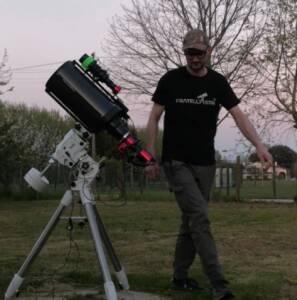
Hi! My name is Nicola Bugin and I live in a town in northern Italy called Borgoricco. I’m really happy that my photo of WR-134 has been so successful that
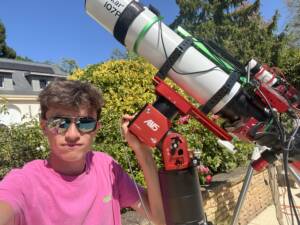
My name is Quentin (@_quentin_g), I am 17 years old, and I live in Nantes, in the west of France. I am currently in a French preparatory class for engineering