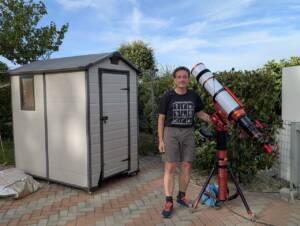
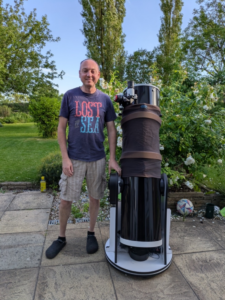
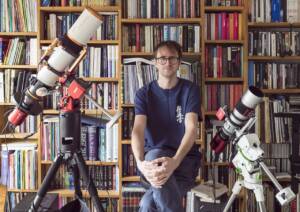
My name is Quentin (@_quentin_g), I am 17 years old, and I live in Nantes, in the west of France. I am currently in a French preparatory class for engineering schools. I have been doing astrophotography for about three years now, and I became especially active during my high school years. Over time, I wanted to create more and more images, which pushed me to build a second setup so I could work with two different focal lengths. Today, I usually run two complete rigs at the same time on different targets during the night.
First of all, about what first sparked my interest in astrophotography, I would say it is mainly seeing people doing this online, especially on YouTube. When I was 12, I got my first Dobsonian telescope, and I wanted to push the thing farther. I searched up on the internet for months, and I finally had the opportunity to get a skywatcher 80ed and an HEQ5 mount I still own to this day (I got it in September 2022, I was 13 at this time).
Then I tried, for several months, I couldn’t get the mount to work, and I really wanted to do things perfectly, with high technical precision at every step. And one day (on May 18th 2023) I just couldn’t keep doing this anymore, I put the thing outside in my backyard, I set up things in a very approximate/beginner way, and I pointed the scope at M13. I was using a Sony A7 IV camera at the time, and even if the result seems horrible to me now, I still remember how amazed I was when it first came out.
The feeling I had when I finished processing this image is something that still continues to push me forward in this hobby, something I can’t even describe.
ZWO has been a key part of that progress. I am a very enthusiastic user of the ASIAIR, ZWO cameras, and many of your accessories, as well as the AM5 mount. Thanks to ZWO, I can work with a setup that is reliable, efficient, and capable of delivering the best image quality I can aim for. It has genuinely helped me move forward in a way that would have been much harder without this equipment.
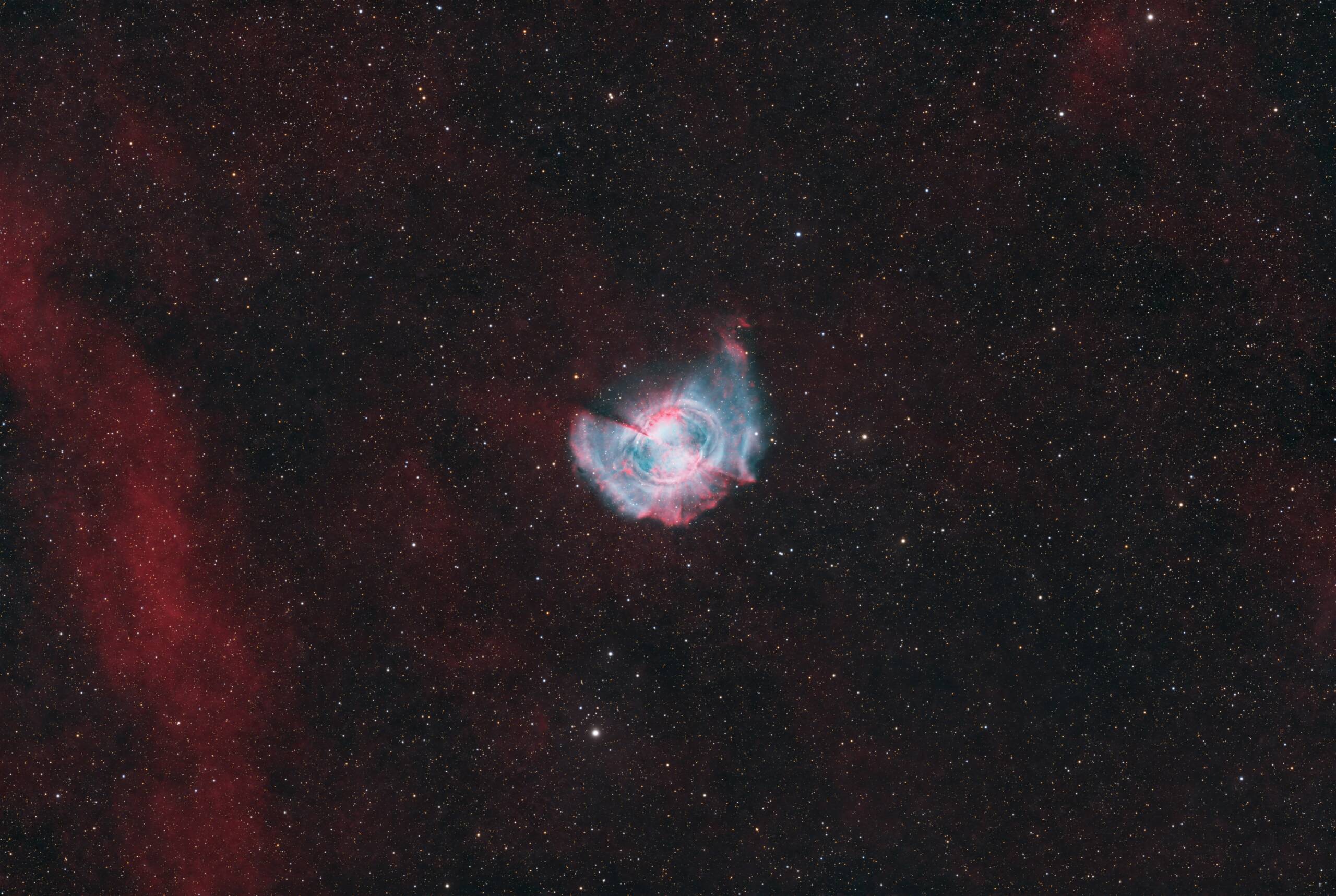
M27, the Dumbbell Nebula and its H-alpha background
While M27 is a well-known and frequently photographed object, my main goal with this deep exposure was to reveal the faint, extensive H-alpha emission in the background. This surrounding nebulosity is rarely captured, yet it provides a fascinating and much wider context to the region.
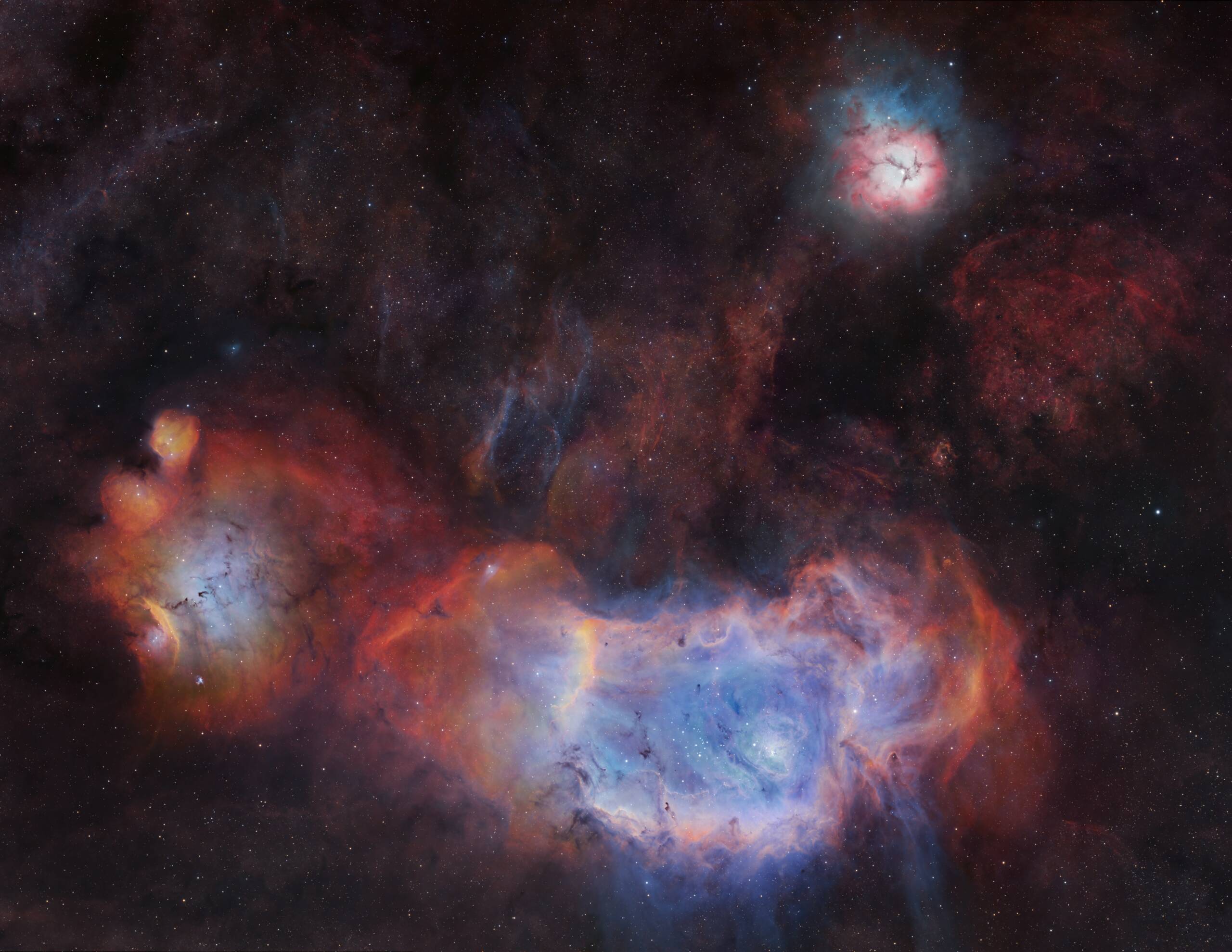
Messier 8, Messier 20 & SNR G007.5-01.7 — SHO
Messier 8, Messier 20 and SNR G007.5-01.7 were imaged from the Parc National des Cévennes in France, a Bortle class 2 sky. OIII filaments of the SNR are visible at the top left, a feature not commonly seen in images of this area.
This picture is a composite image of both SHO and HOO palette. I did not manage to get a satisfying result using SHO data for the Trifid Nebula, so I composited an HOO image of M20 into my SHO composition of the area.
This was shot during a trip to the Cévennes National Park in southern France, a Bortle class 2 dark-sky reserve. I had to deal with a relatively short integration time due to bad weather in this region of France. It was quite a challenge to process.
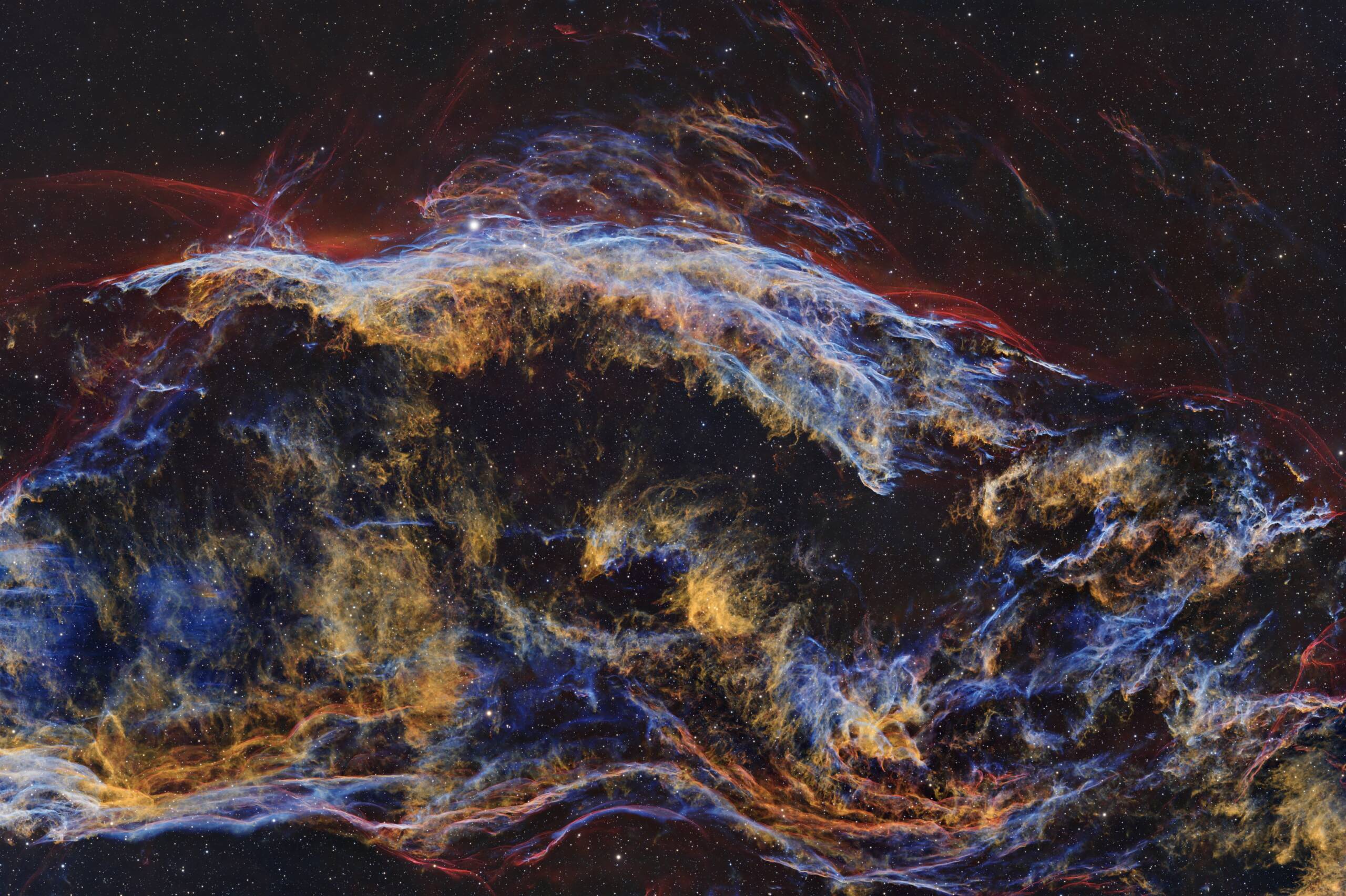
Deep look into the Western Veil — SHO
NGC 6960, better known as the Western Veil Nebula or Witch’s Broom, is one of the brightest filaments of the Veil Nebula supernova remnant in the constellation Cygnus, located about 1,500 light-years away. Formed by the explosion of a massive star around 10,000–20,000 years ago, its delicate filaments trace shock waves interacting with the surrounding interstellar medium. This SHO palette highlights the distribution of ionized sulfur (SII), hydrogen (Hα), and oxygen (OIII), revealing the remarkable complexity of the nebula’s structure.
For this project, my goal was not to reinvent one of the most photographed deep-sky objects, but to extract as much fine detail and color information as possible. I also included SII data, which is not often seen but adds another dimension to the emission structures. Although sulfur is generally found alongside hydrogen, it reveals subtle variations throughout the filaments, producing smooth color transitions that are particularly striking in the SHO composition.
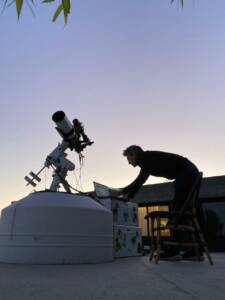
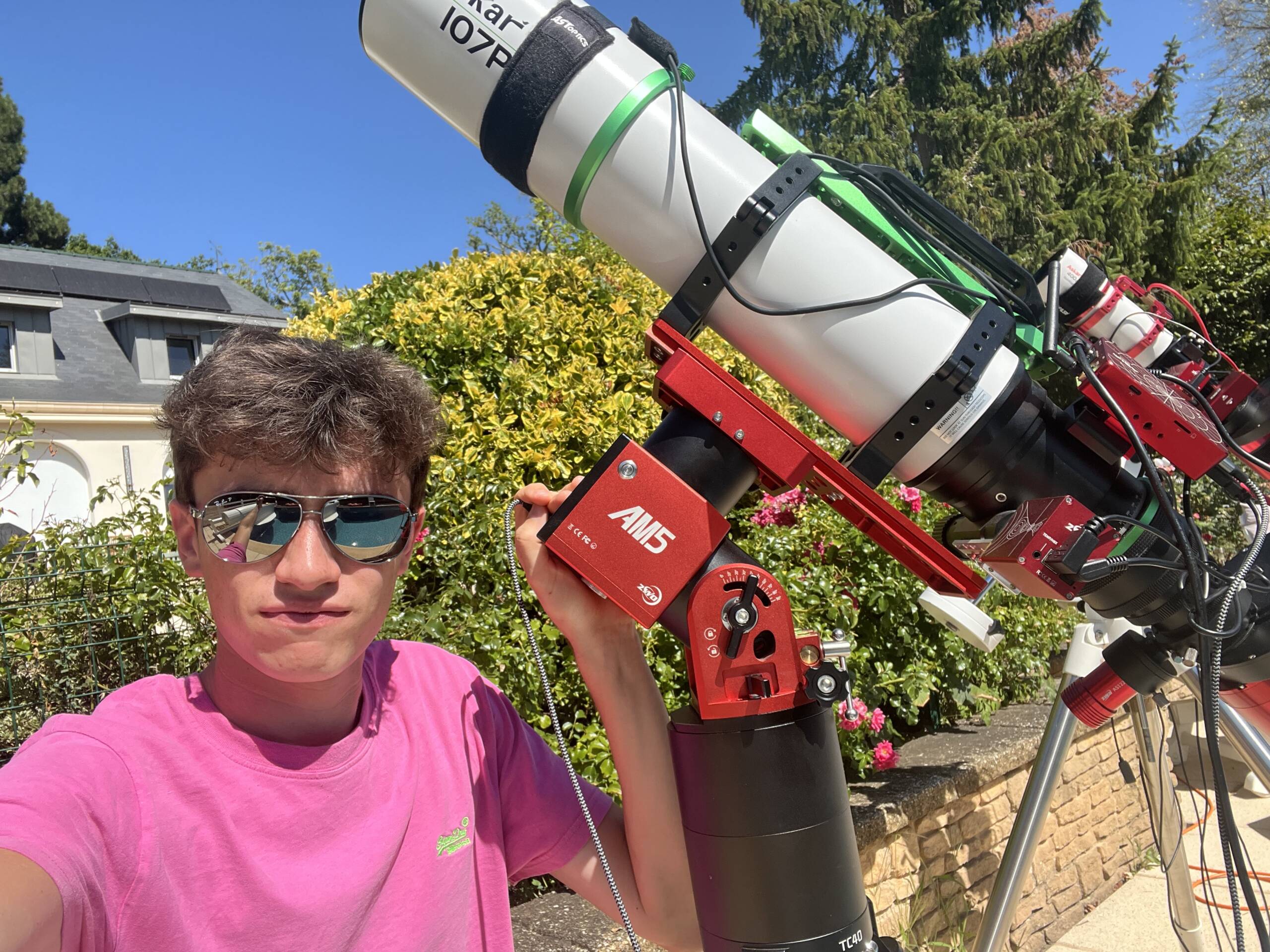
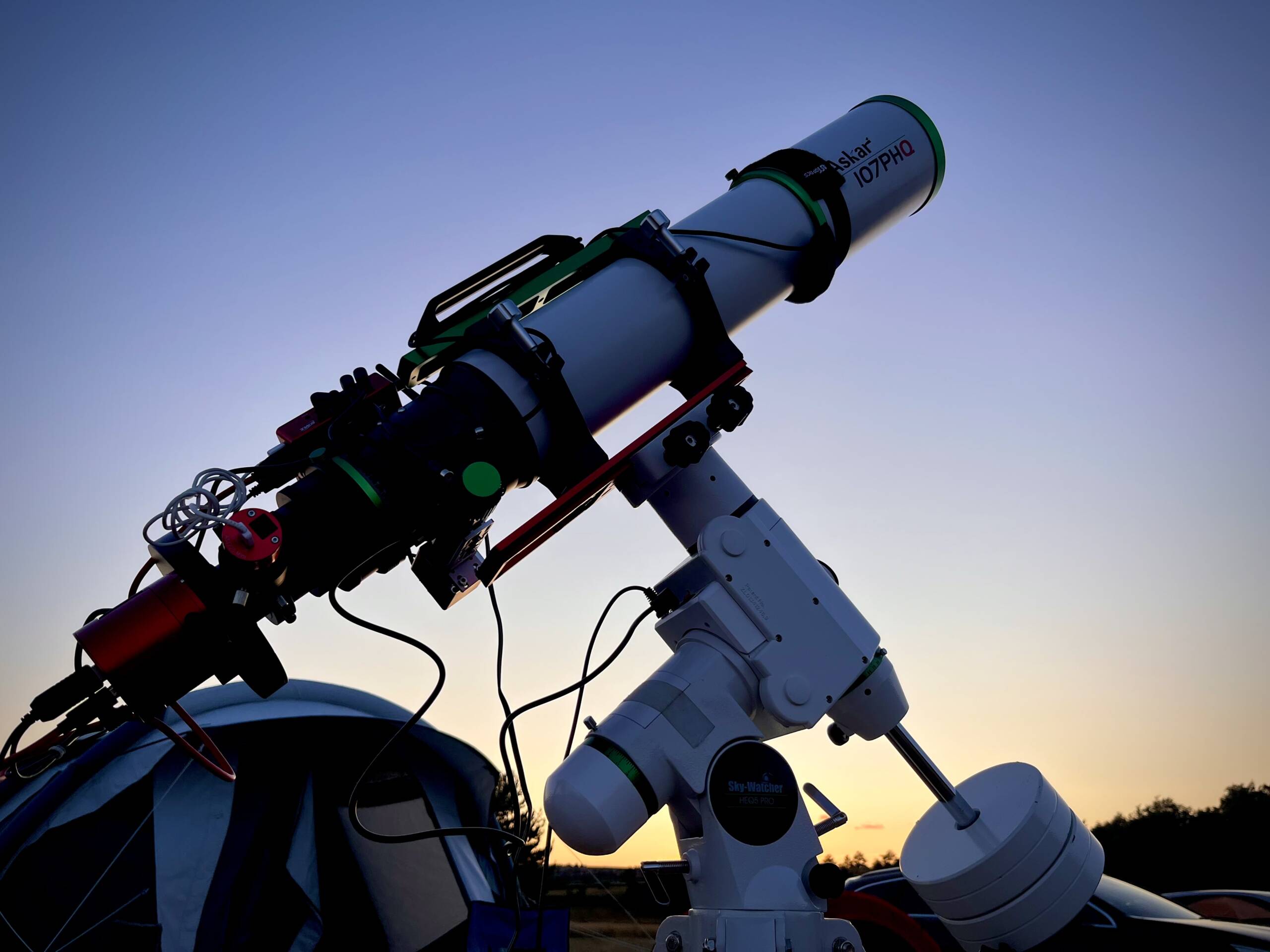
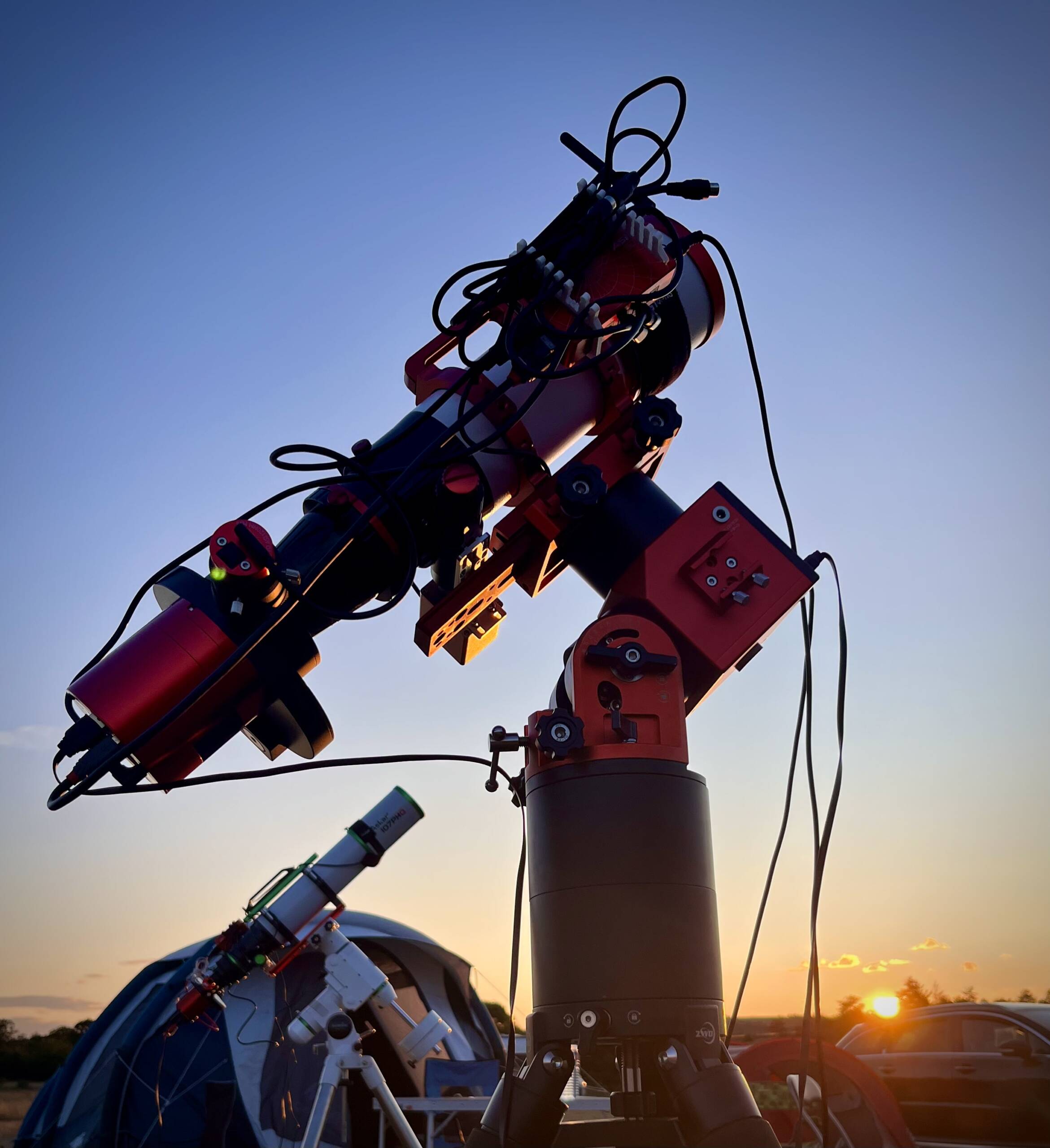
The two rigs I own (you can find pictures of me and my setups attached) :
Askar : FRA 400, 107 PHQ
A sky-watcher HEQ5 pro
Two sets of Antlia filters (LRGB and 3nm SHO)
ZWO : an AM5, 2600mm and 585mm cameras, two asiair, two filter wheels, two EAF, a CAA, two guiding cameras (120mm and 220mm), two OAG
If I had to give just one advice to someone starting out in this hobby, I think I would say : don’t feel overwhelmed, do not think you should do things in a perfect way at first try, and more than anything else, do not ever give up.
This is how I see things, since I started. I don’t ever give up.
Just keep going, step by step, target after target, keep improving yourself, each picture you take can be a bit better than the previous one. Complexity, technical details, all of this is becoming a reward when you finally get to post your first picture.