
From Curiosity to Mastery: The Astrophotography Journey of Puig Nicolas
1. How It All Began For Puig Nicolas, it all started at the age of 10 with a 60/700 refractor and a 114/900 reflector. His first celestial encounters — the
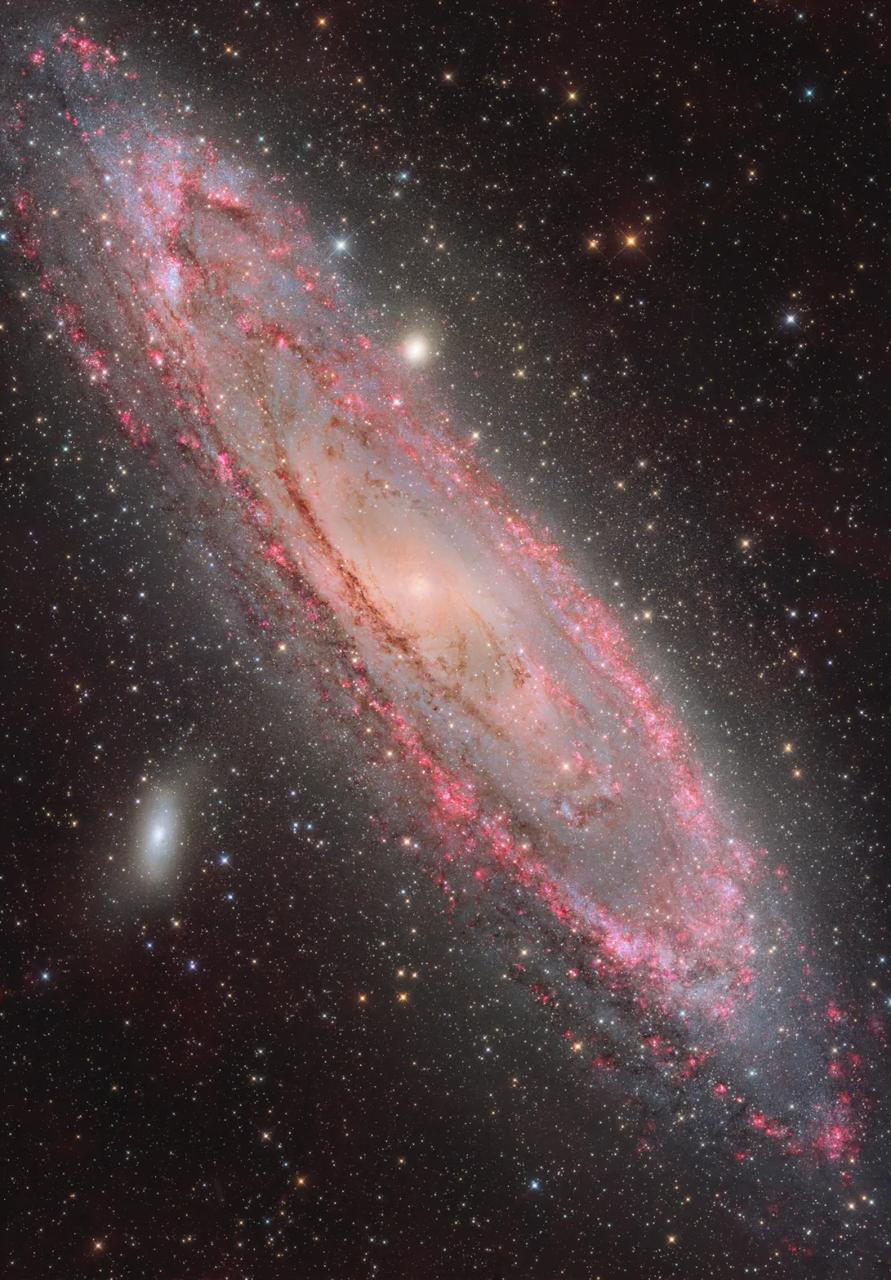
Capturing the Andromeda Galaxy is not uncommon.
Resolving it—star by star, across its vast spiral arms—is something else entirely.
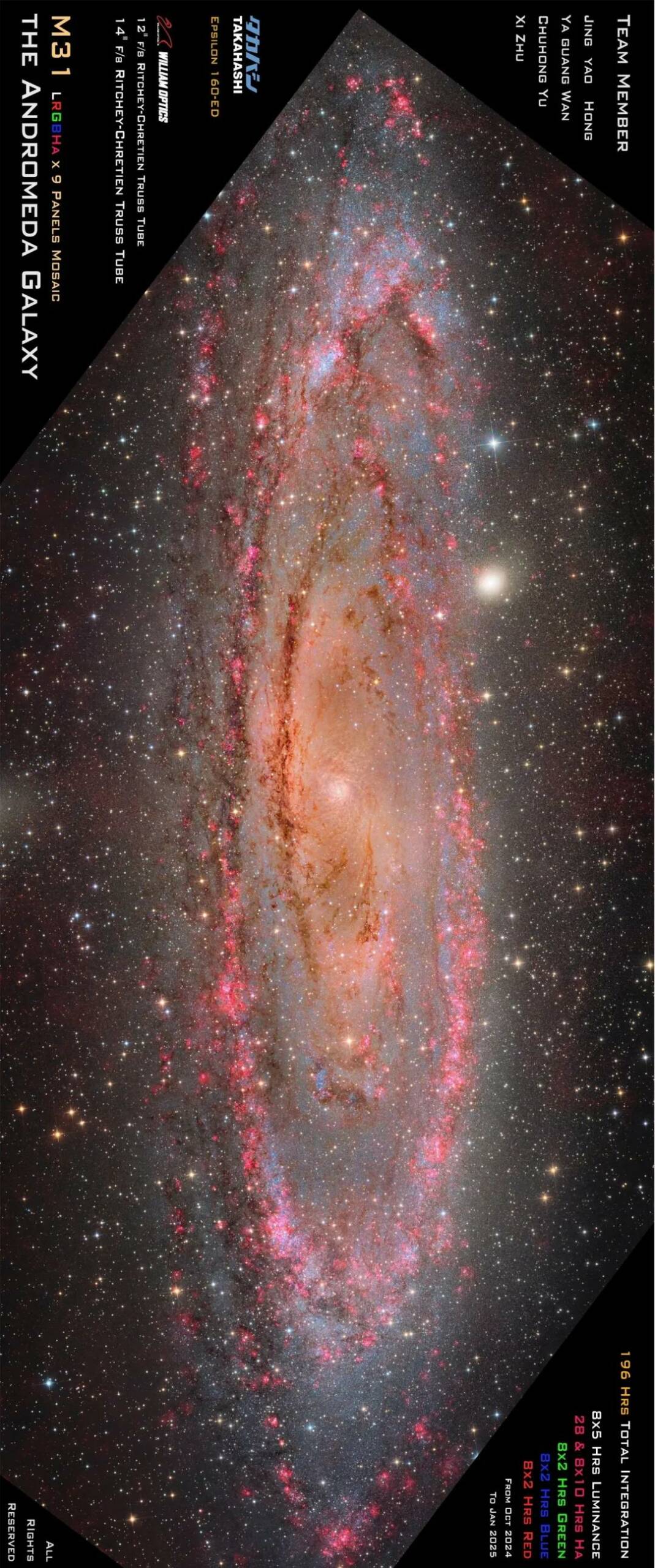
For the four-member team Cosmic Quadrant, this project became a test of patience, precision, and collaboration. Over nearly six months, they combined time, technology, and shared vision to produce a 216-hour long focal-length mosaic of M31—revealing details rarely seen at this scale.
© Cosmic Quadrant:Yuchu Hong, Yaguang Wan, Jingyao Hong, and Xi Zhu
Cosmic Quadrant is a four-member astrophotography team consisting of Yuchu Hong, Yaguang Wan, Jingyao Hong, and Xi Zhu.
Among them, Xi Zhu stands out as a highly experienced astrophotographer, well-known within the community and often invited as a judge in competitions. His deep passion for both astronomy and imaging, along with his constant sharing of techniques and insights, played a crucial role in bringing this M31 project to completion.
Without his involvement, the team admits, the project might have stretched well into the following year.
The team was originally formed at the Daocheng Observatory in Sichuan, where Yuchu Hong initiated the idea of assembling a group for a large-scale collaborative project.
What started as four strangers quickly evolved into a tightly coordinated team.
“We came together for one ambitious project—and somewhere along the way, became true teammates.”
The M31 project began in August 2024, with active data acquisition lasting nearly four months, followed by an additional two months of processing and post-production.
Nearly six months later, the 216-hour mosaic was complete.
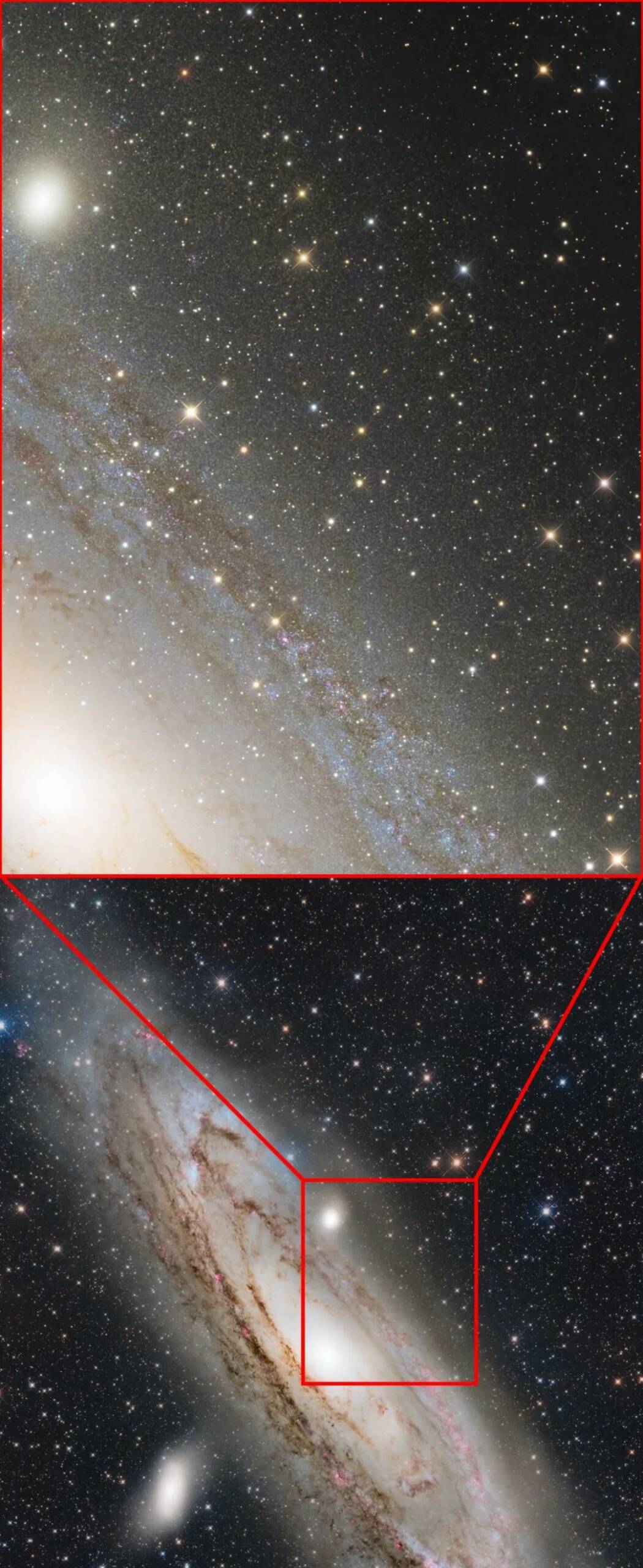
The inspiration came from a striking image taken with a 1-meter telescope, showcasing the NGC 206 region of M31 with exceptional clarity—resolving individual stars deep within the galaxy.
That raised a question:
Could smaller telescopes—10 to 12 inches in aperture—achieve something similar through sheer exposure time?
In late August 2024, the first test was conducted using a 12-inch telescope.
With just 5 hours of luminance data, the result already hinted at extraordinary potential.
That was the turning point. If one region could reach that level of detail… what if the entire galaxy could be captured the same way?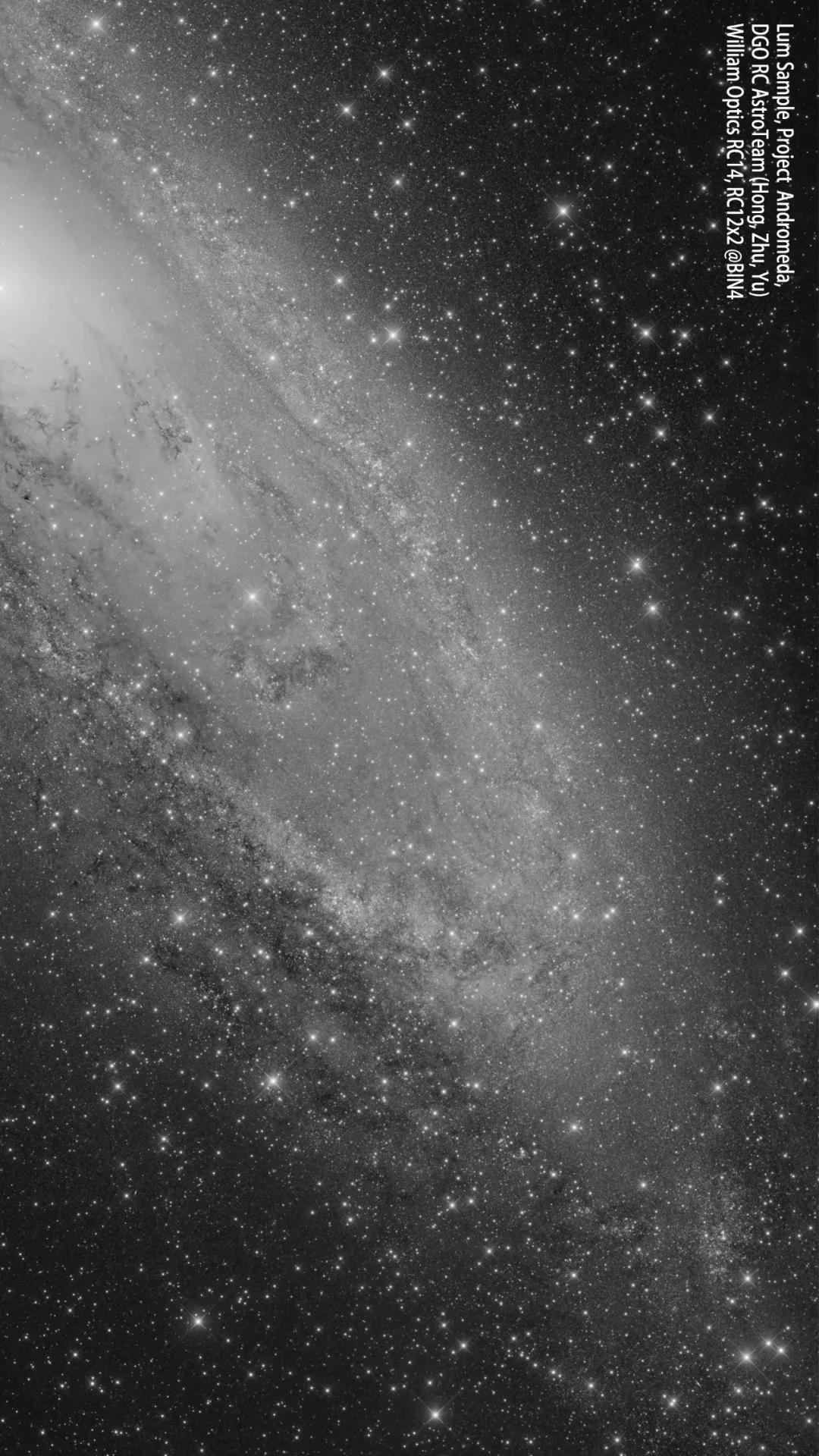
To resolve the finest details in M31, the team relied on a set of large-aperture, long focal-length systems:
Location played a crucial role.
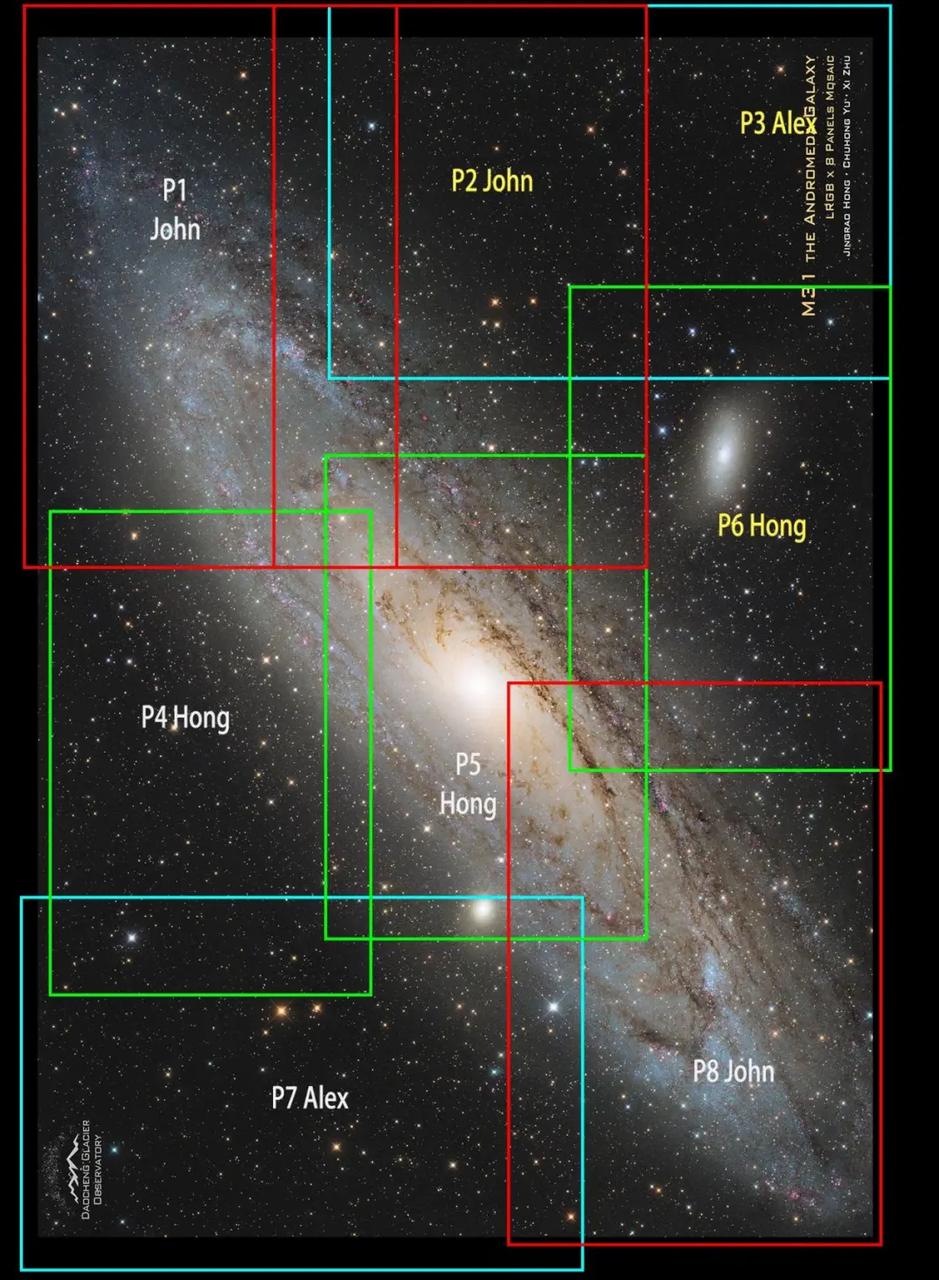
When asked what viewers should focus on, the answer is clear:
“This is one of the first successful long focal-length mosaic M31 projects at this scale—8 to 9 panels—completed in both the AstroBin.”
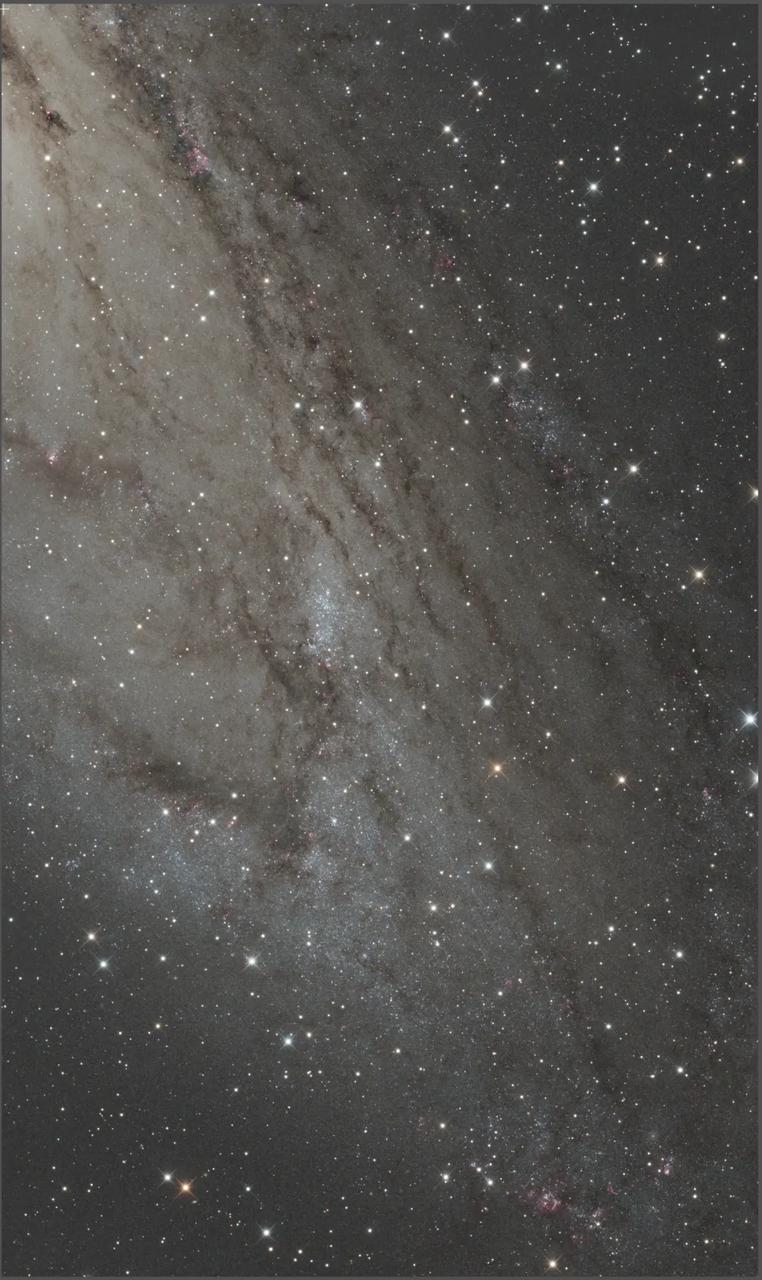
But more importantly, it’s about the level of detail.
The hardest part didn’t come during imaging—it came during processing.
In the linear stage, after assembling the RGB mosaic, the team encountered severe issues:
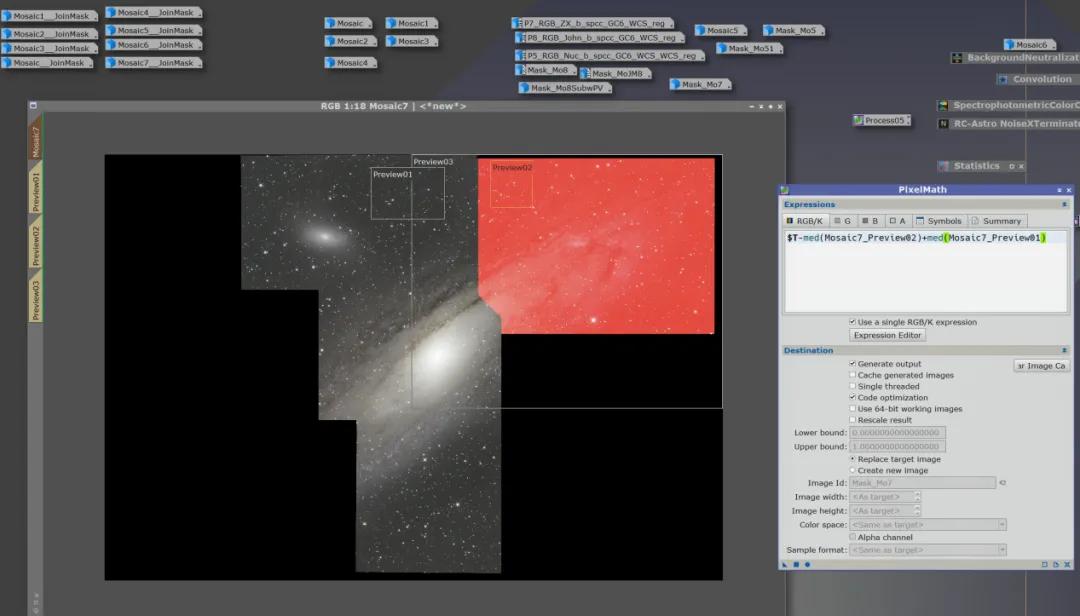
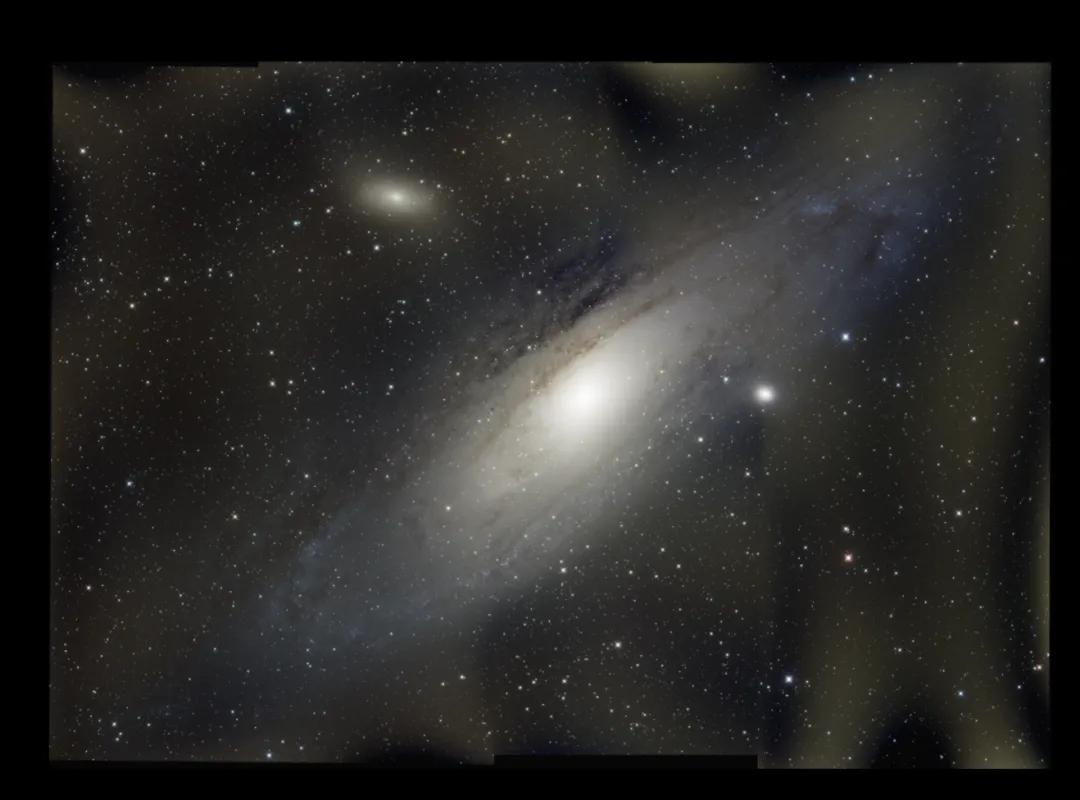
With no option to reshoot, the team had to find a solution.
“As the one who initiated the project, I had no choice but to keep pushing forward.”
After extensive searching, they identified a complex and rarely used technique:
This method—later integrated into PixInsight as part of the MARS project—became the key.
Using wide-field reference data captured with the Takahashi E160ED, they were able to correct the gradients and complete the mosaic.
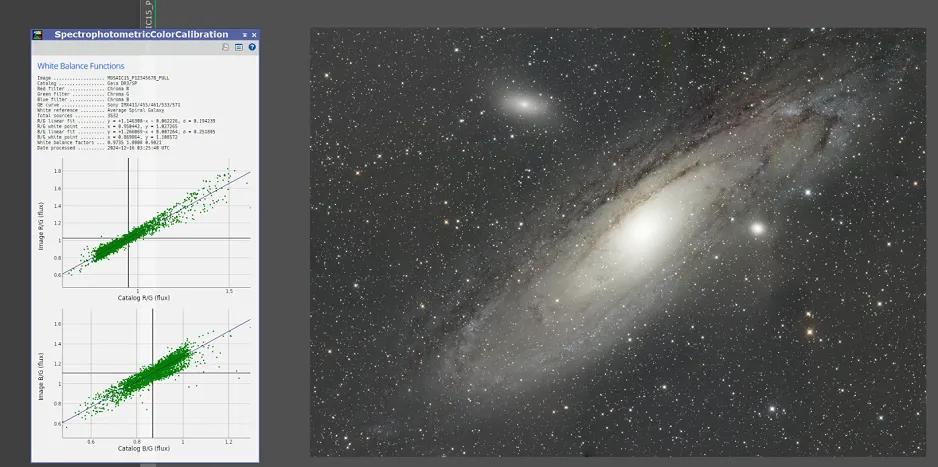
Another major challenge was data selection.
A user asked about struggling with background gradients in Siril.
The team’s advice:
Two approaches were shared:
Method 1 (Simplified)
When asked what they would say to newcomers, the answer was refreshingly honest:
“Before astrophotography, nightlife meant holding a drink. Now it means carrying telescopes.”
They encourage more people to join the hobby—but acknowledge the learning curve.
While this project represents the high end of collaborative astrophotography, the team emphasizes that the journey into astronomy doesn’t have to begin this way.
Accessible tools—such as Seestar smart telescope—are making it easier for more people to take their first step.
By simplifying setup and reducing technical barriers, systems like Seestar allow beginners to focus on the experience itself: capturing their first image, understanding the sky, and building confidence.
From there, more advanced systems can follow naturally.
For the team, astrophotography is not only about results—it’s about the process.
As more astrophotographers explore collaborative workflows and integrated systems, projects like this point toward a broader future—one where precision, accessibility, and shared effort come together.
“Astrophotography doesn’t have to be a solo effort.”
By combining:
1. How It All Began For Puig Nicolas, it all started at the age of 10 with a 60/700 refractor and a 114/900 reflector. His first celestial encounters — the
By day, David Cruz works as a digital designer. By night, he designs something far greater — images of the universe itself. “Since I was young, I was always interested
bbrown_admin, October 30, 2025 INITIAL IMPRESSIONS: The ZWO ASI585MC Air came well packaged from the manufacturer. The box is improved and has an impressive feel with a magnetic closure on
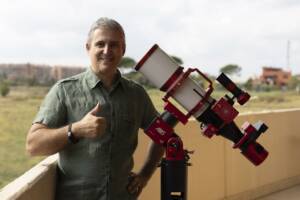
– Q3 ASIWEEK Winner Gianni Lacroce’s Astrophotography Journey Hi, I’m Gianni Lacroce, an Italian astrophotographer. My passion for the night sky began long before I owned a telescope or a
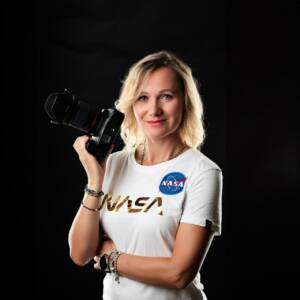
INTRODUCTION My name is Marzena Rogozińska. I live in Bytom (Poland) and work as a psychologist and pedagogue at two schools. I would like to thank you for honoring my